Jivejdon
Jivejdon is a chain notebook or chain blog, knowledge graph and knowledge system with DDD + DomainEvents/Event Soucing/CQRS + clean architecture/Hexagonalarchitecture, powered by jdonframework.
Features
When posting, it provides the function of interlinking posts around keywords/topics, organizing posts together in the form of links. these posts are presented to human readers in a time sequence and to AI readers in a knowledge graph like a theme garden. It is suitable for enterprises to manage their internal knowledge systems, and when combined with intelligent agents, it can serve as the enterprise's second brain.
refer: Large language models + graph structures are the ultimate path to enterprise intelligence.
Markdown files themselves are the graph database for intelligent agents!
Demo
You can check out the canonical deployment of Jivejdon at https://www.jdon.com/(NginX+Tomcat+JDK8+MySQL)
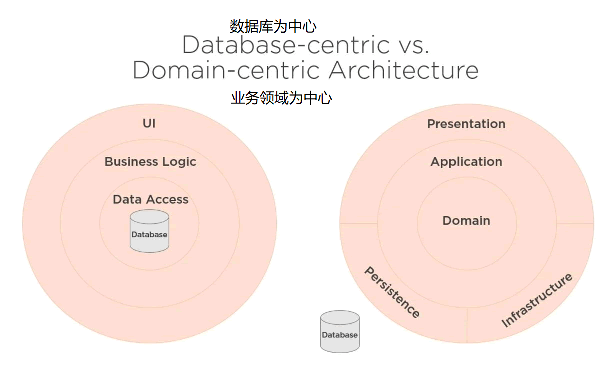
Domain-centric Architecture.
Domain-centric architecture is a new way to design modern world enterprise applications.
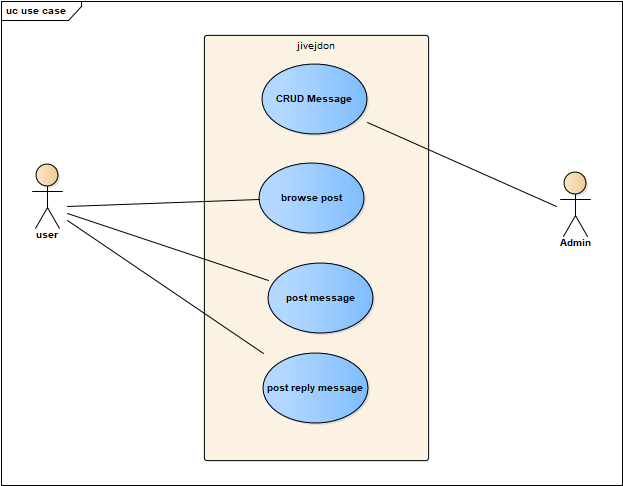
Use Case
DDD Aggregate Model
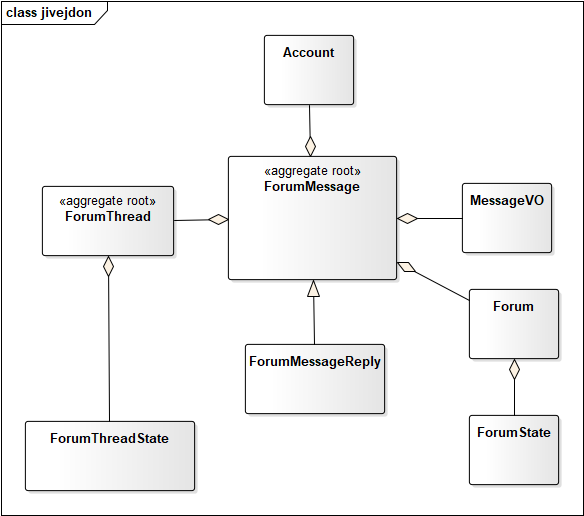
There are two aggregate roots in jivejdon: FormThread and ForumMessage(Root Message).
com.jdon.jivejdon.domain.model.ForumMessage is a rich model, no "public" setter method, all setter methods are "private":
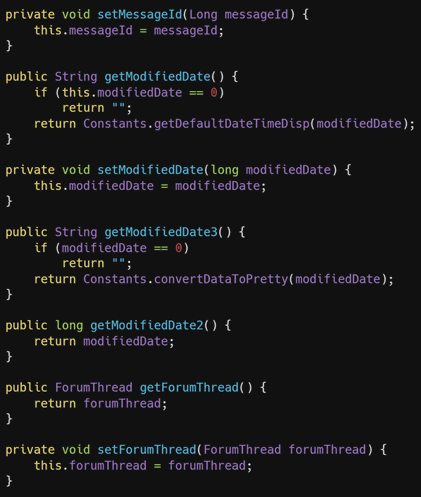
Domain Model principles:
*High level of encapsulation All members' setter methods are
private`` by default, theninternal`. need heavy builder pattern to create aggregate root!*High level of PI (Persistence Ignorance) No dependencies on infrastructure, databases, or other stuff. All classes are POJO.
The customer/supply model from jdonframework can separate the domain model from Persistence/Repository.
All business datas outside of the domain is packed in a DTO anemic model(AnemicMessageDTO), so business rules in the aggregate root entity will not leak outside of the domain.
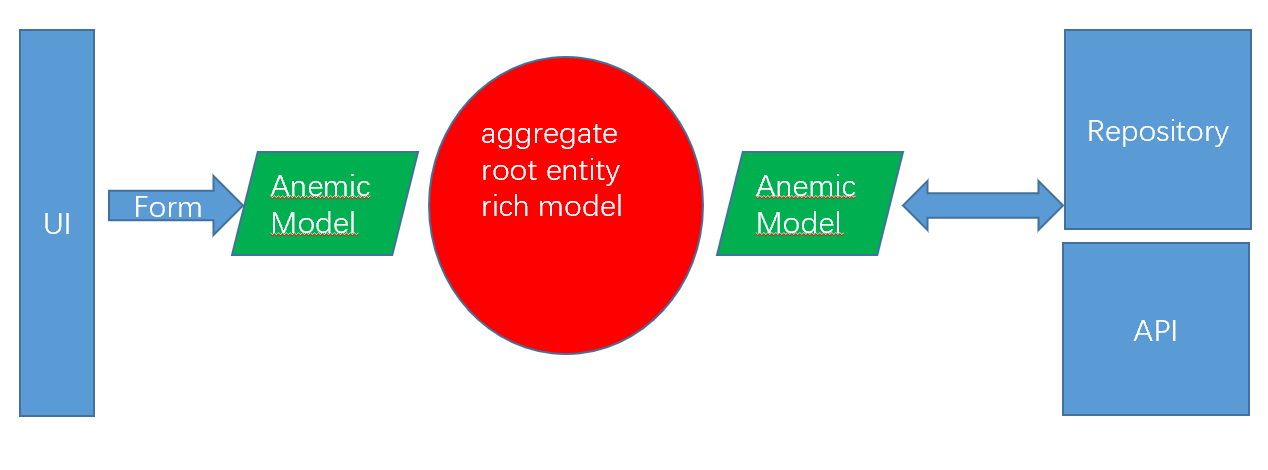
These DTO anemic models can also be packed in Command and Domain Events, so they are managed in DDD ubiquitous business language.
- Rich in behavior
All business logic is located in Domain Model. No leaks to the application layer or other places.
- Low level of primitive obsession
Primitive attributes of Entities grouped together using ValueObjects.
MessageVO is a value Object and has two attributes for message content: subject/body.
Clean architecture/Hexagonal architecture
JiveJdon is developed with JdonFramework that supports the Customer/Supply or pub-sub model, this model can separate domain logic from infrastructure, databases, and other stuff.
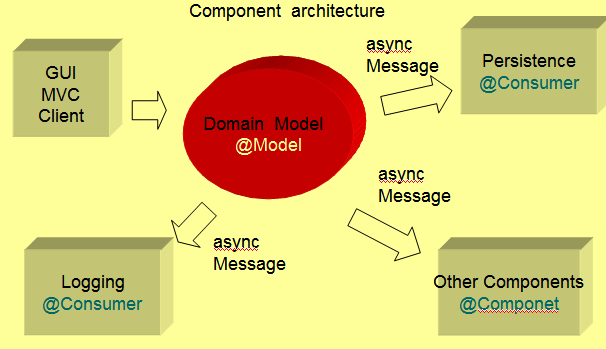
JiveJdon Hexagonal_architecture:
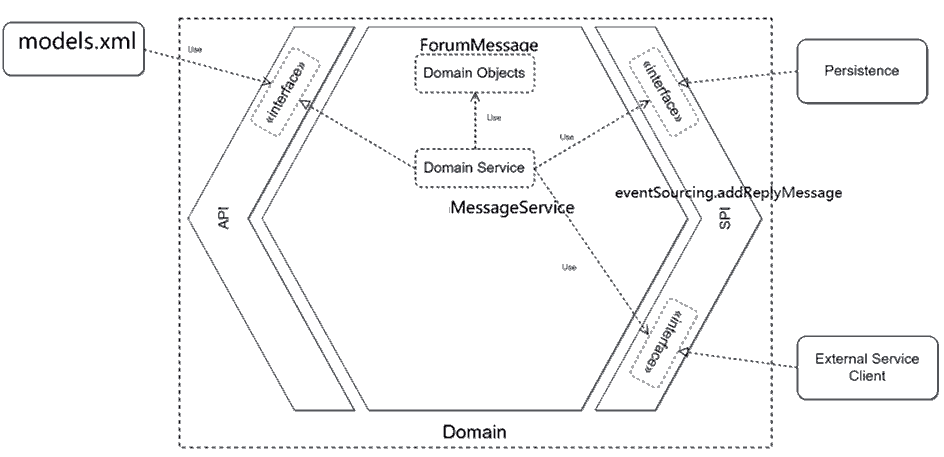
here is the package view of jivejdon:
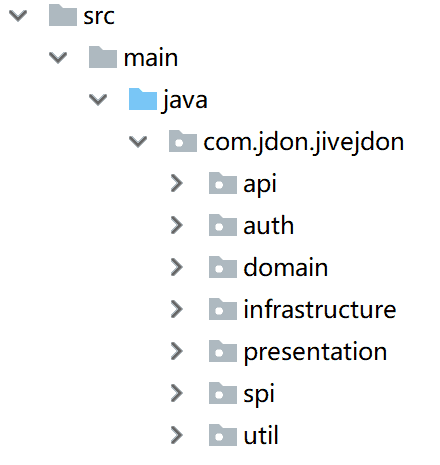
Invoking path:
presentation -> api -> domain -> spi ->infrastructure
models.xml is an adapter for presentation:
	<model key="messageId" class="com.jdon.jivejdon.infrastructure.dto.AnemicMessageDTO">
		<actionForm name="messageForm"/>
		<handler>
			<service ref="forumMessageService">

				<createMethod name="createReplyMessage"/>

			</service>
		</handler>
	</model>
When a user post a replies message, a POST command from the presentation will action the createReplyMessage method of forumMessageService in API :
public interface ForumMessageService {

	Long createReplyMessage(EventModel em) throws Exception;
	....

}
The forumMessageService will delegate the responsibility to the aggregate root entity ForumMessage,
The createReplyMessage() method of the forumMessageService will send a command to the addChild() method of ForumMessage that is too a command handler of CQRS:
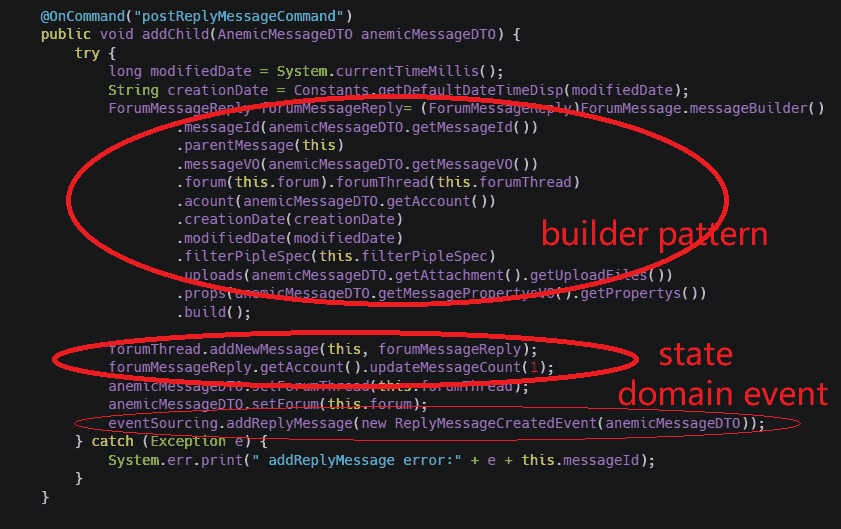
@OnCommand("postRepliesMessageCommand") annotation make addChild() being a command handler, the annotation is from pub-sub model of jdonframework, it can make this method executed with a single-writer pattern - no blocked, no lock, high concurrent. only one thread/process invoking this update method.
"event-sourcing.addReplyMessage" will send a "ReplyMessageCreatedEvent" domain Event to infrastructure layer such as Repository. separate domain logic from infrastructure, databases, and other stuff.
Domain event "ReplyMessageCreatedEvent" occurring in the domain is saved in the event store "jiveMessage", this is a message posted events table. the event can be used for reconstructing the latest replies state of a thread, events replay is in ForumThreadState .
CQRS architecture
CQRS addresses separate reads and writes into separate models, using commands to update data, and queries to read data.
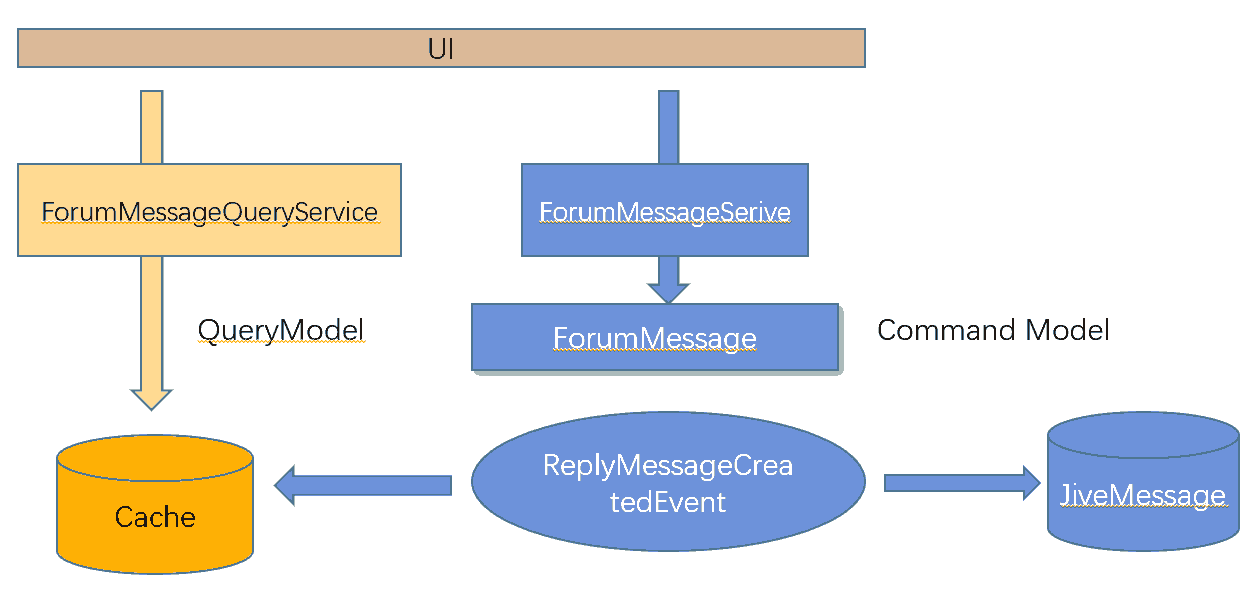
In jivejdon ForumThread and ForumMessage are saved in the cache, the cache is a snapshot of even logs, if an update command activates one of these models, they will send domain events to clear the cache data, the cache is similar to the database for query/read model, the consistency between with cache and the database for command model is maintained by the domain events such as "ReplyMessageCreatedEvent".
The domain event "ReplyMessageCreatedEvent" do three things:
- add a new post message to "jiveMessage" (events log)
- clear the query cache (CQRS)
- update/project the latest replies state of a thread (event project to state)
Event Sourcing
Posting a message is an event, modifying the latest replies status for one thread.
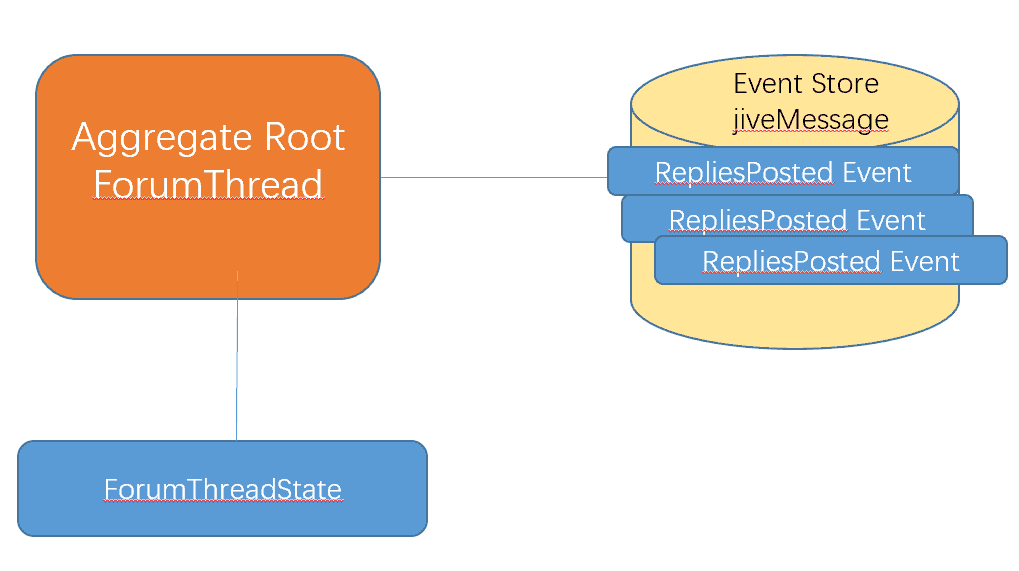
How to get the latest replies status for one thread? we must iterate all posted events collection.
JiveMessage is a database storing posted events in time order, with one SQL we can reduce them chronologically to get the current state: the latest posted event:
SELECT messageID from jiveMessage WHERE threadID = ? ORDER BY modifiedDate DESC
This SQL can quickly find the latest replies post, similar to replaying all posted events to project the current state.
In jiveThread table there is no special field for the latest replies state, all states are from posted events projection. (projection can use SQL!)
When a user posts a new ForumMessage, a ReplyMessageCreatedEvent event will be saved to the event store: JiveMessage, simultaneously refreshing the snapshot of the event: ForumThreadState.
In ForumThreadState there is another method for projecting state from the database, if we want to get the count of all message replies, its projectStateFromEventSource() method can do this:
	public void projectStateFromEventSource() {
		DomainMessage dm = this.forumThread.lazyLoaderRole.projectStateFromEventSource(forumThread.getThreadId());
		OneOneDTO oneOneDTO = null;
		try {
			oneOneDTO = (OneOneDTO) dm.getEventResult();
			if (oneOneDTO != null) {
				latestPost = (ForumMessage) oneOneDTO.getParent();
				messageCount = new AtomicLong((Long) oneOneDTO.getChild());
				dm.clear();
			}
		} catch (Exception e) {
			e.printStackTrace();
		}
	}
lazyLoaderRole.projectStateFromEventSource will send a "projectStateFromEventSource" message to ThreadStateLoader:
public v