Jaeger UI is the open-source, Apache-2.0 TypeScript web interface that visualizes and searches distributed traces captured by Jaeger, built for developers, platform engineers, and site reliability engineers who need to inspect how a request moves across services.
What it is
Jaeger UI is the browser front end of the Jaeger distributed tracing project. It is written in TypeScript and React, published under the Apache 2.0 licence, and maintained in the jaegertracing/jaeger-ui repository, where it has gathered 1,527 stars and 840 forks. The registry lists it under Infrastructure & Operations / Monitoring & Observability, with topics covering apm, distributed-tracing, jaeger, monitoring, opentracing, react, sre, and trace. The homepage is jaegertracing.io, and the README opens with a single line of purpose: visualize distributed tracing with Jaeger.
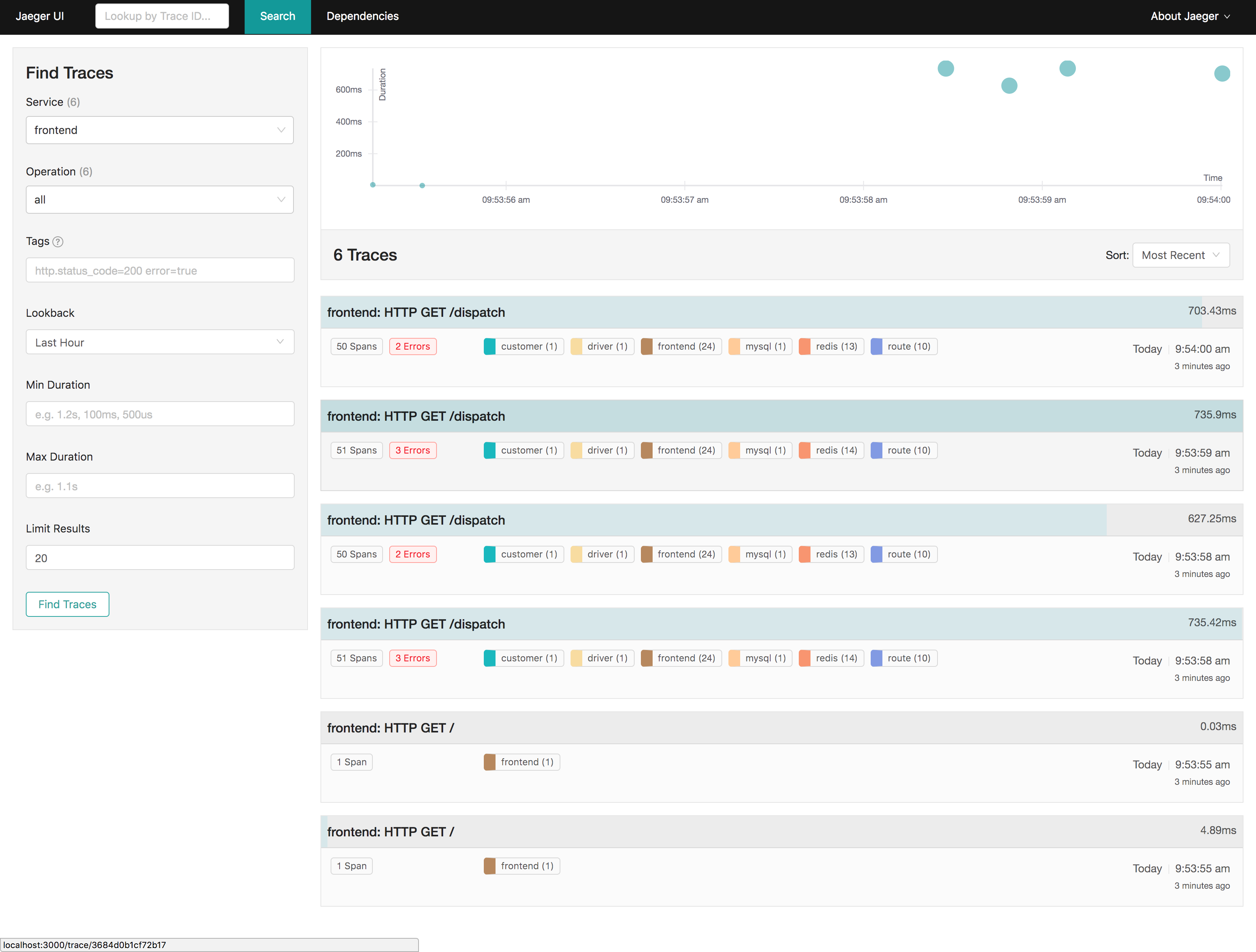
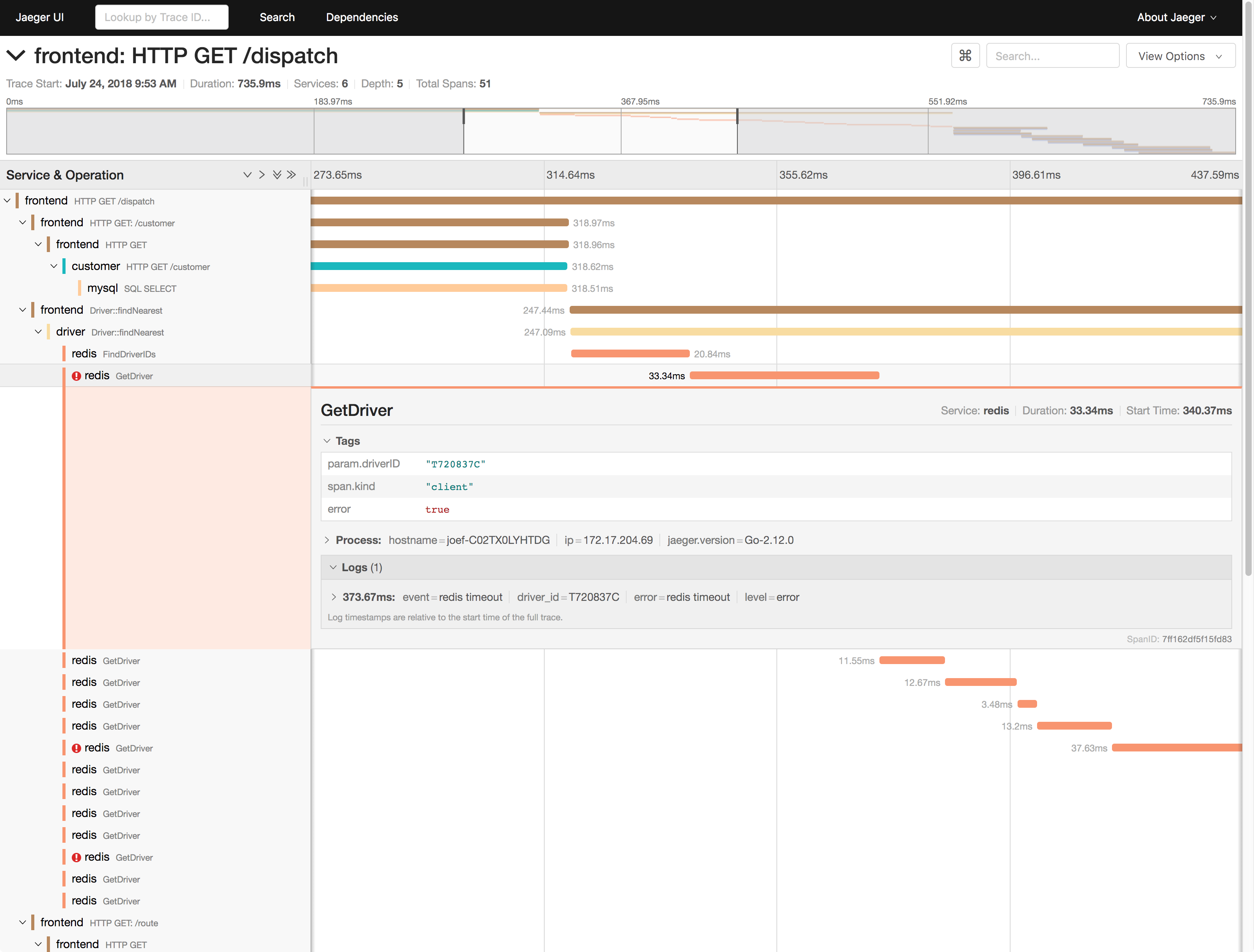
The concrete problem it solves is reading traces. A Jaeger deployment collects spans from instrumented services and stores them, but raw span data is not usable by a person debugging a slow checkout or a failed downstream call. Jaeger UI provides the Trace Search and Trace Details views that turn that stored data into something readable: a searchable list of traces and a per-trace breakdown of the services, operations, and timing along a request path. The facts provided here do not name a separate commercial or open-source product that this interface replaces; within a Jaeger installation it is the standard front end for the query service rather than a drop-in substitute for a third-party dashboard. It also carries UI-level configuration, documented separately in the upstream configuration guide, covering items such as Google Analytics tracking and menu customizations.
Key capabilities
- Trace Search view, shown in the README as
media/ss_search.png, for finding traces before opening them.
- Trace Details view, shown as
media/ss_trace.png, for inspecting a single distributed trace.
- Distributed tracing visualization for Jaeger-collected spans, per the README's stated purpose.
- React-based front end implemented in TypeScript, matching the
react, reactjs, and javascript topics.
- UI configuration for Google Analytics tracking, menu customization, and related behaviour, documented at
jaegertracing.io/docs/latest/frontend-ui/.
- Apache 2.0 licensing declared in
LICENSE, with FOSSA and OpenSSF Scorecard badges in the README.
- OpenTracing and APM topic alignment, reflecting the tracing ecosystem the interface serves.
Who uses it and how
- Site reliability engineers and on-call responders who need to follow a request across service boundaries during an incident.
- Platform and application teams running a self-hosted Jaeger deployment, using the UI as the default interface to their own trace store.
- Distributed-systems developers verifying that instrumentation emits spans for the operations they expect.
- Operators tuning the front end through the configuration guide, for example enabling Google Analytics tracking or adjusting the menu.
- Contributors working on the interface itself, with build, code-coverage, and FOSSA badges plus a
hacktoberfest topic signalling an open contribution path.
Getting started
The README excerpt does not include an install command, package name, Docker image, or compose file; it points to CONTRIBUTING.md for development setup and to jaegertracing.io/docs/latest/frontend-ui/ for UI configuration. Anyone deploying Jaeger in production should follow the upstream Jaeger documentation on jaegertracing.io rather than the README alone.
How it compares
No list of paid products replaced by this project appears in the facts, and no comparable tracing interfaces are named either. Within this registry entry it therefore stands alone as the Jaeger tracing UI, distinguished not by a comparison table but by its Apache 2.0 licence, its TypeScript and React implementation, and its position as the official front end for Jaeger trace data.
When to use it — and when not to
A self-hoster who runs Jaeger UI must also run the surrounding Jaeger stack, including a trace store and the query service, since this repository is the interface and not the collector or database; the README excerpt does not state whether any additional service such as SMTP is required. Teams not using Jaeger, or those needing a tracing front end for a different backend, should not adopt it, because the views are built around Jaeger's data. The README itself is thin, offering screenshots, contribution pointers, and a configuration link but no installation instructions in the excerpt shown, and the repository carried 225 open issues at the time of the recorded last push on 2026-09-16, so prospective users should treat the upstream documentation as the source of truth.