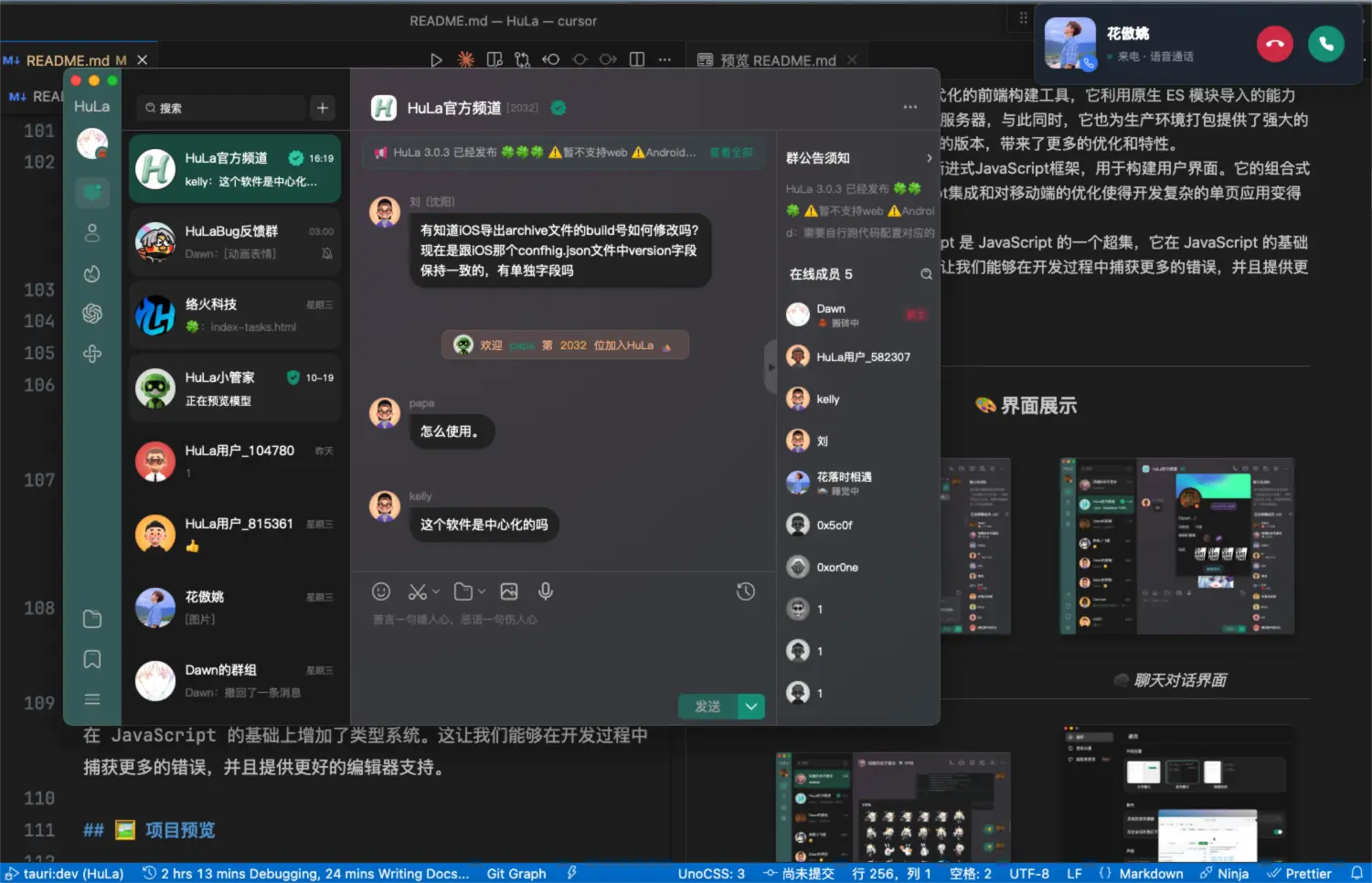
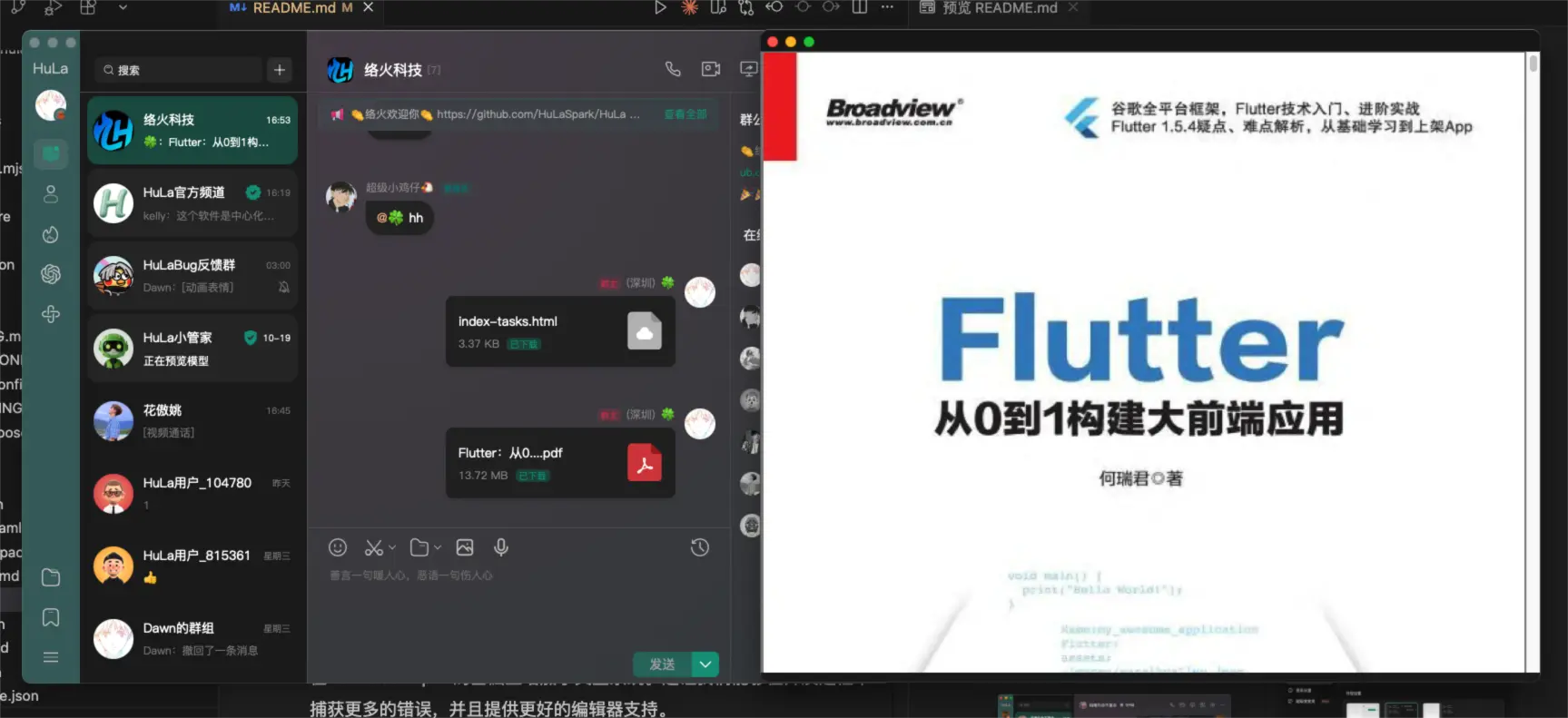
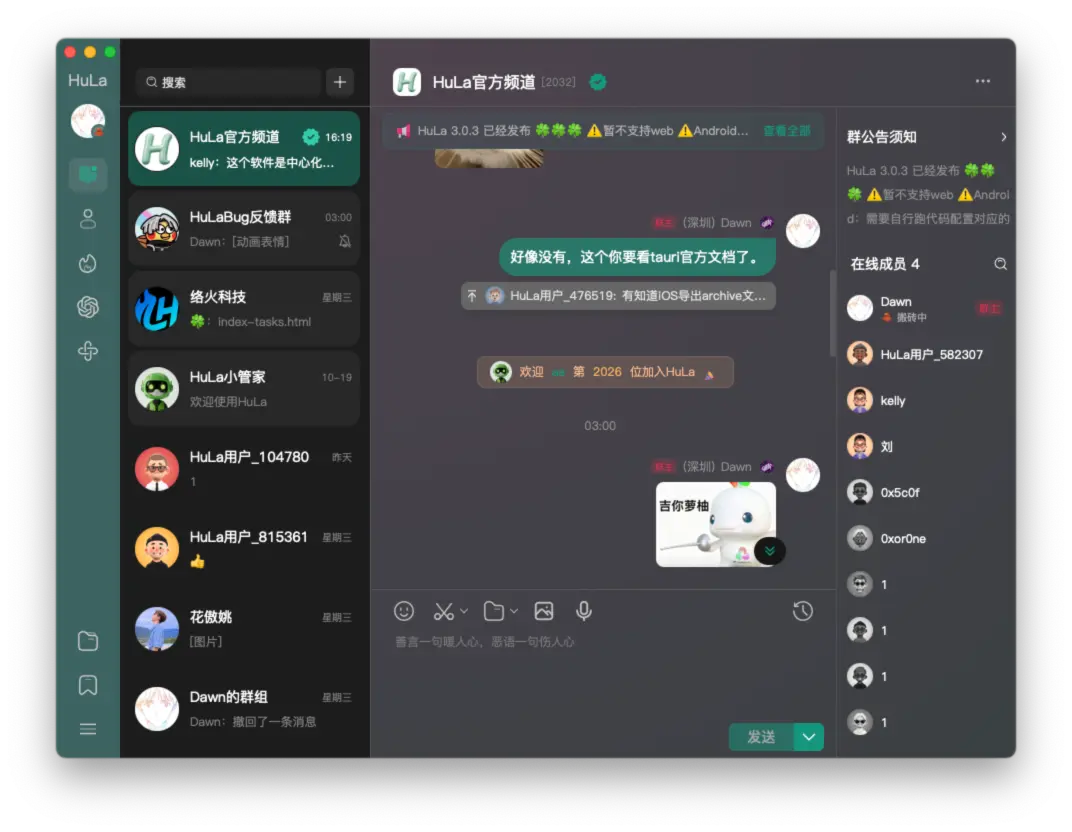
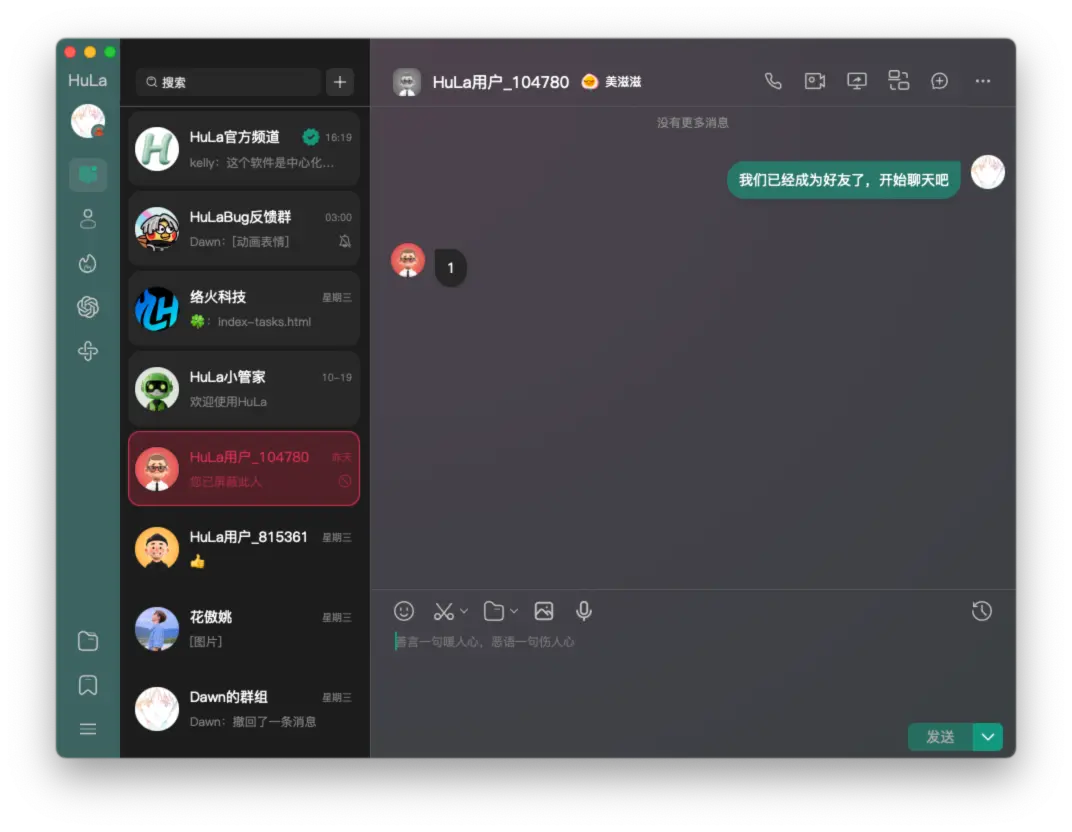
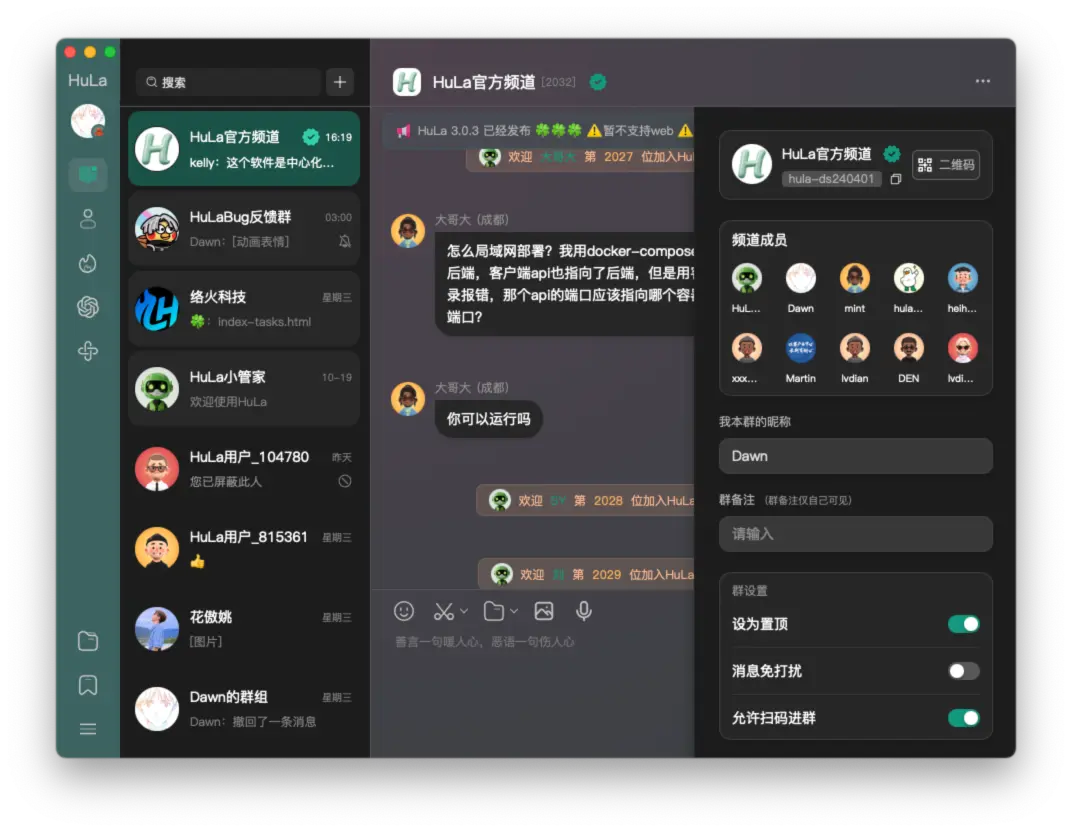
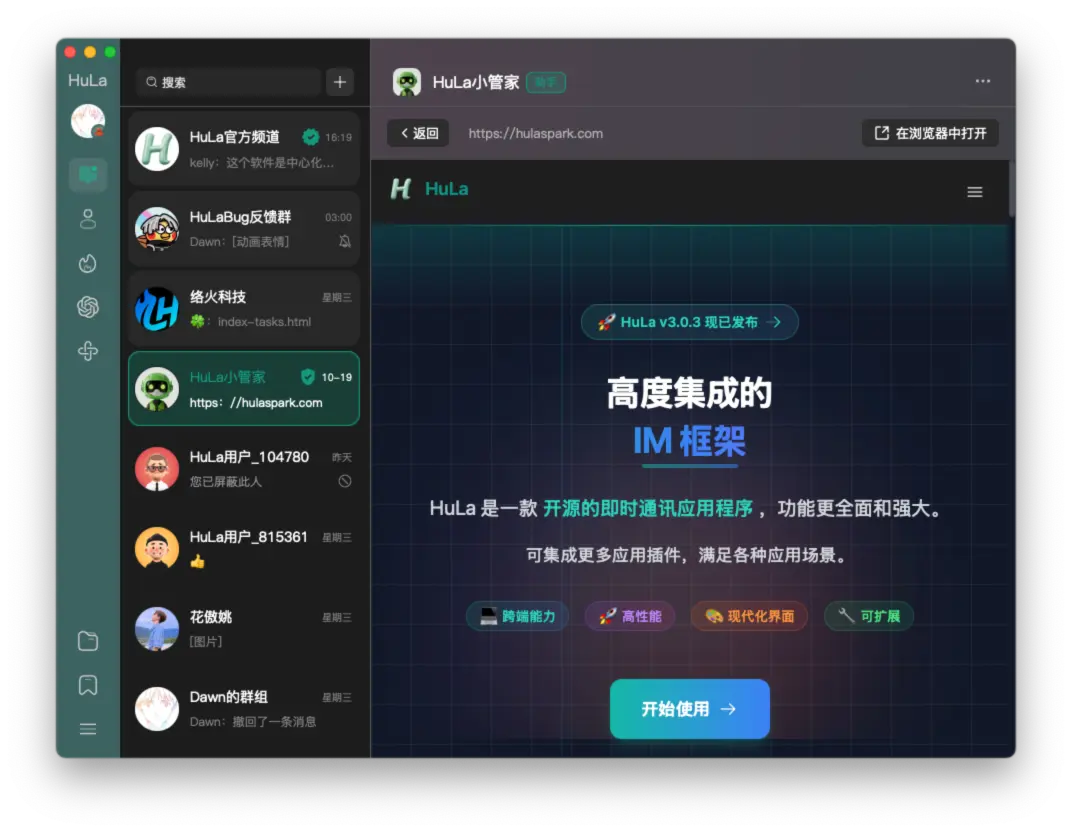
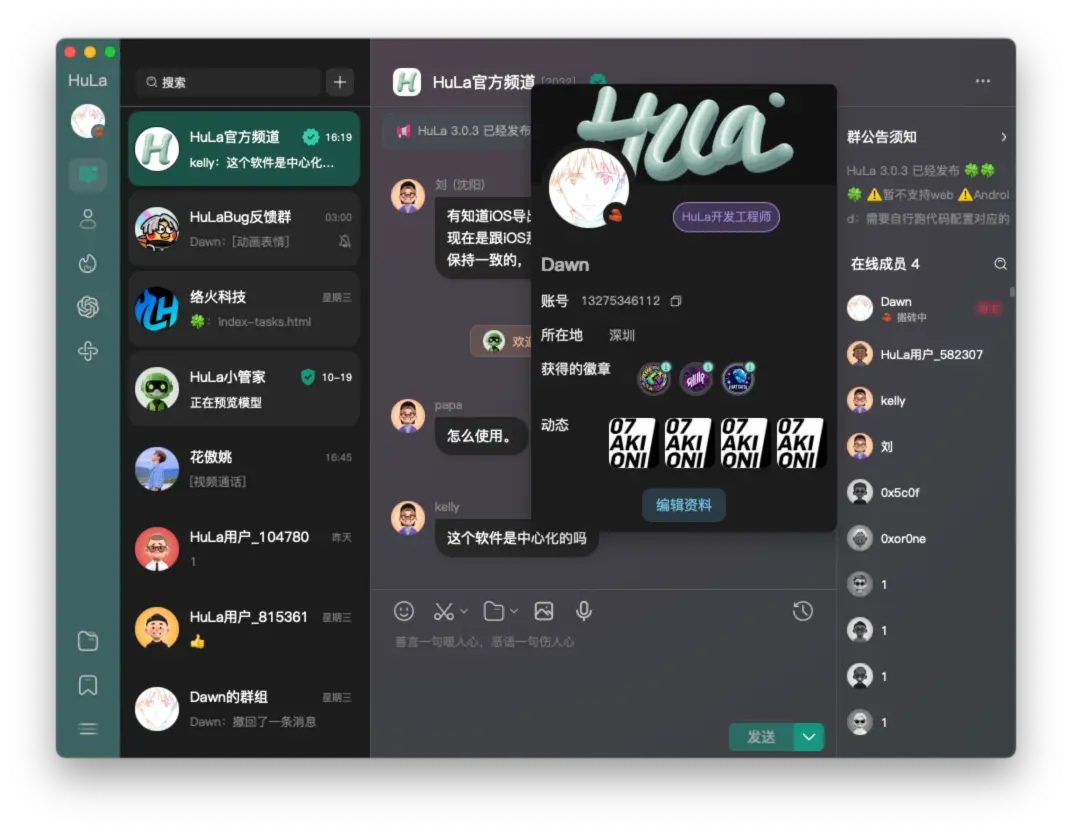
HuLa is an open-source, cross-platform instant messaging system built on Tauri, Vite 7, Vue 3 and TypeScript, aimed at teams and individuals who want a performant chat client they can run on Windows, macOS, Linux, Android and iOS without depending on a hosted messenger they do not control.
What it is
HuLa is a complete instant messaging system rather than a chat widget. The client is a desktop and mobile application packaged with Tauri, which supplies a lightweight, low-resource application container so that the interface can be built with web technology while still shipping as a native binary. The front end is written in Vue 3 with TypeScript for type safety and built with Vite 7, which provides a fast development server over native ES module imports and a production bundling pipeline. A separate server component is published by the project on GitHub and Gitee, so the messaging backend is part of the offering rather than something the adopter has to invent.
The problem it solves is the gap between a browser-based chat prototype and a real messaging client. HuLa lives in the Tauri desktop application ecosystem, where the alternative is usually an Electron-style stack that carries a much larger resource footprint, or a web-only application that cannot reach desktop capabilities. It gives an adopter a working messenger with authentication, contact management, group chat and message history already implemented, along with a documented environment configuration and startup tutorial. The concrete thing it replaces is the bespoke chat front end that a team would otherwise have to assemble and maintain itself before it could ship a single message.
Key capabilities
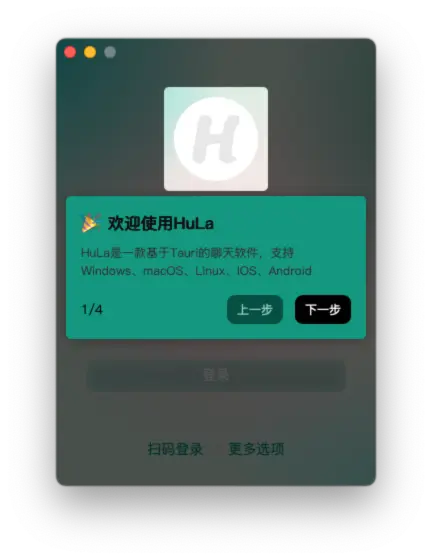
- Account and password login plus QR code login, with multi-device login management.
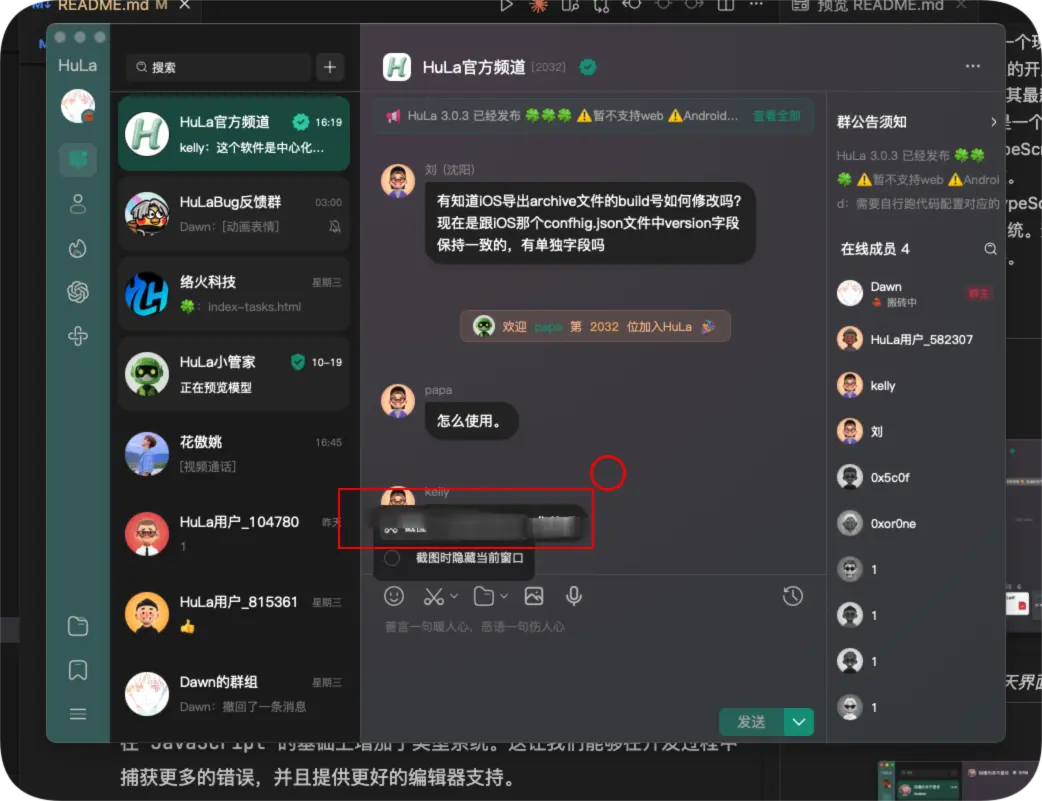
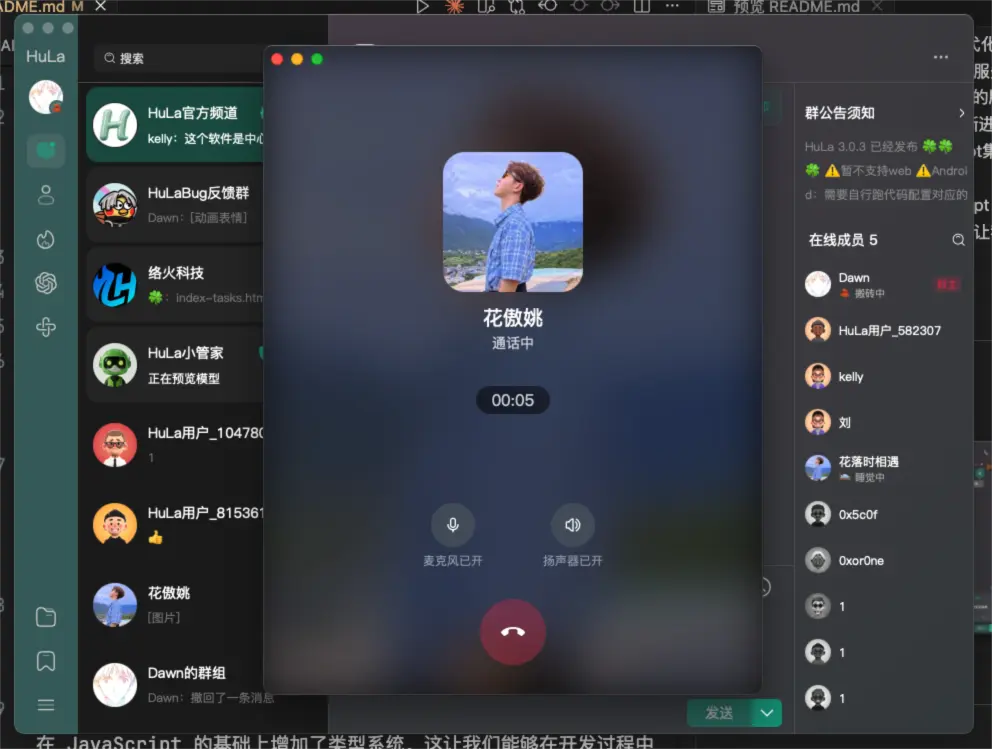
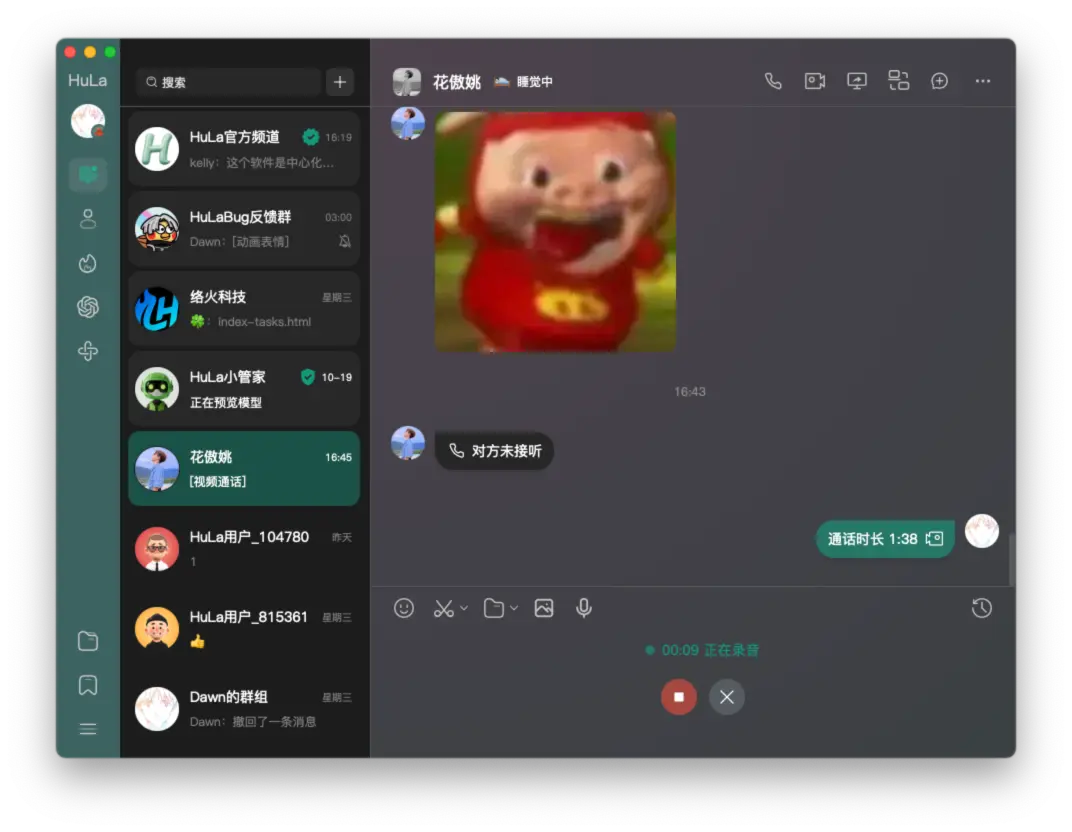
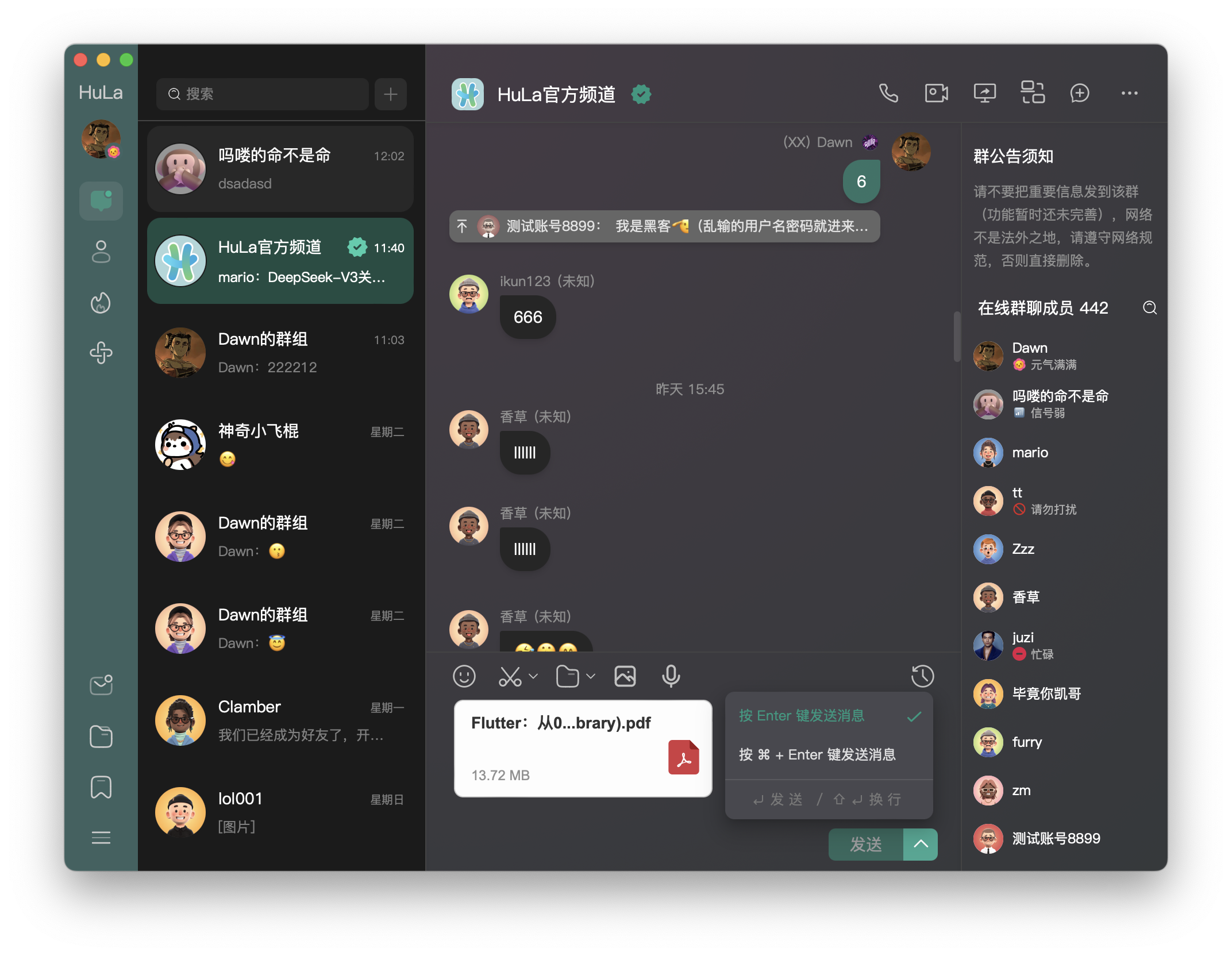
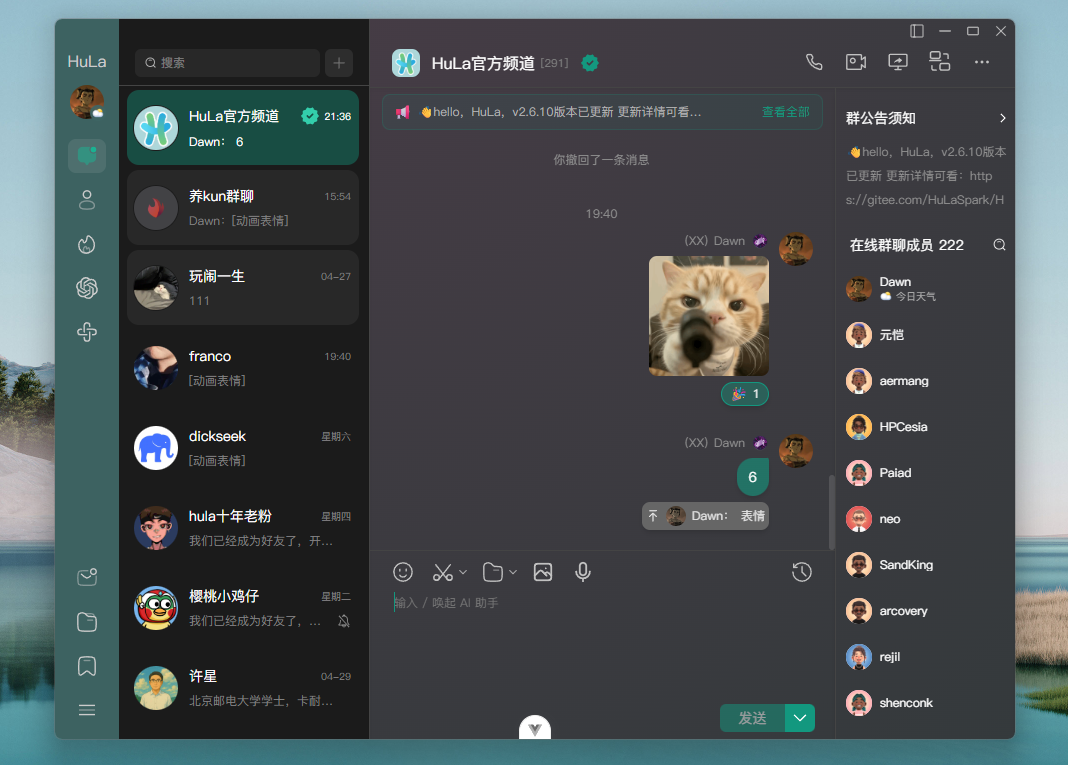
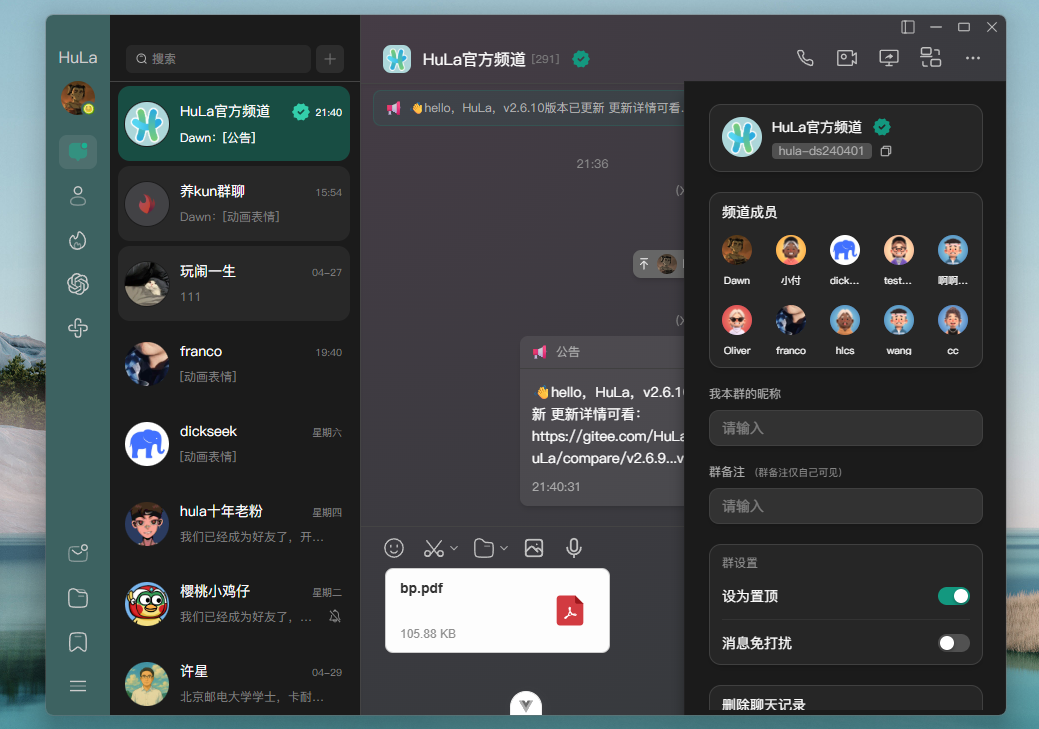
- One-to-one private chat and group chat, with message recall, @mentions and replies, and read status.
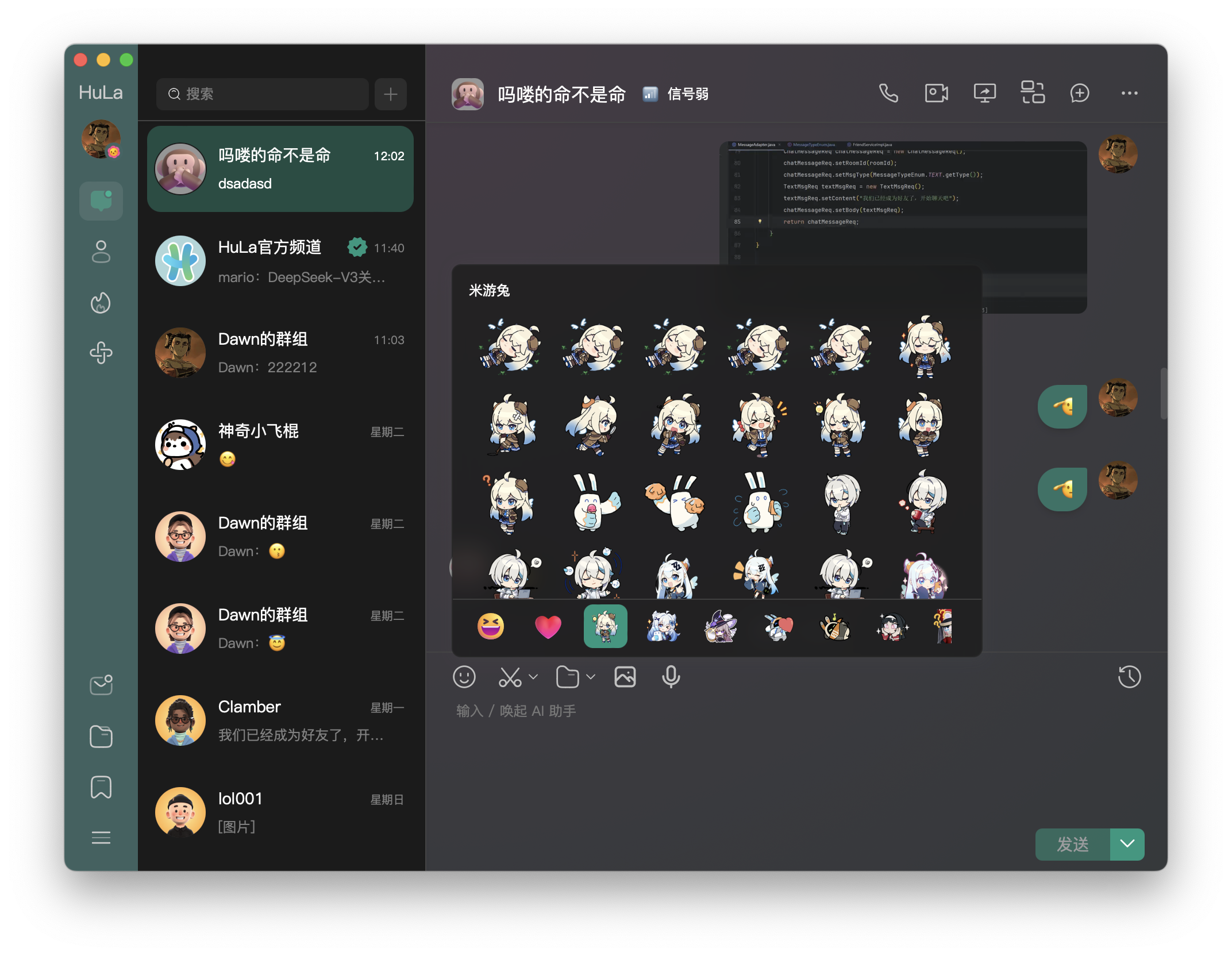
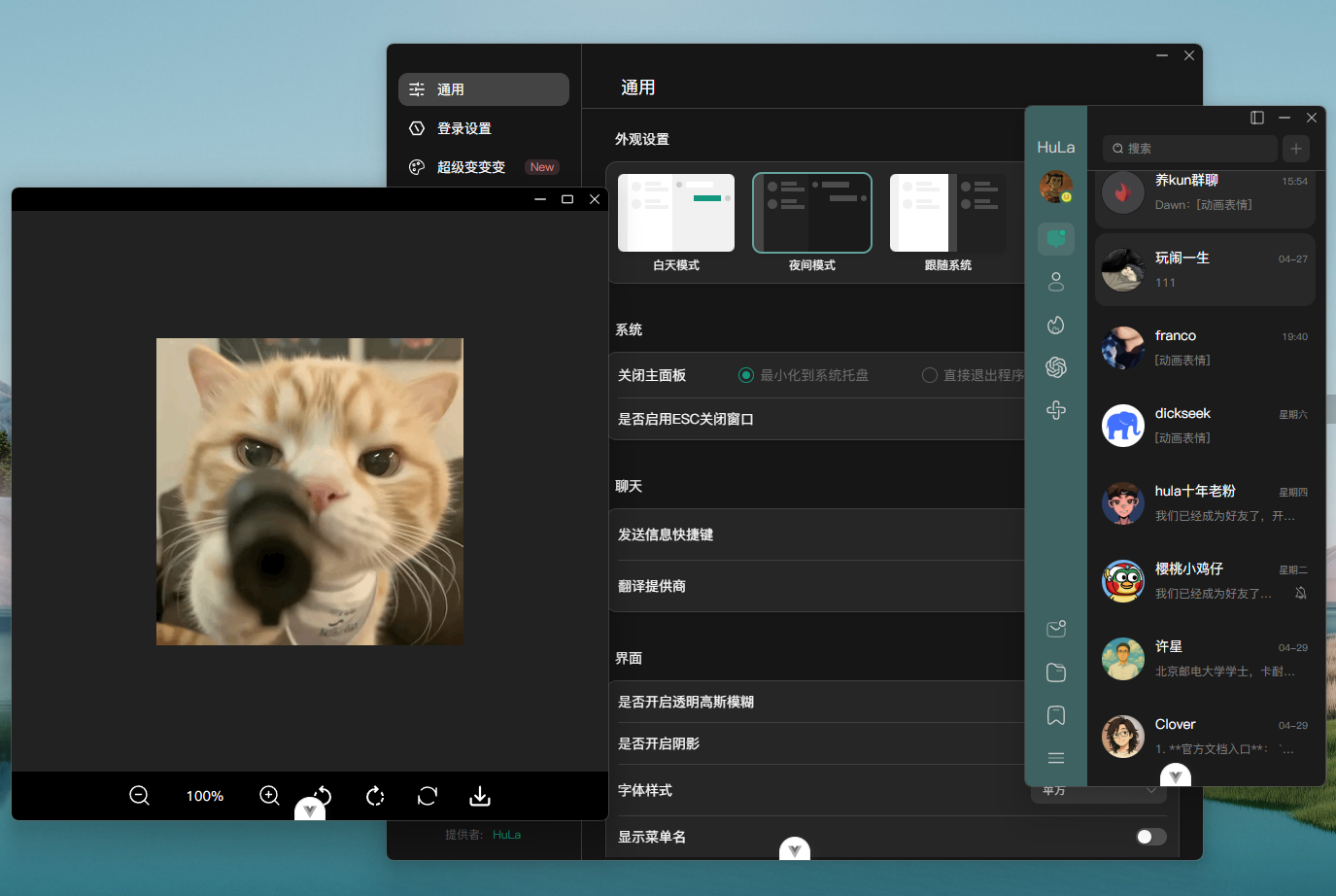
- Rich message handling: emoji and sticker packs, message context menus, link preview cards, message likes, message forwarding and history record management.
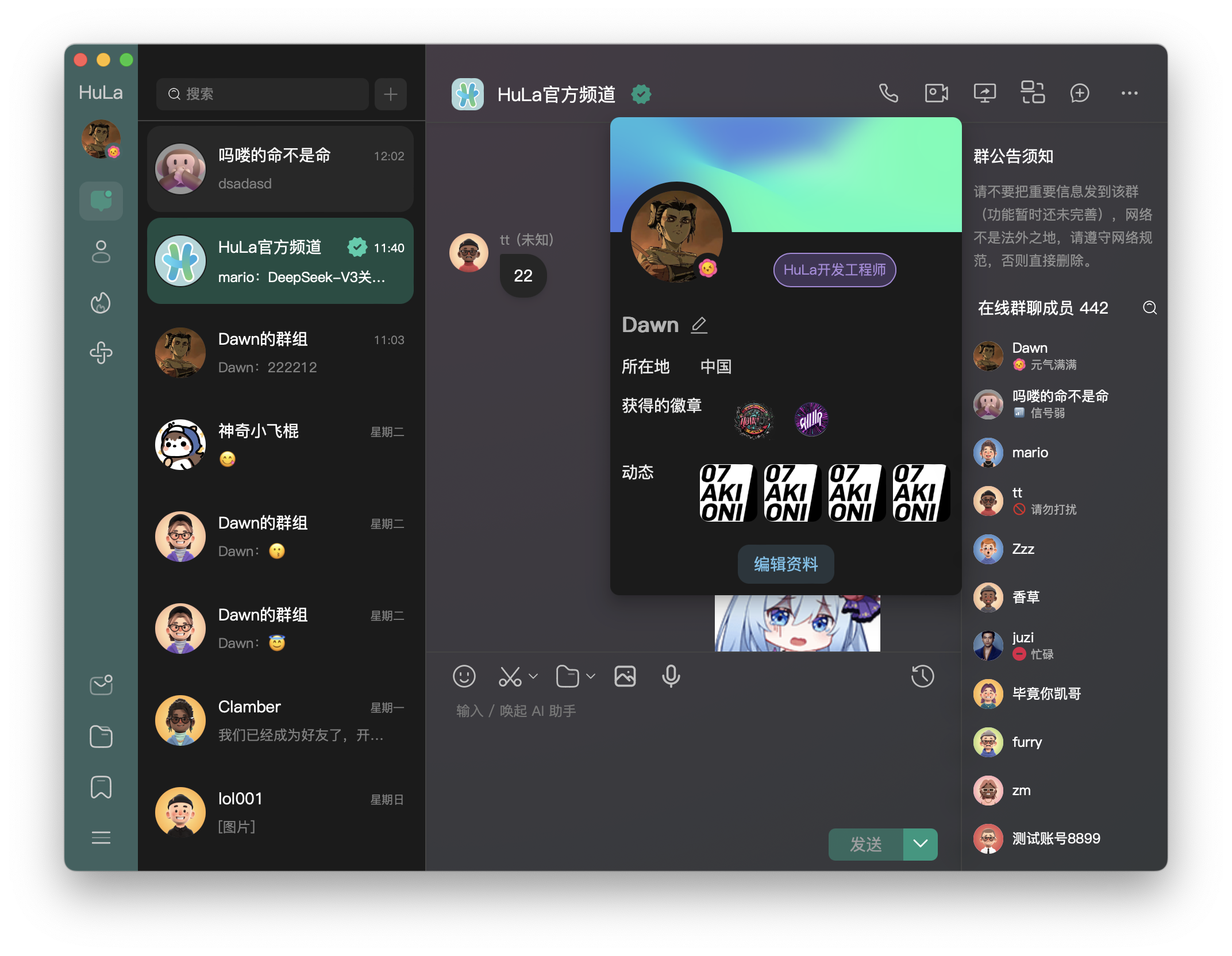
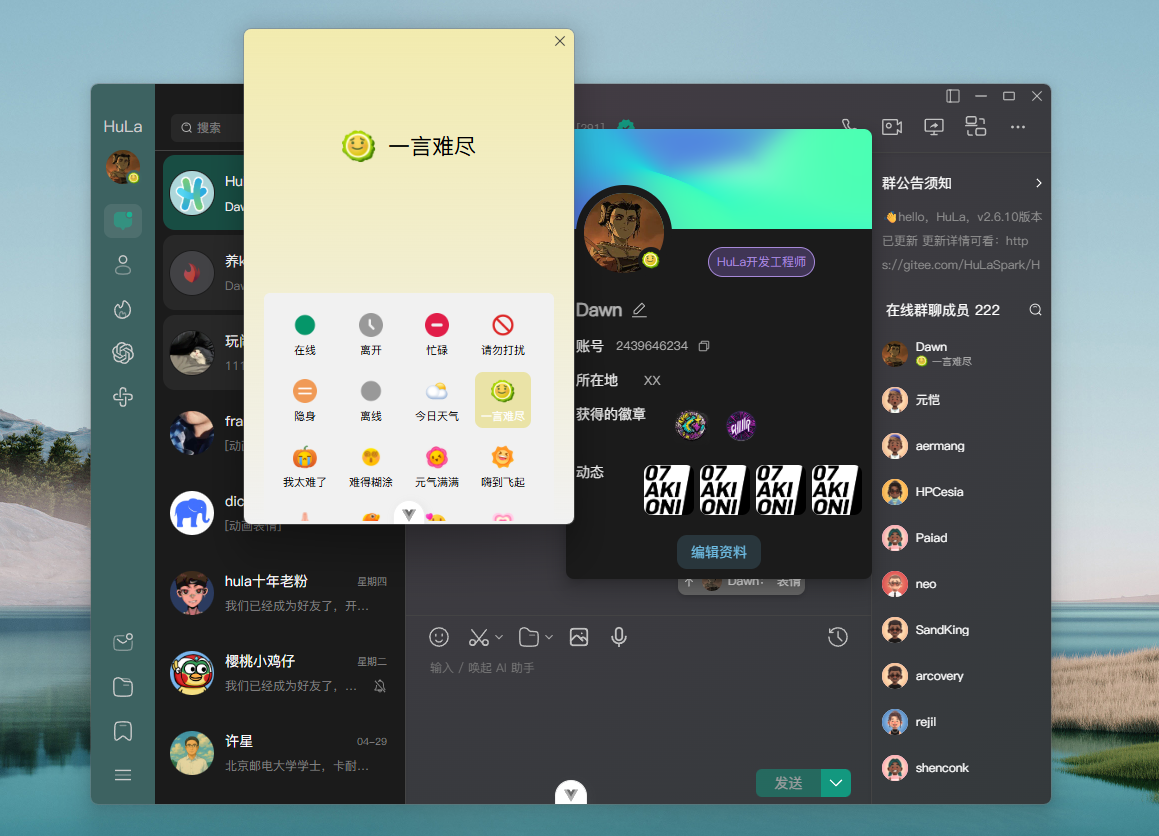
- Social management covering friend add and delete, friend search, online status, a friend badge system, blocking, mute and do-not-disturb, remark and nickname management.
- Group administration through group creation and management, group announcements, and QR code joining of groups.
- Location capture and sending, plus navigating through the message context menu.
- Apache-2.0 licence, with a stack of Tauri, Vite 7, Vue 3 and TypeScript under the hood.
Who uses it and how
- Teams that need an in-house messenger on Windows 10 or Windows 11 desktops and do not want to route internal conversation through a third-party service.
- Organisations with mixed fleets, because the same codebase targets macOS, Linux, Android and iOS alongside Windows from a single Vue 3 project.
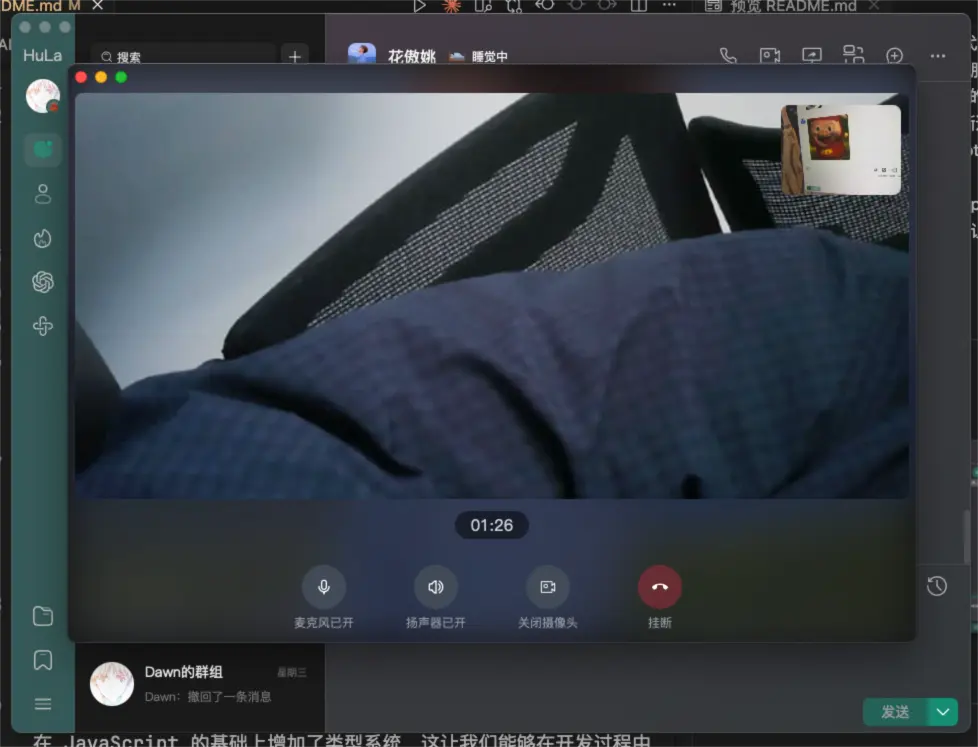
- Mobile-first or field users on Android 12 or later, who get group chat, location sending and QR code login on the same account as their desktop session.
- Small development groups that want a chat client they can read, fork and extend, given the permissive licence and the public server repository.
Getting started
Start from the environment configuration and startup tutorial linked at hulaspark.com, and take the server component from the project's GitHub or Gitee repository. There is no published npm package, Docker image or compose file named in the facts, so the documented path is a source build following those instructions.
How it compares
No list of paid products that HuLa replaces is provided, and no comparable tools are named in the facts, so it stands alone in this registry.
When to use it — and when not
A self-hoster takes on the operation of both the client build and the server component published on GitHub and Gitee, including whatever environment configuration the startup tutorial describes. Web deployment is not supported as shipped, since browser use requires custom removal of desktop-only functionality, so anyone needing a pure web client should look elsewhere. The README is a feature-status document rather than an architectural guide, and details of the required database, storage or mail infrastructure are not spelled out in the material available here, so budget time to read the server repository before committing.