home-assistant-glow is a free, open source internet of things (iot) project written in several languages and released under MIT. It has 1,270 GitHub stars, 182 forks and 12 open issues, and was last pushed 2 days ago. On this registry it ranks #36 of 49 tracked projects in Internet of Things (IoT), with 5 head-to-head comparisons available.

What is home-assistant-glow?

Home Assistant Glow is an open-source firmware and hardware project that reads the pulse LED on an electricity meter and sends those measurements to Home Assistant, built for home-automation users whose meter has no P1 port and who are willing to assemble a small ESP-based sensor themselves.

What it is

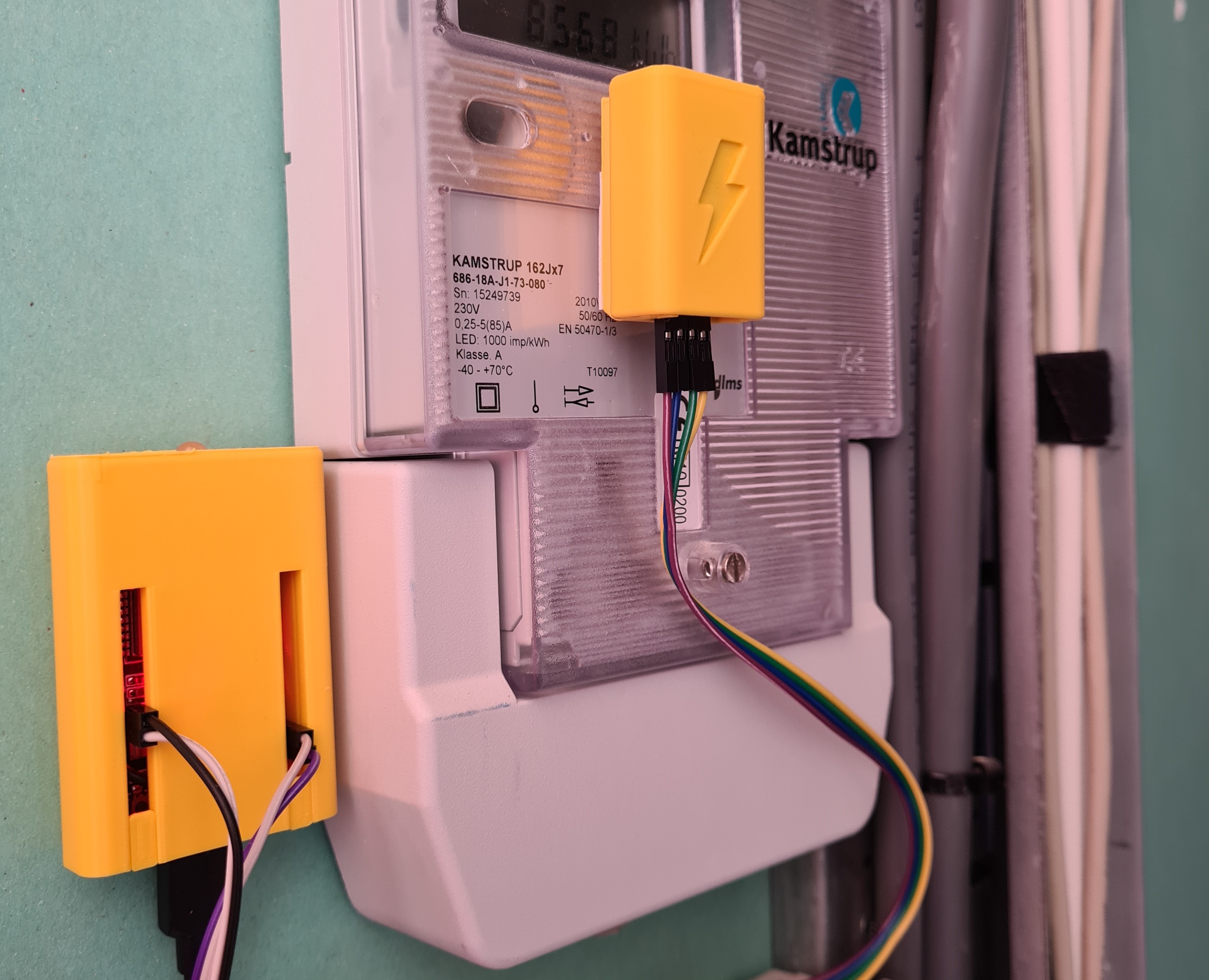
Home Assistant Glow makes a "not so smart" electricity meter readable by watching the pulse LED that is present on most meters. Work on it began during an internship at Nabu Casa in the first half of 2021, focused on energy management for the house and on collecting energy data to display on a dashboard. The project lives in the Home Assistant and ESPHome ecosystem: an LM393 photodiode detects the pulses, and the firmware runs on an ESP32 (recommended), an ESP32-C3 or an ESP8266. A 3D-printable case is included so the assembly can be hidden inside the meter cupboard, and the source is published under the MIT licence with documentation at glow-energy.io.

The problem it solves is a gap in Home Assistant's own energy tooling. Since Home Assistant release 2021.8, the Energy dashboard can display household energy usage, but not everyone has a smart meter or one equipped with a P1 port to read that data from. Home Assistant Glow substitutes for that missing port: rather than reading a data connection, it reads the meter's pulse LED and reconstructs consumption from it, using the imp/kWh rate marked on the meter as the conversion value.

Key capabilities

  • Detects meter pulses with an LM393 photodiode, using the meter's imp/kWh rate as the configuration value.
  • Runs as ESPHome firmware on an ESP32 (recommended), ESP32-C3 or ESP8266 microcontroller.
  • Feeds measurements into Home Assistant, where they can be shown on the Energy dashboard introduced in release 2021.8.
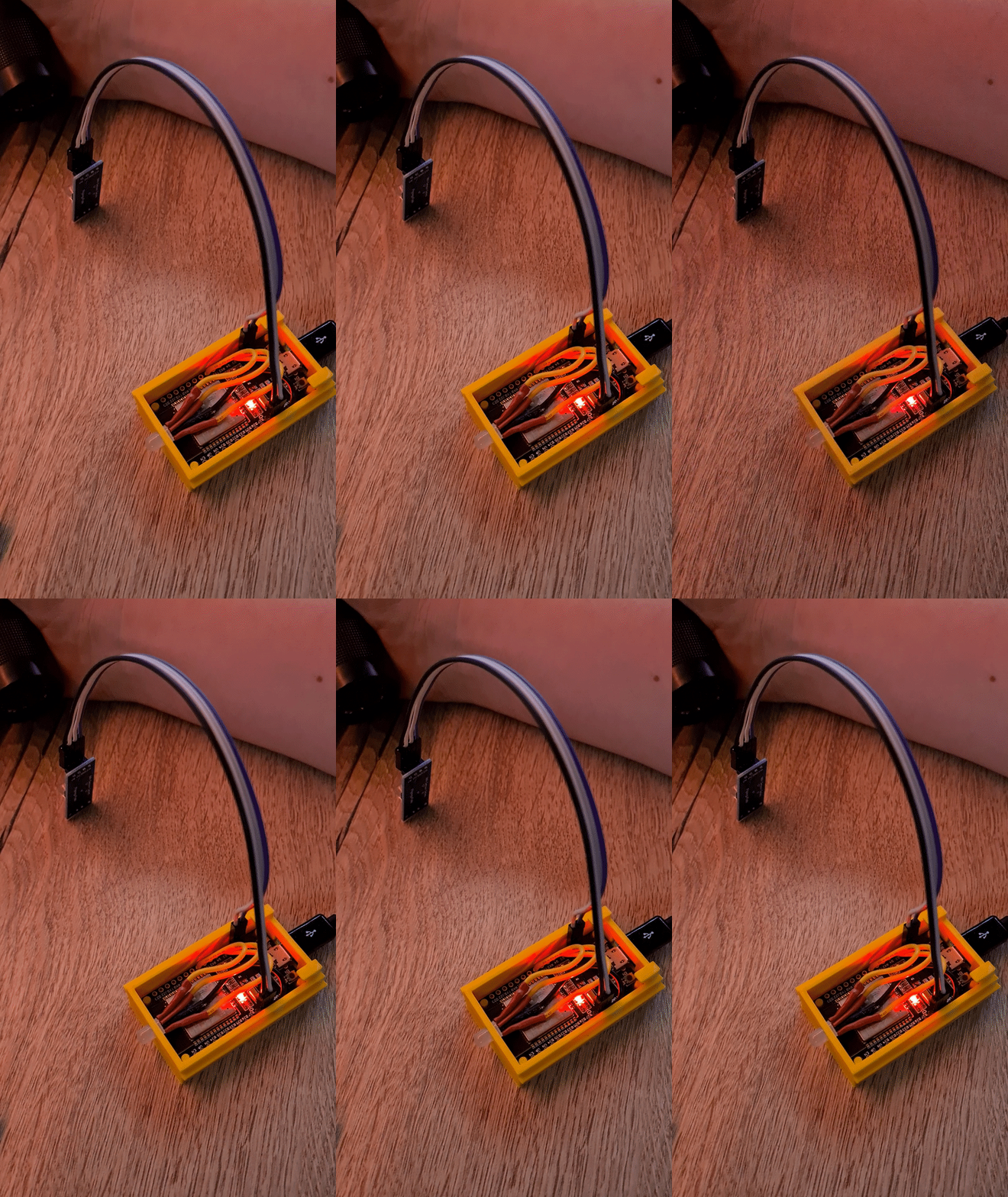
  • Includes a 5mm 4-pin RGB LED with common cathode for local status indication.
  • Ships a 3D-printable case in the repository's case folder so the device fits inside a meter cupboard.
  • Supports firmware installation through esp web tools, following the walkthrough on the documentation website.
  • Maintains a separate release branch for copying YAML configuration, because the default branch shows development and may be ahead of the released version.

Who uses it and how

  • Households whose electricity meter has a pulse LED and an imp/kWh marking but no P1 port, and which therefore cannot report usage to Home Assistant directly.
  • Home Assistant users who want their consumption to appear on the Energy dashboard alongside the rest of their home data.
  • Makers comfortable sourcing the parts: microcontroller, female-to-female Dupont jumpers, LM393 photodiode, RGB LED and a printed case.
  • ESPHome users willing to flash firmware and keep YAML configuration working for the device.
  • A community of builders around the repository, which has accumulated 1,270 stars and 182 forks.

Getting started

The recommended path is to install the latest firmware on the ESP using esp web tools, following the walkthrough on the documentation website at glow-energy.io, which covers the hardware needed and how to add the device to Home Assistant. YAML code should be copied from the release branch rather than the default branch.

How it compares

Home Assistant Glow does not compete with ESPHome — it is built with it, and ESPHome supplies the firmware layer that runs on the microcontroller. Nor does it compete with Home Assistant's Energy dashboard: it feeds that dashboard, providing a data source in homes where a P1 port is not available.

When to use it — and when not to

A self-hoster has to source and assemble the hardware — microcontroller, LM393 photodiode, RGB LED, jumpers and a 3D-printed case — flash the firmware, maintain the ESPHome configuration, and already run Home Assistant for the data to be useful. It is the wrong choice for anyone whose meter already exposes a working P1 port, for meters without a readable pulse LED or imp/kWh rate, and for those who want a ready-made commercial device rather than a small build project. Because the default branch tracks development and may be ahead of the released version, YAML should be taken from the release branch, and the affiliate links in the README may appear broken while an ad-blocker is active.

project readme (upstream, from github) — read inline

Home Assistant Glow 🌟

Project Maintenance License Forks Stargazers Issues

GitHub Activity GitHub Last Commit Contributors

During my internship at Nabu Casa in the first half of 2021, I focused on energy management for your house, how to collect all energy data and display it on a dashboard. Since Home Assistant release 2021.8 it's possible to use the Home Assistant Energy dashboard to display your energy usage. Unfortunately, not everyone has a smart meter and/or is equipped with a P1 port. This is where the Home Assistant Glow comes in!

CLICK HERE! To see the Home Assistant Glow in action.

Home Assistant Glow makes a (not so) smart meter without a P1 port easily readable, reading the pulse LED that is always present in most cases and it works with ESPHome! To neatly hide it all in your meter cupboard, a case has been designed that you can 3D print yourself.

How do I know if my meter is supported?

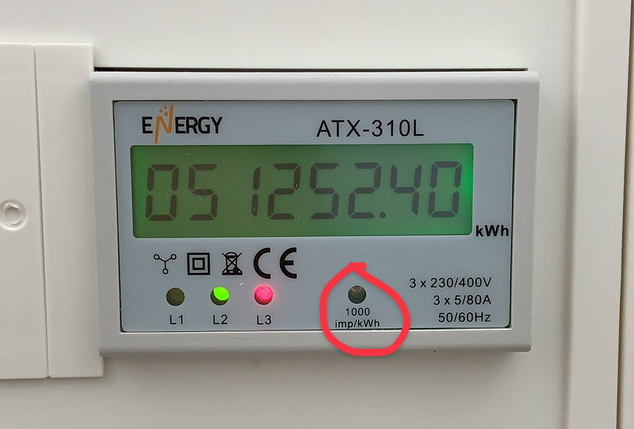
To make sure your meter will work with the Home Assistant Glow, you have to look for the imp/kWh rate on your meter (see picture). Make a note of this value because you may need it later when configuring your device.

Getting Started

[!IMPORTANT] Please note, the default branch shows development and may be ahead of the released version. For copying YAML code, use the release branch. It's best to use the website to install the latest firmware on your ESP.

On the documentation website you will find a complete walkthrough with which hardware you need, how to install the correct firmware on your ESP (using esp web tools) and how to add it to Home Assistant.

Hardware

First, fill your 🛒 or see if you already have the components below.

Choose one of the listed microcontrollers, but keep in mind that the ESP32 is recommended.

Contributing

We welcome contributions! Please read the contribution guidelines before submitting PRs.

Thanks to everyone who already contributed! ❤️

For a full list of all authors and contributors, check the contributor's page.

Disclamer

Affiliate links are used on this repository to support the Home Assistant Glow 🌟 project. Some Ad-blockers might block these links and thus they seem to appear broken. You will have to temporarily disable ad-blocker to open these links.

License

MIT License

Copyright (c) 2021-2026 Klaas Schoute

Permission is hereby granted, free of charge, to any person obtaining a copy of this software and associated documentation files (the "Software"), to deal in the Software without restriction, including without limitation the rights to use, copy, modify, merge, publish, distribute, sublicense, and/or sell copies of the Software, and to permit persons to whom the Software is furnished to do so, subject to the following conditions:

The above copyright notice and this permission notice shall be included in all copies or substantial portions of the Software.

THE SOFTWARE IS PROVIDED "AS IS", WITHOUT WARRANTY OF ANY KIND, EXPRESS OR IMPLIED, INCLUDING BUT NOT LIMITED TO THE WARRANTIES OF MERCHANTABILITY, FITNESS FOR A PARTICULAR PURPOSE AND NONINFRINGEMENT. IN NO EVENT SHALL THE AUTHORS OR COPYRIGHT HOLDERS BE LIABLE FOR ANY CLAIM, DAMAGES OR OTHER LIABILITY, WHETHER IN AN ACTION OF CONTRACT, TORT OR OTHERWISE, ARISING FROM, OUT OF OR IN CONNECTION WITH THE SOFTWARE OR THE USE OR OTHER DEALINGS IN THE SOFTWARE.

Frequently asked questions

Is home-assistant-glow free to use?

home-assistant-glow is open source under the MIT licence. There is no licence fee and no seat count — you can self-host it or, where the project offers one, pay a vendor for a managed version instead.

What does home-assistant-glow do?

⚡ The power of energy measurements in your house

What is home-assistant-glow written in?

home-assistant-glow's source is publicly available at https://github.com/klaasnicolaas/home-assistant-glow, with 1,270 GitHub stars.