google-maps-scraper is a free, open source data extraction & web scraping project written in Go and released under MIT. It has 5,901 GitHub stars, 931 forks and 56 open issues, and was last pushed 5 days ago. On this registry it ranks #32 of 45 tracked projects in Data Extraction & Web Scraping, with 5 head-to-head comparisons available. It gained 47 stars over the last 3 tracked days.

What is google-maps-scraper?

google-maps-scraper is an MIT-licensed Go tool that scrapes Google Maps for business data — name, address, phone number, website URL, rating, review count, reviews, email, latitude and longitude — and is aimed at developers, sales and lead-generation teams, and local-business researchers who need those records in CSV or JSON.

What it is

The project is a Google Maps scraper written in Go, distributed under the MIT licence and developed in the open on GitHub, where it has 5,895 stars, 926 forks and 56 open issues. It ships in several shapes from one codebase: a command line tool, a browser-based Web UI, a REST API, an AI agent skill, and an optional self-hosted platform whose multi-user edition is documented in docs/saas.md. The topic list — distributed-scraper, distributed-scraping, web-scraper, web-scraping, google-maps-scraping — describes both the domain and the architecture.

The concrete problem it solves is getting structured Google Maps listings out of the map and into a file or an application without paying a per-lead vendor. It replaces the paid, closed Google Maps scrapers advertised in its own README as sponsors, namely the G Maps Extractor Chrome extension and the Scrap.io country-scale extractor, and it does so with a tool the operator runs and controls rather than a hosted account.

Key capabilities

  • Extraction of the name, address, phone number, website URL, rating, review count, reviews, email, latitude and longitude for each place, with CSV and JSON as the output formats.
  • A command line interface for pulling leads into CSV or JSON directly.
  • A REST API so scraping can be automated from an application.
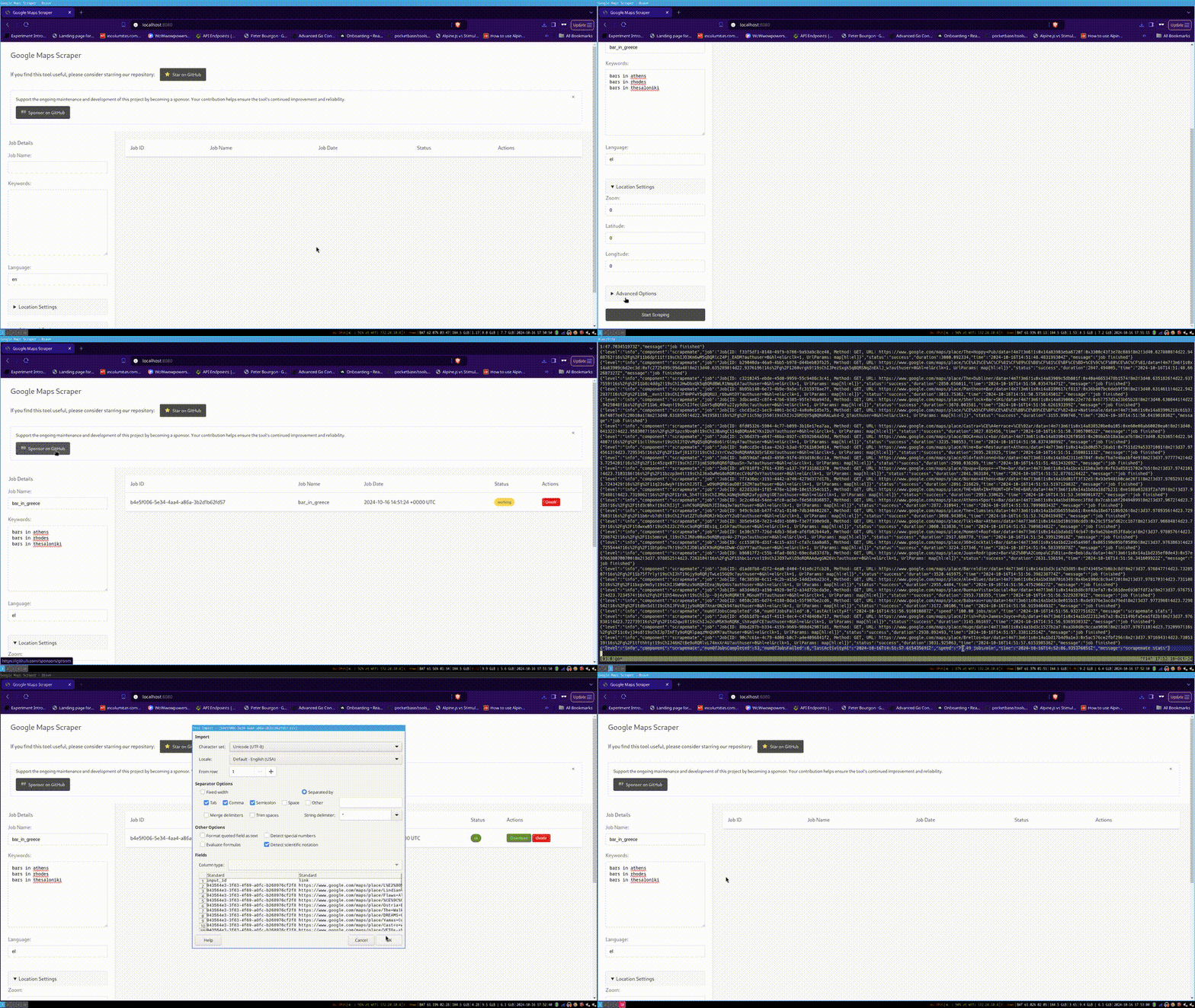
  • A Web UI that runs locally in a browser.
  • An AI agent skill installed with npx skills add gosom/google-maps-scraper, compatible with Claude Code, Codex, Cursor, GitHub Copilot and any Agent Skills-compatible tool.
  • A distributed scraper design, with an optional self-hosted platform and a multi-user SaaS Edition documented in docs/saas.md.
  • Proxy handling: supply your own proxy, continue without one, or review three randomly selected proxy sponsors, with credentials entered through a masked local terminal prompt and never pasted into the agent chat.

Who uses it and how

  • Lead-generation and sales prospecting teams pulling business contacts for outreach.
  • Local business research and data enrichment work, where listings are matched against existing records.
  • Developers automating scraping from their own applications through the REST API.
  • Operators running a multi-user scraping platform via the SaaS Edition.
  • AI agent users who describe the leads they want in plain language — for example, "Find dentists in Berlin and include their websites and email addresses" — and let the agent plan searches, run validation, start the full local scrape and monitor it.

Getting started

Install the agent skill with npx skills add gosom/google-maps-scraper; the CLI, Web UI and REST API paths are documented in the README alongside docs/recipes.md for common workflows. Agent-driven use requires Docker and Node.js on macOS, Linux, or Windows through WSL.

How it compares

Against the paid products listed in the README — Coreclaw, G Maps Extractor and Scrap.io — the difference is the licence and the running model: this project is MIT-licensed and self-hosted, so the operator holds the data and the infrastructure instead of a vendor account. Those alternatives are positioned as no-code extensions or managed platforms with free-lead allowances, while this one is code the user deploys.

When to use it — and when not to

A self-hoster must operate Docker and Node.js, and larger crawls need proxies configured, so teams without that capacity, or those who want a no-code Chrome extension, are better served by the sponsored alternatives. The repository carried 56 open issues at the last push on 13 September 2026, and the README excerpt available here is truncated mid-sentence, so some documentation detail should be checked at the source before relying on it. The MIT licence itself is unambiguous.

project readme (upstream, from github) — read inline

Google Maps Scraper

GitHub Stars GitHub Forks Tweet

Build Status Go Report Card GoDoc License: MIT Discord

Extract Google Maps business leads, emails, reviews, phone numbers, websites, ratings, coordinates, and more with a free open-source CLI, Web UI, REST API, and optional self-hosted platform.

Use it for lead generation, local business research, sales prospecting, data enrichment, or developer automation.

Ask an AI Agent to Get Leads

The easiest way to use Google Maps Scraper is with an AI coding agent such as Claude Code, Codex, Cursor, GitHub Copilot, or any Agent Skills-compatible tool. You describe the leads you want; the agent plans the searches, runs a small validation, starts the full local scrape, monitors it, and helps you work with the results.

Install the skill:

npx skills add gosom/google-maps-scraper

Then ask your agent in plain language:

Find dentists in Berlin and include their websites and email addresses.

The agent automatically checks for the latest skill and Docker image, then asks only for details it still needs. For larger crawls, you can provide your own proxy, continue without one, or review three randomly selected proxy sponsors. Proxy credentials are entered through a masked local terminal prompt and are never pasted into the agent chat.

Requires Docker and Node.js on macOS, Linux, or Windows through WSL. See how the agent workflow works.

Goal Start here
Get leads into CSV/JSON Command Line
Ask an AI coding agent to run a scrape AI Agent Skill
Run a browser UI locally Web UI
Automate scraping from your app REST API
Run a multi-user scraping platform SaaS Edition
Follow common workflows Recipes

Example GIF

If this project is useful to you, a GitHub star helps others discover it. Sponsorships help fund maintenance and new work.


Sponsored By

This project is made possible by our amazing sponsors

Coreclaw - Full-stack web scraping and data extraction platform
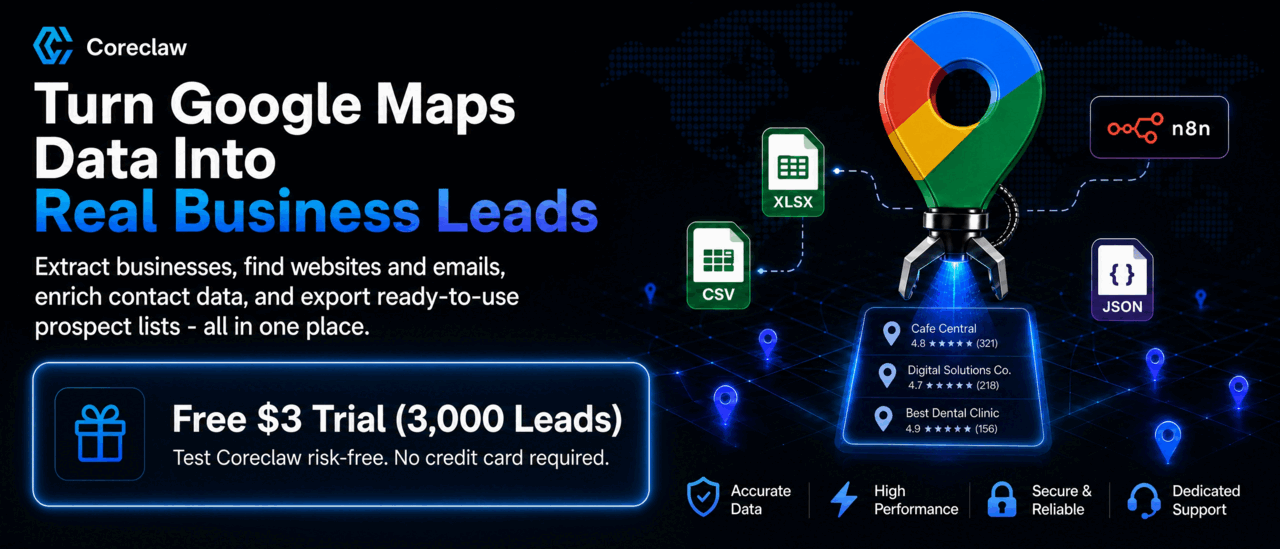
Coreclaw - Full-stack web scraping and data extraction platform

Find ready-made workers for public websites, run them instantly, and get structured data you can export or connect anywhere. Get free test for $3 →


G Maps Extractor - No-code Google Maps scraper
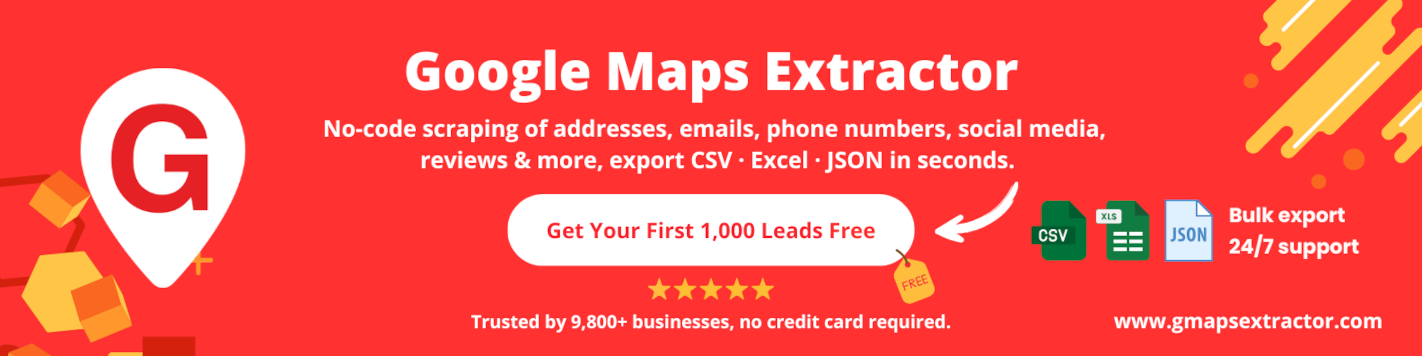
G Maps Extractor

Chrome extension that extracts emails, social profiles, phone numbers, reviews & more. Get 1,000 free leads →


Scrap.io - Extract ALL Google Maps listings at country-scale
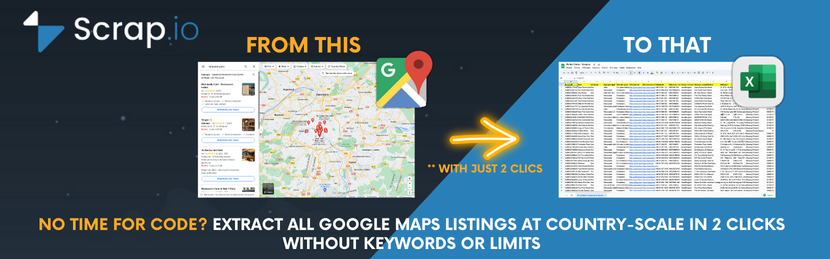
Scrap.io - Extract ALL Google Maps Listings

No keywords needed. No limits. Export millions of businesses in 2 clicks. Try it free →


SerpApi - Google Maps API and 30+ search engine APIs
SerpApi

Fast, reliable, and scalable. Used by Fortune 500 companies. View all APIs →


SearchApi - Google Maps API for SERP scraping
SearchApi

Real-time Google Maps data with a simple integration. Explore the API →


Evomi - Swiss quality proxies for scraping
Evomi

Swiss quality proxies from $0.49/GB across 150+ countries, with 24/7 support and 99.9% uptime. Visit Evomi →


HasData - No-code Google Maps Scraper & Email Extraction
HasData Google Maps Scraper

Extract business leads, emails, addresses, phones, reviews and more. Get 1,000 free credits →


RapidProxy - High-Performance Proxy Solution
RapidProxy

Unlock global access with consistent, high-speed connections from $0.65/GB, 90M+ real residential IPs worldwide, and traffic that never expires. Try it free →


Swiftproxy - Reliable Residential Proxies for Web Scraping
Swiftproxy - Reliable Residential Proxies for Web Scraping

Swiftproxy provides 90M+ clean residential IPs across 220+ locations, with HTTP(S)/SOCKS5 support, flexible targeting, and non-expiring traffic. Ideal for web scraping, data collection, and location-based research. Free testing is available, with 10% off using code PROXY90. Try Swiftproxy now →


TalorData - Fast SERP API for Google Maps and Search Data
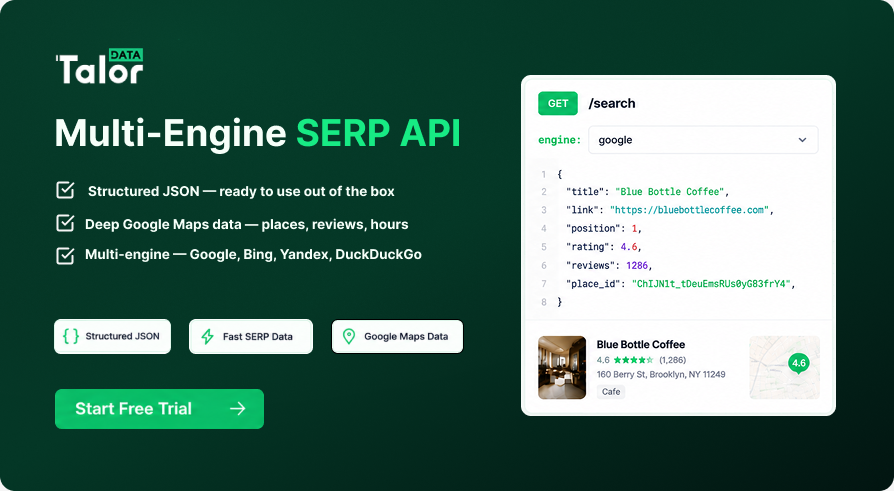
TalorData

Real-time SERP data APIs for Google Maps and search results, with structured JSON / HTML responses and 1,000 free API responses to start. Start using TalorData → | Learn more


Webshare - Premium proxies for scraping at scale
Webshare

The most affordable premium proxies across 195 countries & 80+ million IPs, plus a FREE plan for new users. Learn more


BirdProxies - Resid

readme truncated — read the full docs on github

Frequently asked questions

Is google-maps-scraper free to use?

google-maps-scraper is open source under the MIT licence. There is no licence fee and no seat count — you can self-host it or, where the project offers one, pay a vendor for a managed version instead.

What does google-maps-scraper do?

scrape data from Google Maps. Extracts data such as the name, address, phone number, website URL, rating, reviews number, latitude and longitude, reviews,emai

What is google-maps-scraper written in?

google-maps-scraper is primarily written in Go. Its source is publicly available at https://github.com/gosom/google-maps-scraper, and it has 5,901 GitHub stars.