




Geodesic is a robust Linux toolbox container, crafted to optimize DevOps workflows. This container comes loaded with essential dependencies for a DevOps toolchain. It's designed to bring consistency and boost efficiency across development environments. It achieves this without the need for installing additional software on your workstation. Think of Geodesic as a containerized parallel to Vagrant, offering similar functionality within a Docker container context.
Although Geodesic is packed with essentials, it is designed to be extended and customized to suit your specific needs.
Create your own Dockerfile based on Geodesic and add your favorite tools to the mix.
Then share the resulting container with everyone on your team to ensure everyone is working in the same environment.

Key Features
- Unified Toolchain: By packaging all necessary DevOps tools and dependencies, Geodesic eliminates the "works on my machine" problem, ensuring toolchain uniformity across different machines.
- Consistent Environment: Geodesic guarantees that every developer operates in a uniform OS environment with consistent tool versions, sidestepping discrepancies that often arise in diverse development setups.
- Quick Start for New Developers: It streamlines the onboarding process for new team members, allowing them to bypass lengthy workstation configurations and dive straight into productivity.
- Cross-Platform Compatibility: With native support for Mac OSX, Linux, and Windows (via WSL), Geodesic extends its versatile toolchain to a wide range of operating systems, ensuring broad accessibility and functionality.
- Version Control for Tools: Geodesic facilitates easy versioning of tools for different environments, enabling repeatable setups and minimizing compatibility issues.
- Reusable Base Image for Toolboxes: Empower teams to create and maintain consistent toolbox images, ensuring a standardized development environment across the board.
Screenshots
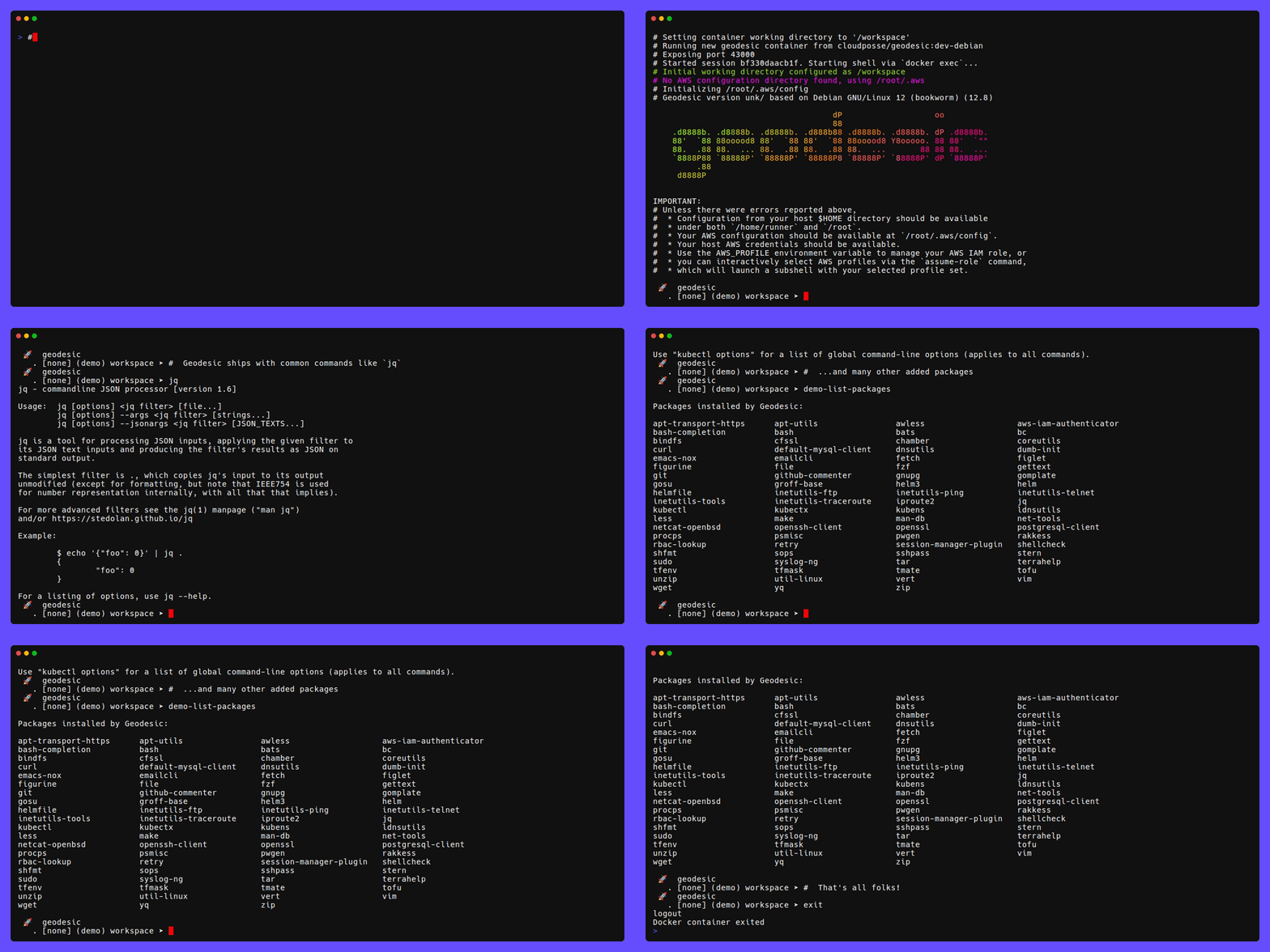
Example of running a shell based on the cloudposse/geodesic base docker image.
Introduction
These days, the typical software application is distributed as a docker image and run as a container. Why should infrastructure be any different? Since everything we write is "Infrastructure as Code", we believe that it should be treated the same way. This is the "Geodesic Way". Use containers+envs instead of unconventional wrappers, complicated folder structures and symlink hacks. Geodesic is the container for all your infrastructure automation needs that enables you to truly achieve SweetOps.
Geodesic is best used in one of these two ways:
- Interactive Shell It is optimized to work as an interactive command-line shell. The shell includes a powerful set of tools for the DevOps practitioner, with many more available through our packages. Installation of the shell is as easy as running a docker container or using it as a base image for your own Docker toolbox.
- Docker Base Image You can create your own
Dockerfileand usecloudposse/geodesicas the base image. This way, all you need to add are the few of your favorite tools not already installed, and then you have a consistent toolbox for everyone to share.
An organization may chose to leverage all of these components, or just the parts that make their life easier.
We recommend starting by using geodesic as a Docker base image (e.g. FROM cloudposse/geodesic:... pinned to a release and base OS) in your projects.
[!IMPORTANT] Note: Starting with Geodesic 3.0, we distribute Geodesic as a multi-platform (
linux/amd64,linux/arm64) Debian-based Docker image only. We no longer publish an Alpine version, but continue to include thedebianlabels for compatibility. As with Geodesic 2.0, thelatesttag points to the Debian image.Starting with Geodesic 2.0, we distributed Geodesic as a multi-platform (
linux/amd64,linux/arm64) Debian-based Docker image and a single-platform (linux/amd64) Alpine-based image. We moved thecloudposse/geodesic:latestDocker image tag from the Alpine version to the Debian version at that time.
What’s Changed in Geodesic 4.0
Geodesic 4.0 is a major release that brings many new features and improvements. The most notable changes are:
- The first launched shell is no longer special. All shells are now equal, and you can quit them in any order. The geodesic container remains running until the last shell exits.
- The
geodesiccommand now has a--solooption that allows you to launch a new Geodesic container for just that one shell. - Geodesic no longer mounts the host user's entire home directory into the container. Instead, it mounts only selected directories.
- The
geodesic stopcommand has been enhanced to shut down the Geodesic container gracefully, rather than forcefully, allowing, among other things, shell scripts to run their exit handlers.
See extensive release notes for Geodesic 4.0 here.
What’s Changed in Geodesic 3.0
Rather than bringing new features, Geodesic 3.0 is focused on slimming down the Docker image and removing outdated tools. Geodesic 3.0 is approximately half the size of Geodesic 2.10! See the v3.0.0 release notes for details on what was removed, but for most users, we expect the impact to be minimal.
This release is intended to set the stage for future improvements, so although we cannot announce a time frame, be on the lookout for Geodesic 4.0, which will bring many long-requested new features.
Want to learn more? Check out our getting started with Geodesic guide!
Alpine and Terraform dropped
The biggest impacts are that the Alpine-based image has been dropped, and Terraform has been replaced with OpenTofu.
- OpenTofu is installed as a
terraformalternative using the Debian alternatives system, soterraformcommands will still work without modification. - We have been encouraging users to switch from Alpine to Debian for years, so we hope most people have already done so. For the rest, switching to Debian should be straightforward, and brings the added advantage of support for Apple Silicon.
Highlights from Geodesic 2.11
Since the release of Geodesic 2.0, we have been continuing to improve the Geodesic experience.
- We have added preliminary support for "dark mode" terminals. Your terminal mode should be detected automatically,
but you can force it by running
update-terminal-mode {dark|light}. - The
GEODESIC_TF_PROMPT_ENABLEDenvironment variable has been revived. Set it totrueand when in a Terraform or Tofu directory, the prompt will display the currently selected workspace. (We had, for a time, incorrectly suggested you control this feature viaGEODESIC_TF_PROMPT_ACTIVE. That environment variable is for internal use and you should never set it.)
What’s New in Geodesic 2.0
Geodesic 2.0 introduces support for Apple Silicon (M1 and later chips), and prioritizes Debian over Alpine as the base OS. Users new to Geodesic should use the Debian-based version and existing users of the Alpine-based image should switch to the Debian-based image as soon as is convenient. They each have nearly all the same tools pre-installed, so sw