Freelens















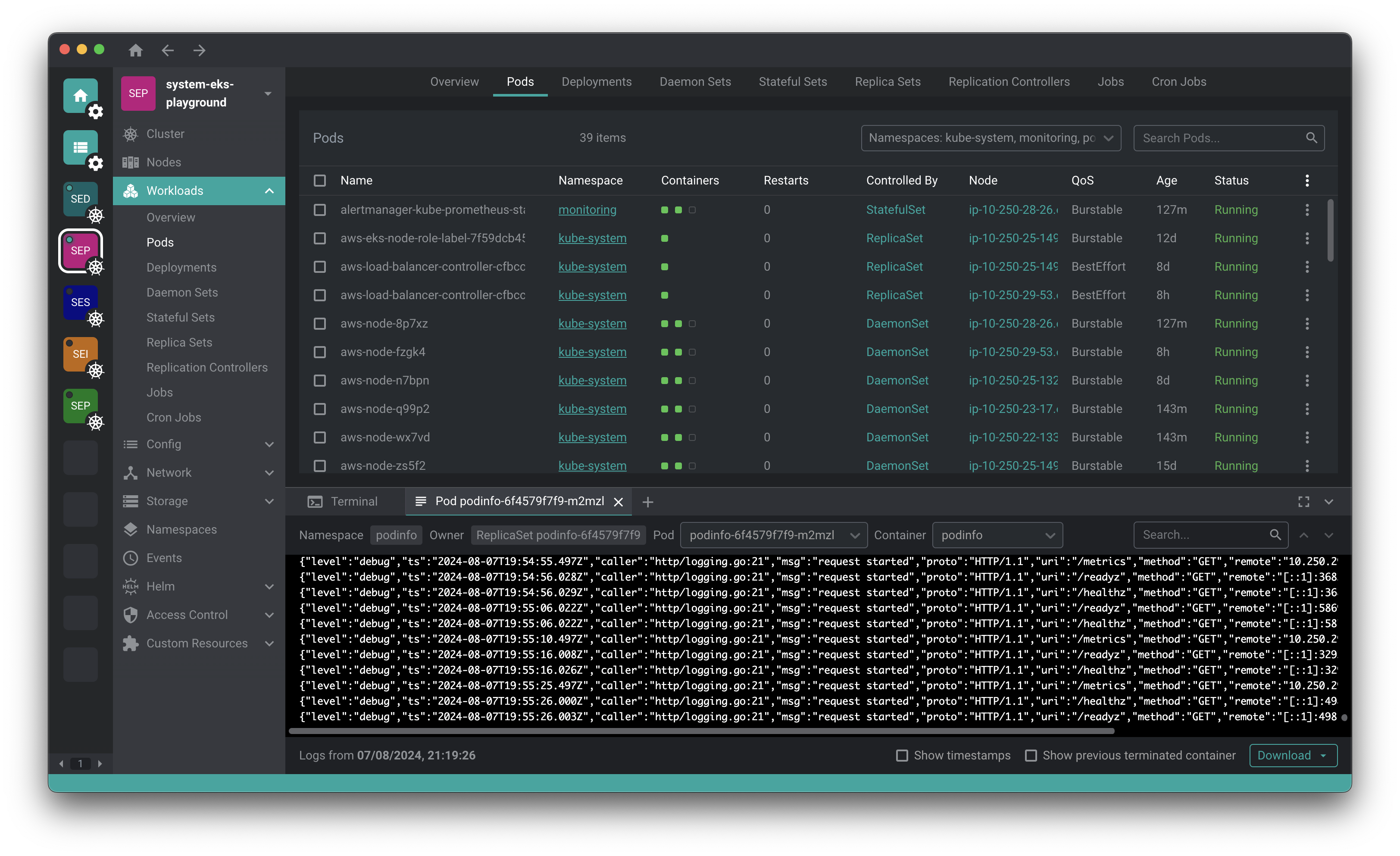
Freelens is a free and open-source user interface designed for managing Kubernetes clusters. It provides a standalone application compatible with macOS, Windows, and Linux operating systems, making it accessible to a wide range of users. The application aims to simplify the complexities of Kubernetes management by offering an intuitive and user-friendly interface.
Requirements
Kubernetes 1.22 or later. Older clusters fall back to the bundled kubectl,
which may not work correctly; a different one can be set in Preferences.
Downloads
See the releases page and download the right package for your system.
macOS
macOS 12 or later is required.
Download either the PKG (installer) or DMG (image) package from the releases page. Both arm64 (M1 chip or newer) and amd64 (Intel) variants are available.
All binary packages are built on macOS 15 and should be compatible with newer systems.
Homebrew
Run the following command:
brew install --cask freelens
Linux
Linux with GNU C Library 2.34 or later is required. It is provided ie. by Debian 12, Fedora 35, Mint 21, openSUSE Leap 15.4, Ubuntu 22.04 and by rolling release distributions like Arch, Manjaro or Tumbleweed.
Download DEB or RPM (package) or AppImage (executable) from the releases page. Both arm64 (aarch64) and amd64 (x86_64) variants are available.
All binary packages are built on Ubuntu 22.04 and should be compatible with new systems.
AppImage
The Linux AppImage file requires libz.so and libfuse.so.2. You can add them by running:
sudo apt install libfuse2 zlib1g-dev
Run the application with additional arguments:
./Freelens*.AppImage --no-sandbox --ozone-platform-hint=auto --enable-features=WebRTCPipeWireCapturer --enable-features=WaylandWindowDecorations --disable-gpu-compositing
Flatpak
The package is available on the Flathub App Store for Linux.
Use GNOME Software application or run the following commands:
flatpak install flathub app.freelens.Freelens
flatpak run app.freelens.Freelens
The application is sandboxed. It includes bundled kubectl and helm
commands and uses the ~/.kube/config file by default.
Flatpak adds wrappers for the aws, doctl, gke-gcloud-auth-plugin, and
kubelogin tools, running them as commands from the host system.
The terminal uses /bin/sh by default, but it can be switched to, for
example, /bin/bash for a sandboxed environment or /app/bin/host-spawn for
a host environment.
Snap
The package is available on the Snap Store for Linux.
Use App Center application or run the following command:
snap install freelens --classic
APT repository
Run the following commands:
curl -L https://raw.githubusercontent.com/freelensapp/freelens/refs/heads/main/freelens/build/apt/freelens.asc | sudo tee /etc/apt/keyrings/freelens.asc
curl -L https://raw.githubusercontent.com/freelensapp/freelens/refs/heads/main/freelens/build/apt/freelens.sources | sudo tee /etc/apt/sources.list.d/freelens.sources
sudo apt update
sudo apt install freelens
Arch User Repository
The package is available on the Arch User Repository (AUR).
Check the freelens-bin package page.
Windows
Windows 10 or later is required.
Download the EXE (NSIS) or MSI installers from the releases page.
Both the x64 (amd64) and arm64 versions of the Windows binaries are provided.
However, an EXE installer (NSIS) itself is x86 binary only even if it installs
arm64 application and then installs to C:\Program Files (x86)\Freelens path
by default.
The version of the MSI package has the last 4th digit always 0 and this is a
limitation of this package format.
Portable
Download the Portable EXE from the releases page. It is a self-contained executable that can be run without installation.
WinGet
The package is available in WinGet Community repository.
Run the following command:
winget install Freelensapp.Freelens
The --silent option is supported to suppress all UI.
The --scope user or --scope machine option can be used to install it
either to local user directory or to C:\Program Files.
WinGet installs the application from EXE installer (NSIS).
Scoop
The package is available in the Scoop command-line installer for Windows.
Run the following command:
scoop bucket add extras
scoop install freelens
Scoop uses MSI package to install the application.
Development
Visit the Development document to see how to build the application from source. Check out the Freelens Docs to contribute to development or create your own extension.
Extensions
Anyone can develop extensions for Freelens and many extensions previously used with Open Lens have already been converted. Visit the Extensions discussion to see them and write in the appropriate discussion if you also want to propose yours.
Community
Get updates about Freelens & keep in touch with our community
- Follow us on LinkedIn
- Follow us on Bluesky
- Follow us on [X](https://x.com