Fider is an open-source, self-hostable feedback portal, written in Go under the AGPL-3.0 licence, that lets a product team collect feature requests and suggestions from its customers and hear directly what they need.
What it is
Fider is an open-source platform for collecting and prioritizing feedback, published on GitHub as getfider/fider and described in its README as a feedback portal for feature requests and suggestions. The repository carries 4529 stars, 851 forks and 57 open issues, with last push on 2026-09-12, and it is tagged with the topics customer, feature-request, feedback, ideas and suggestions. The project is written in Go, licensed AGPL-3.0, and documented through its homepage at fider.io and its docs site at docs.fider.io.
The concrete problem it solves is stated plainly in the README: give customers a voice and let them tell you what they need, so the team spends less time guessing and more time building the right product. It lives in the open-source self-hosted web application ecosystem, distributed through a GitHub repository, a documentation site, and a managed cloud option run by the creators of the project. What it replaces is the internal guesswork about product direction, by making the collection of feature requests and suggestions an explicit, customer-facing activity rather than an assumption.
Key capabilities
- Provides a feedback portal purpose-built for feature requests and suggestions, rather than a general-purpose issue tracker.
- Offers two delivery modes: Fider Cloud, a fully managed service run by the creators, and self-hosted deployment on your own servers and in your own infrastructure.
- Handles software updates and patches in the Cloud mode, so operators do not manage them.
- Defines its scope through repository topics
customer, feature-request, feedback, ideas and suggestions.
- Is implemented in Go and released under the AGPL-3.0 licence.
- Builds through the GitHub Actions workflow
build.yml, surfaced as a build badge in the README.
- Tracks community contributions through the
CONTRIBUTING.md guide, and funds development through donations and sponsorships on OpenCollective (opencollective.com/fider), where sponsors receive a logo and link in the README.
Who uses it and how
- Product teams that want customer-submitted feature requests and suggestions instead of relying on guesswork about what to build next.
- Organizations that must keep software and data inside their own infrastructure, which the self-hosted option supports at no cost, with the operator responsible for everything.
- Teams that would rather not manage updates and patches, who can sign up for Fider Cloud and be running in minutes.
- Existing self-hosters, who are invited to report where they deploy Fider in issue
#899 on the repository.
- Organizations able to fund the project, through one-off donations or a monthly sponsorship that places a logo and link in the README.
Getting started
There are two routes named in the README: sign up for Fider Cloud, the fully managed service from the creators, at https://fider.io/#get-started, or install Fider on your own servers following the self-hosted guide at https://docs.fider.io/self-hosted/. The self-hosted path is free, with the operator responsible for everything.
How it compares
The facts provided name no comparable tools, and no list of paid products that Fider replaces, so within this registry it stands alone. The only comparison the facts support is internal to the project: Fider Cloud is a fully managed service with updates and patches handled by the creators, while the self-hosted deployment is free and places all operational responsibility on the operator.
When to use it — and when not to
Self-hosting means operating Fider yourself, and the README states plainly that the operator is responsible for everything, so a team should confirm the required services against the self-hosted documentation before committing. Choose Fider Cloud instead if the goal is to avoid managing software updates and patches, and think twice about the project if an AGPL-3.0 licence does not fit your organization's obligations, or if you need installation specifics such as exact commands, a Docker image or a compose file, none of which appear in the README excerpt provided here.
project readme (upstream, from github) — read inline

Fider.io •
Fider Feedback •
Fider Demo •
Docs •
Contributing
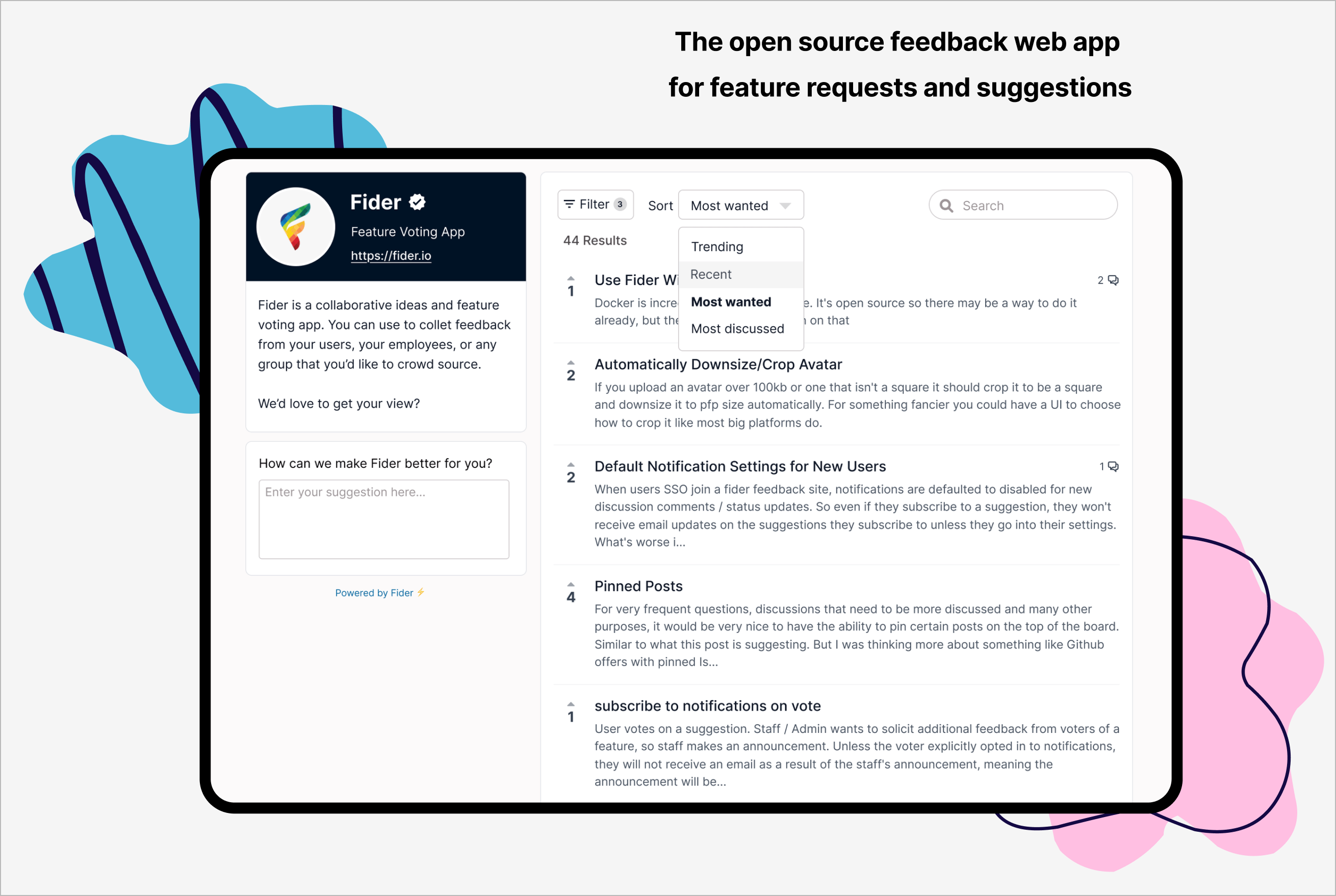

Fider is a feedback portal for feature requests and suggestions.
Give your customers a voice and let them tell you what they need. Spend less time guessing and more time building the right product.
Getting Started
☁️ Fider Cloud
The easiest and quickest way to get started. A fully managed services by the creators of Fider to help you get started in minutes. Forget about managing software updates and patches, we do it all for you! Sign up now
🏢 Self-Hosted
Install Fider on your own servers, in your own infrastructure. It's totally free, but of course you're responsible for everything. Learn how
If you do self-host and enjoy Fider, please let us know where you're using it - we really appreciate it 🙏
💰 Donations and Sponsors
Support the development of Fider to help us make it the best feedback tool! You can set up donations as small or large as you want to help us keep Fider going. Donate
If your organization uses Fider, consider becoming a sponsor - set up a monthly donation and get your logo and link on the README. Become a sponsor
Contributors
This project exists thanks to all the amazing people who contribute!

Read our CONTRIBUTING guide to learn how you can contribute to Fider.