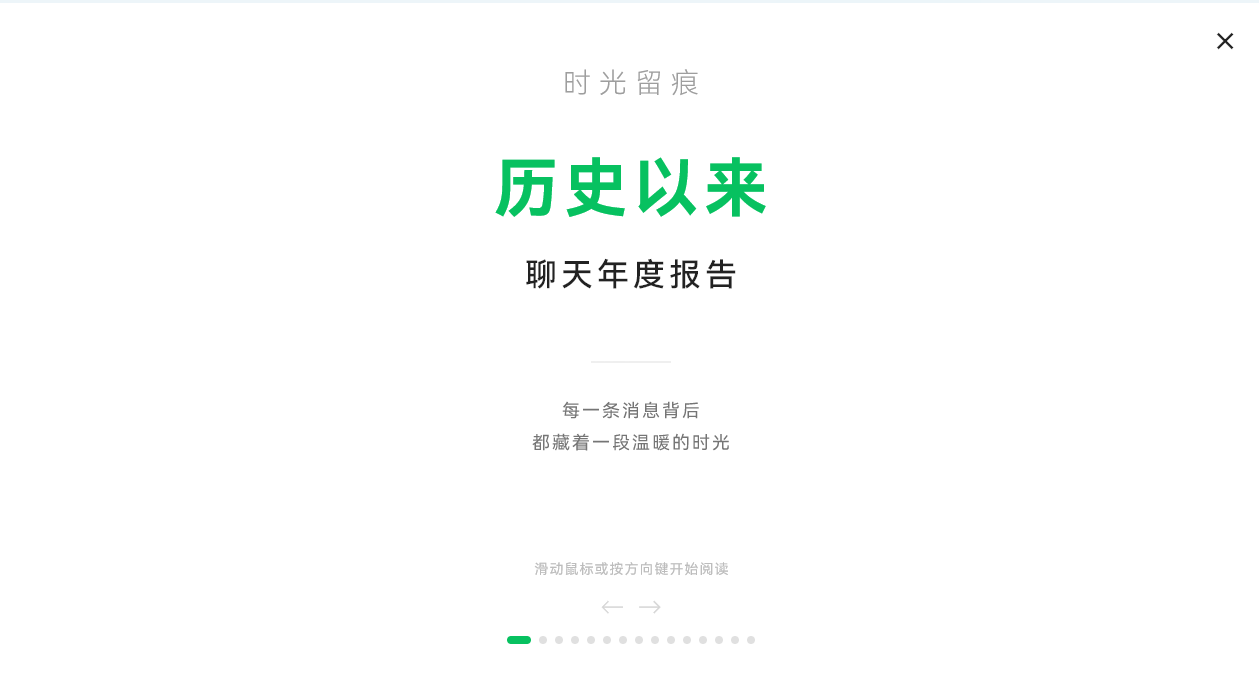
EchoTrace is a fully local, MIT-licensed desktop tool that decrypts WeChat chat history, keeps the archive on the user's own machine for offline viewing, exports conversations to HTML, and generates annual chat reports, built for anyone who wants to look back over years of conversations without handing that data to a third party.
What it is
EchoTrace is an open-source application, written in Flutter and published under the MIT licence, that reads WeChat chat records from a local machine, decrypts them, and turns them into browsable archives and analytical reports. It is filed under Data & Analytics / Business Intelligence & Reporting, and its topics are annual-reports, chat-history, data-analysis, data-visualization, and wechat. It lives in the small ecosystem of open-source WeChat archive tooling: the README credits chatlog for decryption ideas, WxDatDecrypt for image decryption reference, and contributor @sai595870682 for the approach to parsing inline images and voice messages. The project has 3,814 stars, 683 forks, and 31 open issues.
The concrete problem it addresses is that WeChat history stays inside the client, where it is difficult to search, archive, or quantify over long spans of time. EchoTrace decrypts those records, presents them offline, exports them as HTML for sharing, and builds reports from them. The README frames the motivation directly: the author wanted to know who time had brought into their life, to see that they had exchanged tens of thousands of messages with a friend, to find late-night conversations, and to see how time quietly moved some people closer and others further away. The tool exists so that this analysis happens on local files rather than through a hosted service that would require uploading chat data.
Key capabilities
- Decrypts WeChat chat records and saves them locally so they can be viewed offline.
- Exports conversations to HTML files that can be shared with friends.
- Generates annual reports for an individual and for a pair, including the date two people first chatted and yearly statistics.
- Produces a word cloud of the words two people use most often.
- Parses and displays richer message types, covering voice messages, images, and sticker packs.
- Ships as a Flutter desktop application built with
flutter pub get, flutter run, and flutter build windows.
- Has a documented roadmap for message-type radar charts, chat-time distribution and heat maps, and a short image summary of a pair's annual report.
Who uses it and how
- People reviewing years of conversation, who want the counts, dates, and patterns that a report surfaces rather than scrolling through the client.
- Privacy-conscious users who need a local archive: decryption, storage, and offline viewing keep the chat data on their own machine.
- Users who want to hand results to someone else, using the HTML export to share an archive or report with a friend.
- Developers and contributors, who clone the repository, run
flutter pub get, flutter run, and flutter build windows; docs/beginner_guide.md targets newcomers and docs/development.md covers architecture, file responsibilities, debugging, and CLI usage.
- Users who outgrow it: the README points to ChatLab for deeper chat analysis, to WeFlow for realtime functionality, and to 密语 for backup functionality.
Getting started
Clone https://github.com/ycccccccy/echotrace.git, then run flutter pub get and flutter run; package a build with flutter build windows on Windows. New users are directed to docs/beginner_guide.md.
How it compares
EchoTrace sits alongside other open-source WeChat archive tools rather than replacing a paid product: it credits chatlog for decryption ideas and WxDatDecrypt for image decryption, and after maintenance stopped the README redirects users to WeFlow for realtime functionality and to 密语 for backup functionality. Deeper analysis is delegated to ChatLab, so EchoTrace's own scope is decryption, offline viewing, HTML export, and report generation.
When to use it — and when not to
The README states plainly that EchoTrace has stopped being maintained, and it directs users who still need realtime capture to WeFlow and users who need backup to 密语; anyone who requires an actively maintained tool should start there instead. A self-hoster must supply a Flutter toolchain and build the application from source, since the README documents no packaged installer, and 31 issues remain open. The README closes with a reminder to use the tool responsibly and in compliance with relevant laws, which is the main constraint to weigh before decrypting anyone's records.