dolphinscheduler is a free, open source orchestration & scheduling project written in Java and released under Apache-2.0. It has 14,482 GitHub stars, 5,092 forks and 128 open issues, and was last pushed 14 hours ago. On this registry it ranks #13 of 64 tracked projects in Orchestration & Scheduling, with 5 head-to-head comparisons available. It gained 8 stars over the last 3 tracked days.

What is dolphinscheduler?

Apache DolphinScheduler is an Apache-2.0 licensed, Java-based data orchestration platform for data engineers, analytics teams and platform operators who need to schedule complex task dependencies across data pipelines without building the control plane themselves.

What it is

Apache DolphinScheduler is an open-source workflow and task scheduling platform hosted in the Apache Software Foundation ecosystem. It is designed for agile, low-code construction of high-performance workflows, and it concentrates on the hard part of data engineering: resolving complex task dependencies in data pipelines. It ships with a wide range of built-in job types out of the box, so common pipeline steps do not require custom plugin development before a first workflow can run. It is developed in Java, published under the Apache-2.0 licence, and the repository carries 14,482 stars and 5,092 forks.

The concrete problem it addresses is the operational control plane around scheduled data work. Within the same ecosystem it occupies the space held by Apache Airflow and Azkaban, and it replaces the combination of a bare scheduler plus handwritten glue: dependency resolution, workflow and task versioning, state control, tenancy and permissions, and backfill are all first-class features rather than scripts bolted onto an external cron. Workflow definitions can be created and managed through the Web UI, a Python SDK, or the Open API, which means the same platform serves both drag-and-drop authoring and programmatic pipeline generation. The architecture is decentralised and multi-master, multi-worker, with native horizontal scaling, so capacity increases by adding workers rather than by replacing a single scheduler node.

Key capabilities

  • Four deployment modes are provided: Standalone, Cluster, Docker, and Kubernetes, with an additional Terraform path documented under deploy/terraform/README.md.
  • Workflows and individual workflow instances, including their tasks, are versioned, which gives a recoverable history for both definitions and runs.
  • Workflow and task state is controllable at runtime: runs can be paused, stopped, and recovered at any time.
  • Backfill is available natively in the Web UI, without requiring an external script or API client.
  • Multi-tenancy is supported, alongside permission control that extends to projects and data sources.
  • Data source integration covers MySQL, PostgreSQL, Hive, and Trino, giving unified access to external systems from the same interface.
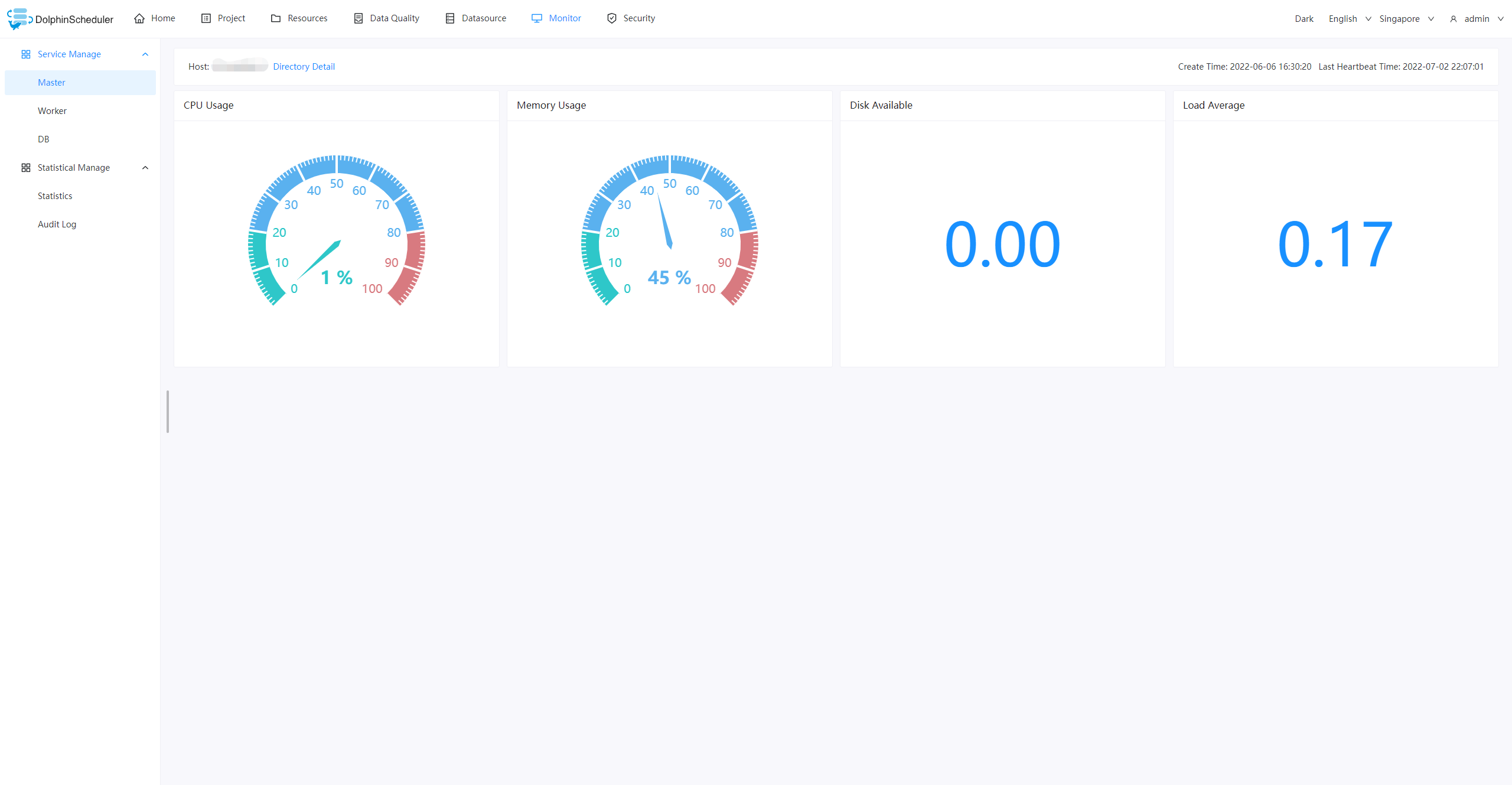
  • A monitoring page reports master, worker, and database status, including server resource usage and load, so a health check can be done without logging in to the server.
  • Orchestration spans multiple clouds and data centres, and custom task types can be added for workloads the built-in job types do not cover.

Who uses it and how

  • Data platform teams that need multi-tenant scheduling, where separate projects are isolated by permissions and by which data sources each project may reach.
  • Data engineers building dependency-heavy pipelines who want the Web UI, the Python SDK, or the Open API to drive workflow creation rather than a single authoring path.
  • Operators who use the built-in monitor view to inspect master, worker, and database health and load without opening a shell on each host.
  • Teams running at high volume, where the project positions itself for tens of millions of tasks per day and scale-out is handled by adding workers in the multi-worker architecture.
  • Kubernetes-based organisations that prefer to deploy through the Kubernetes or Terraform routes rather than managing the cluster mode by hand.

Getting started

The README offers four quickstart routes: start with standalone, start with Docker, start with Kubernetes, or the Cluster deployment, with Terraform documented in deploy/terraform/README.md.

How it compares

The topic list places Apache DolphinScheduler alongside Apache Airflow and Azkaban as comparable orchestration tools, so it sits in the open-source workflow scheduler category rather than in a proprietary niche. Distinguishing claims it makes within that group are the four deployment modes, the decentralised multi-master, multi-worker architecture, and native backfill in the Web UI.

When to use it — and when not to

A self-hoster takes on running the platform itself: master and worker processes, the database whose status the monitor page reports, and the deployment mode chosen from Standalone, Cluster, Docker, or Kubernetes. Teams that want a fully managed scheduler with no infrastructure to operate, or that have no need for multi-tenancy, versioned workflows, and dependency resolution at this scale, should look elsewhere. The documentation links in the README target the 3.3.0-alpha docs, so version-specific guidance may lag the code, and the repository still carries 128 open issues.

project readme (upstream, from github) — read inline

Apache Dolphinscheduler


License codecov Quality Gate Status Twitter Follow CN doc

About

Apache DolphinScheduler is a modern data orchestration platform that empowers agile, low-code development of high-performance workflows. It is dedicated to handling complex task dependencies in data pipelines and provides a wide range of built-in job types out of the box.

Key features for DolphinScheduler are as follows:

  • Easy to deploy, providing four deployment modes including Standalone, Cluster, Docker, and Kubernetes.
  • Easy to use, workflows can be created and managed via Web UI, Python SDK or Open API
  • Highly reliable and high availability, with a decentralized, multi-master and multi-worker architecture and native support for horizontal scaling.
  • High performance, its performance is several times faster than other orchestration platforms, and it is capable of handling tens of millions of tasks per day
  • Cloud Native, DolphinScheduler supports orchestrating workflows across multiple clouds and data centers, and allows custom task types
  • Workflow Versioning, provides version control for both workflows and individual workflow instances, including tasks.
  • Flexible state control of workflows and tasks, supports pausing, stopping, and recovering them at any time.
  • Multi-tenancy support
  • Additional features, backfill support(Web UI native), permission control including project and data source etc.

QuickStart

User Interface Screenshots

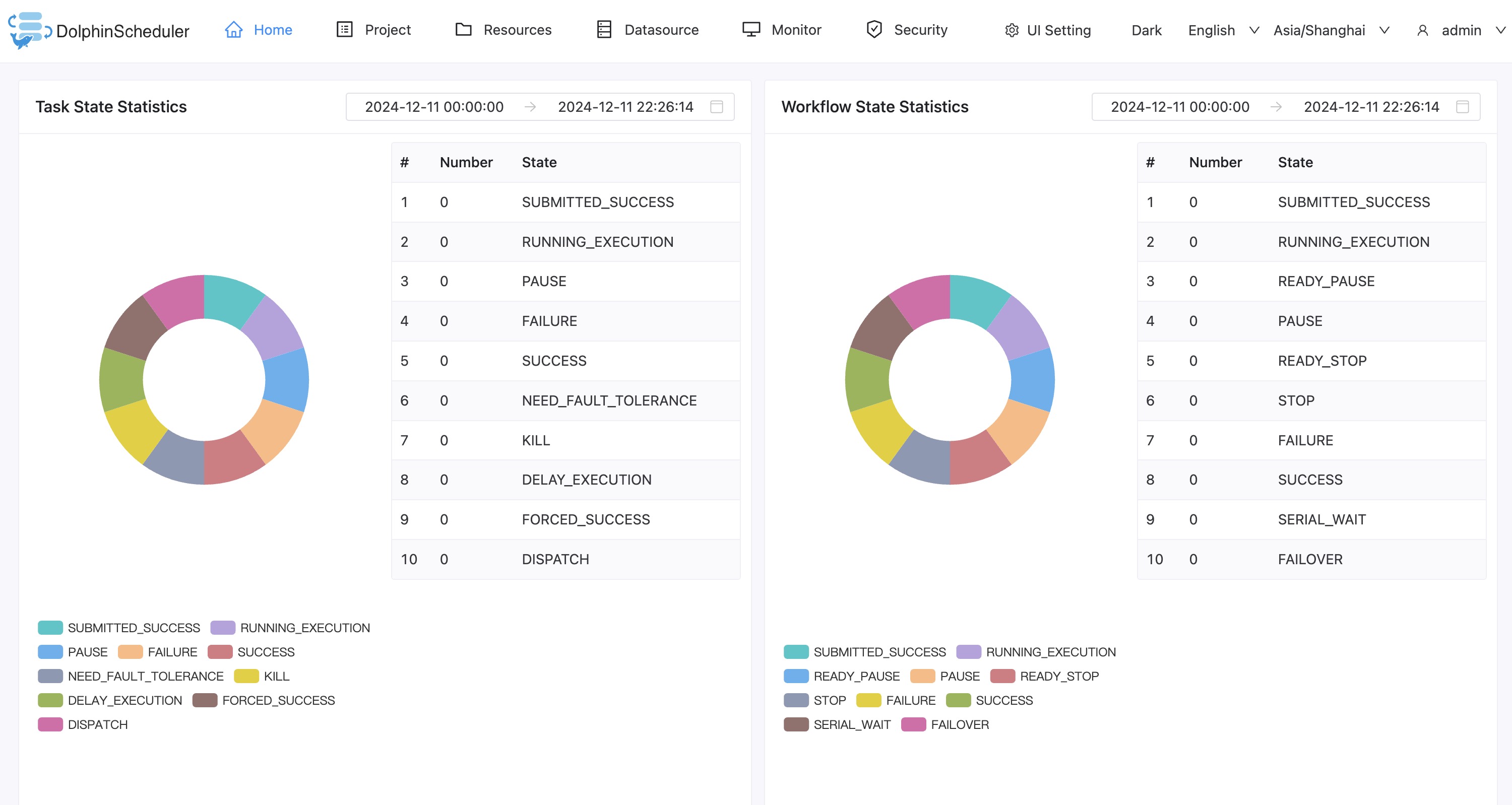
  • Homepage: Project and workflow overview, including the latest workflow instance and task instance status statistics. home
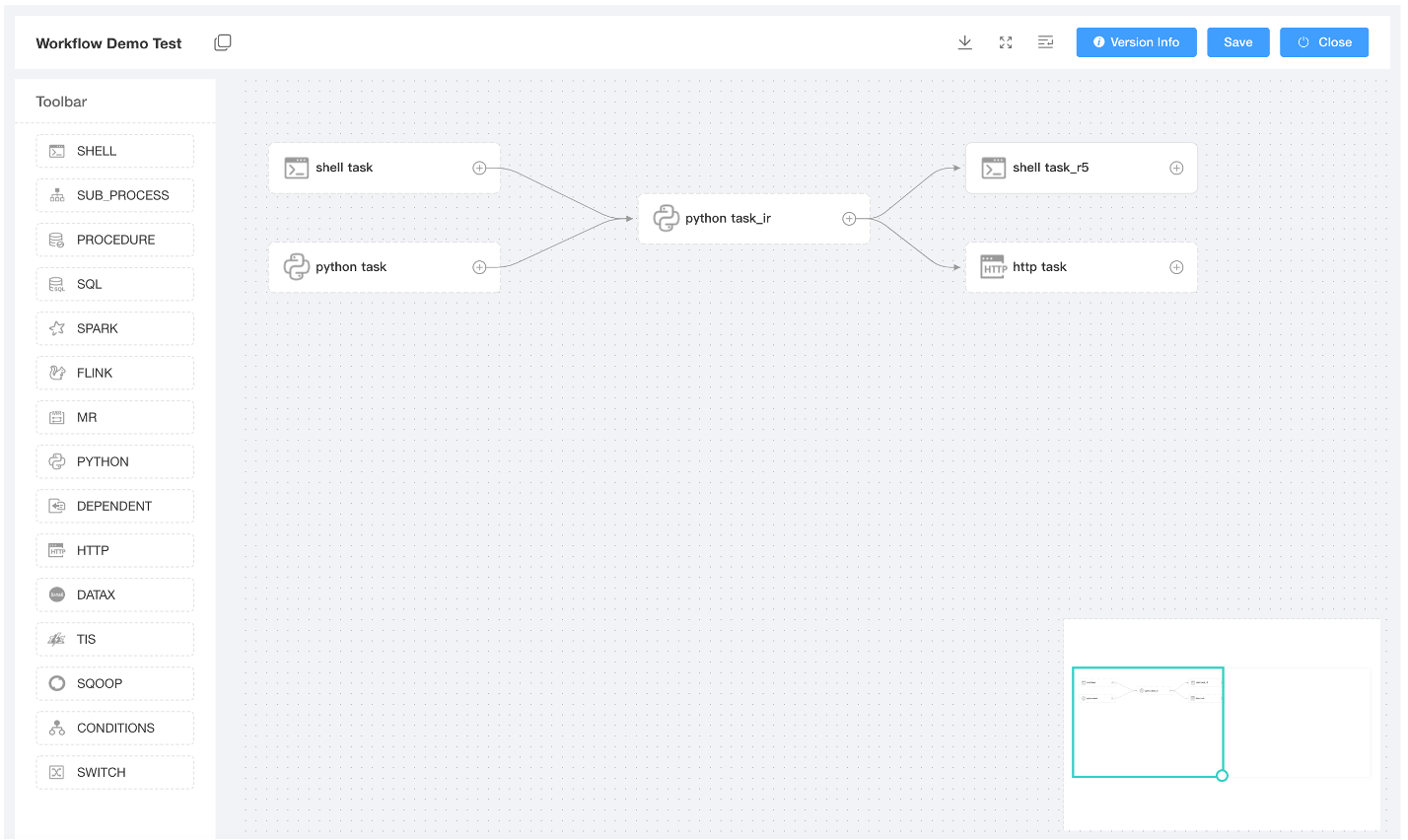
  • Workflow Definition: Create and manage workflows by drag and drop, easy to build and maintain complex workflows, support a wide range of tasks out of box. workflow-definition
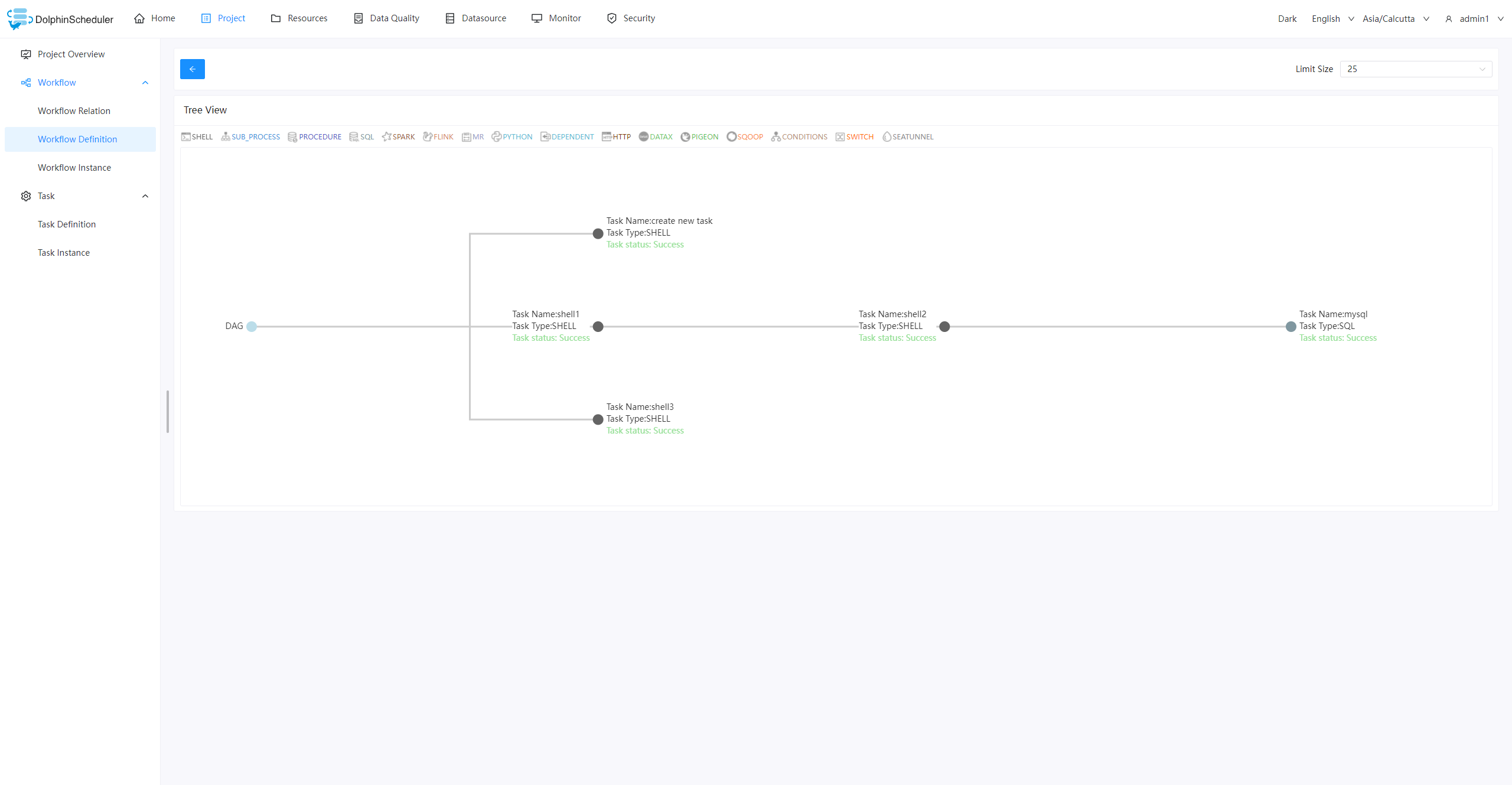
  • Workflow Tree View: Abstract tree structure could provide a clearer understanding of task relationships workflow-tree
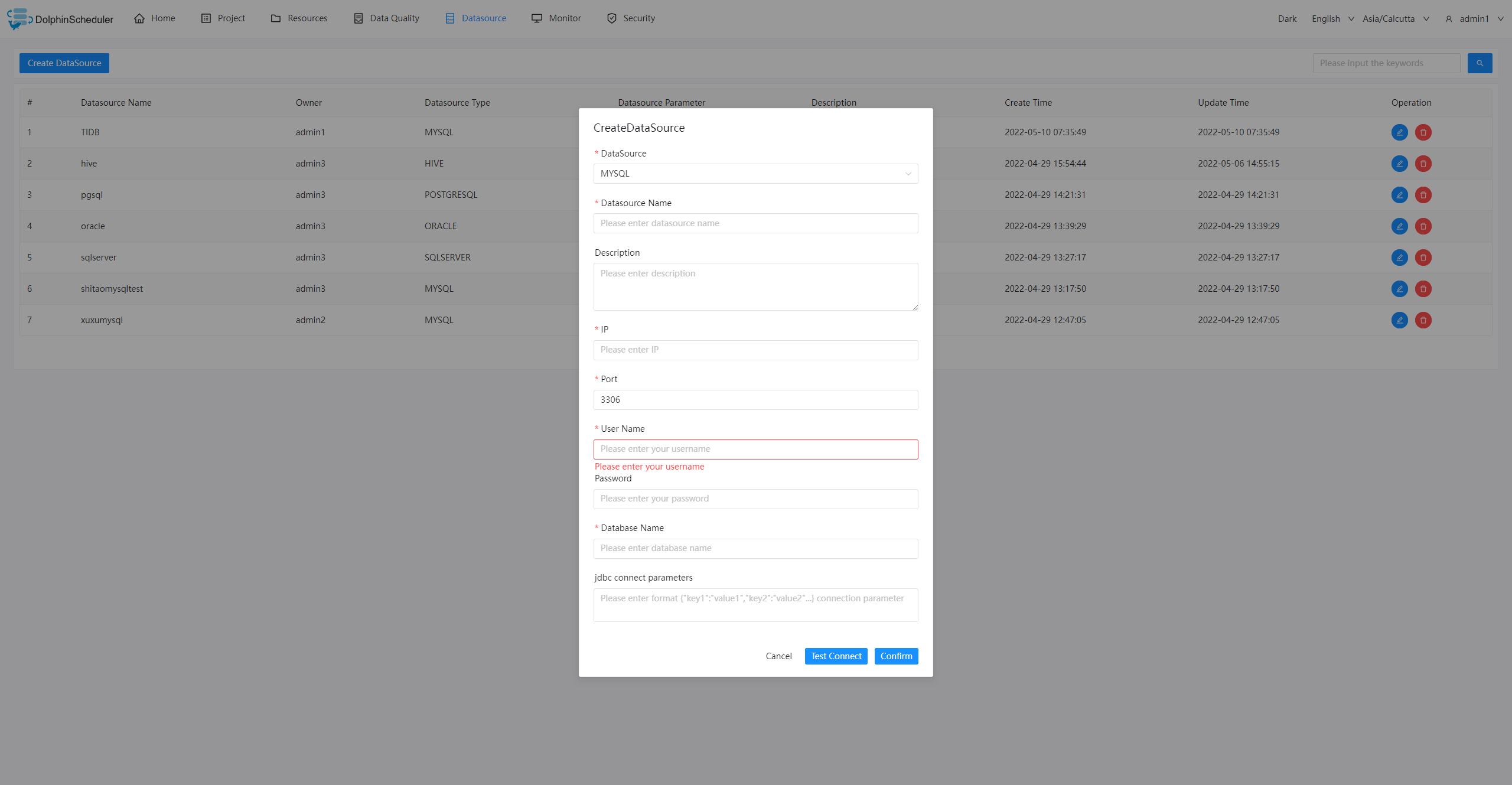
  • Data source: Supports multiple external data sources, provides unified data access capabilities for MySQL, PostgreSQL, Hive, Trino, etc. data-source
  • Monitor: View the status of the master, worker and database in real time, including server resource usage and load, do a quick health check without logging in to the server. monitor
Suggestions & Bug Reports

Follow this guide to report your suggestions or bugs.

Contributing

The community welcomes contributions from everyone. Please refer to this page to find out more details: How to contribute. Check out good first issues here if you are new to DolphinScheduler.

Community

Welcome to join the Apache DolphinScheduler community by:

Landscapes


DolphinScheduler enriches the CNCF CLOUD NATIVE Landscape.

Frequently asked questions

Is dolphinscheduler free to use?

dolphinscheduler is open source under the Apache-2.0 licence. There is no licence fee and no seat count — you can self-host it or, where the project offers one, pay a vendor for a managed version instead.

What does dolphinscheduler do?

Apache DolphinScheduler is the modern data orchestration platform. Agile to create high performance workflow with low-code

What is dolphinscheduler written in?

dolphinscheduler is primarily written in Java. Its source is publicly available at https://github.com/apache/dolphinscheduler, and it has 14,482 GitHub stars.