
PostgreSQL backup tool
Databasus is a free, open source and self-hosted tool to backup PostgreSQL. Make backups with different storages (S3, Google Drive, FTP, etc.) and notifications about progress (Slack, Discord, Telegram, etc.). With a focus on Point-in-Time Recovery at low RPO/RTO







English • Русский • Español • Português • 中文 • Français
Features • Installation • Usage • License • Contributing
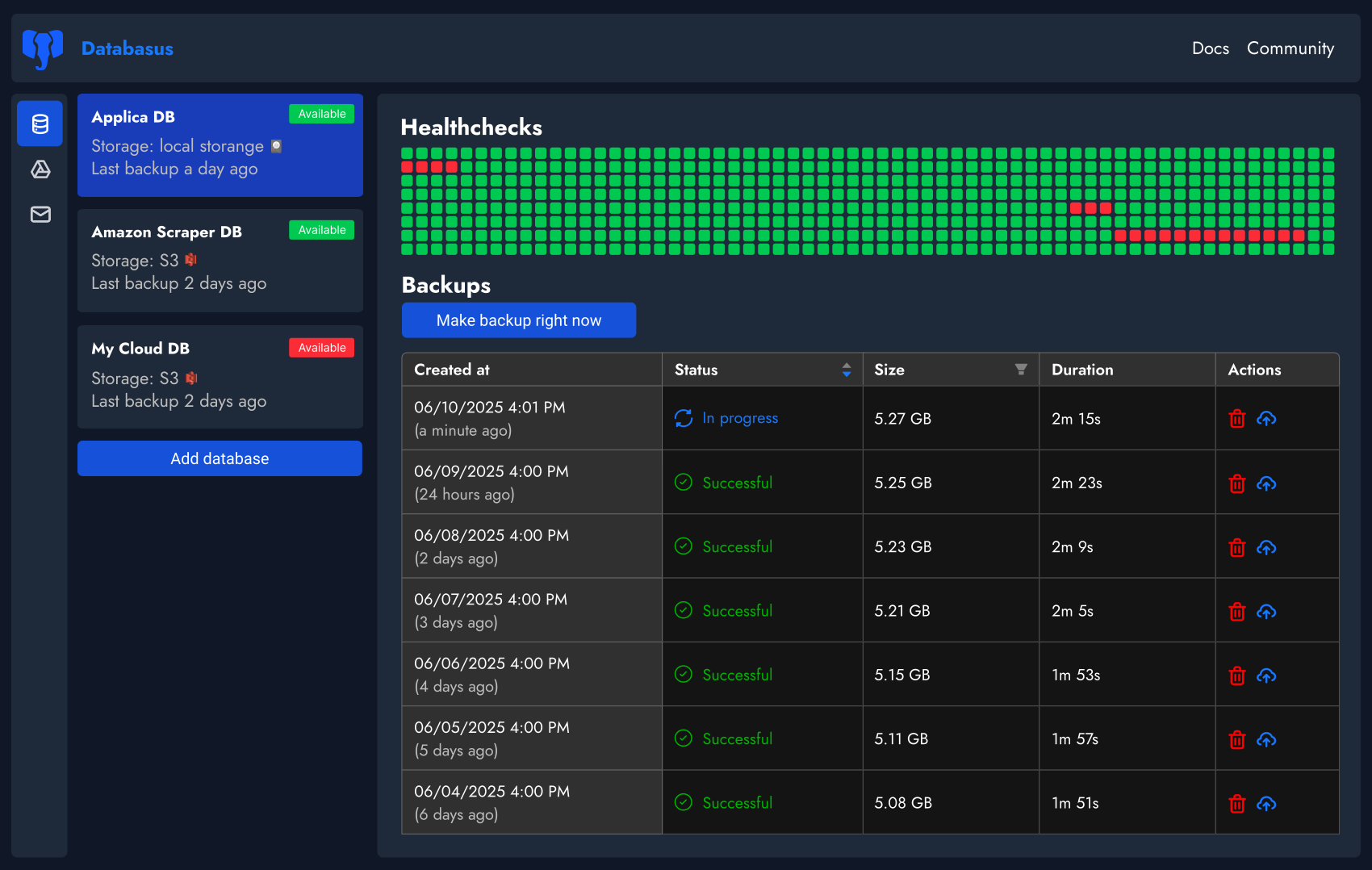
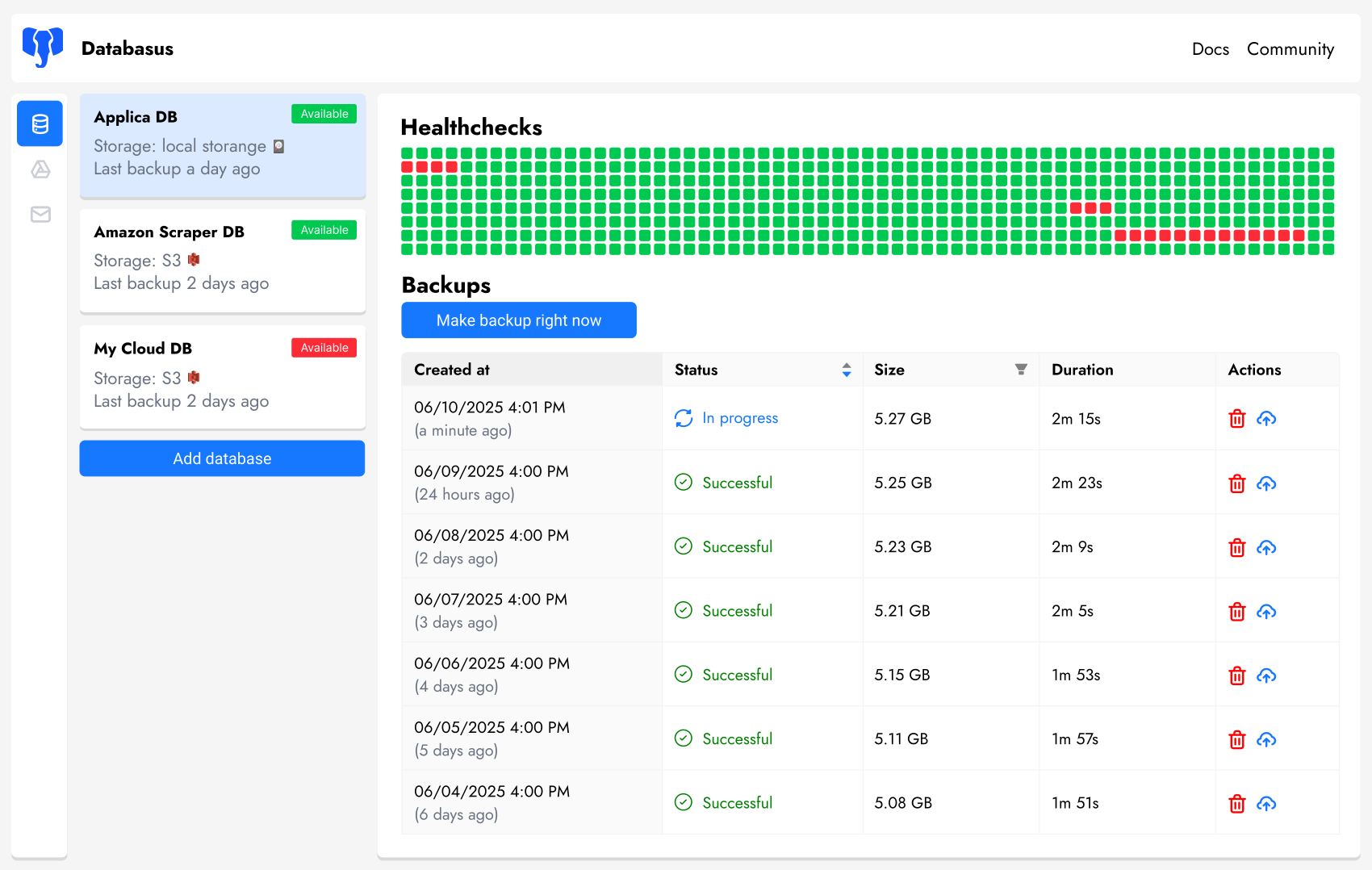
✨ Features
📦 Backup types
- Physical: file-level copy of the entire database cluster over PostgreSQL native incremental backups mechanism (read more)
- Full: a complete, self-contained copy of the cluster
- Incremental: stores only what changed since the previous full backup, so backups stay small and fast
- WAL streaming: continuously captures the database write stream, enabling Point-in-time recovery (PITR). Designed for disaster recovery and near-zero data loss
- Logical: native dump of the database in its engine-specific binary format (compressed, suitable for parallel restore)
🔄 Scheduled backups
- Flexible scheduling: hourly, daily, weekly, monthly or cron
- Precise timing: run backups at specific times (e.g., 4 AM during low traffic)
- Smart compression: 4-8x space savings with balanced compression (~20% overhead)
🧪 Restore verification (docs)
Databasus performs a real restore to confirm backups are usable, not just intact on disk or checksum check.
- Triggers: after each backup or on a flexible schedule (hourly, daily, weekly, monthly or cron)
- Real restore: spins up a database container, runs the restore and checks the restored size against the backup
- Report: lists every table with its row count
- Optional notifications: send the report or failure-only alerts through any configured notifier
🗑️ Retention policies
- Time period: Keep backups for a fixed duration (e.g., 7 days, 3 months, 1 year)
- Count: Keep a fixed number of the most recent backups (e.g., last 30)
- GFS (Grandfather-Father-Son): Layered retention — keep hourly, daily, weekly, monthly and yearly backups independently for fine-grained long-term history (enterprises requirement)
- Size limits: Set per-backup and total storage size caps to control storage usage
🗄️ Multiple storage destinations (view supported)
- Local storage: Keep backups on your VPS/server
- Cloud storage: S3, Cloudflare R2, Google Drive, NAS, Dropbox, SFTP, Rclone and more
- Secure: All data stays under your control
📱 Notifications (view supported)
- Multiple channels: Email, Telegram, Slack, Discord, Teams, Mattermost, webhooks
- Real-time updates: Success and failure notifications
- Team integration: Perfect for DevOps workflows
🔒 Enterprise-grade security (docs)
- AES-256-GCM encryption: Enterprise-grade protection for backup files
- Zero-trust storage: Backups are encrypted and remain useless to attackers, so you can safely store them in shared storage like S3, Azure Blob Storage, etc.
- Encryption for secrets: Any sensitive data is encrypted and never exposed, even in logs or error messages
- Read-only user: Databasus uses a read-only user by default for backups and never stores anything that can modify your data
👥 Suitable for teams (docs)
- Workspaces: Group databases, notifiers and storages for different projects or teams
- Access management: Control who can view or manage specific databases with role-based permissions
- Audit logs: Track all system activities and changes made by users
- User roles: Assign viewer, member, admin or owner roles within workspaces
- OpenTelemetry logs: Export application and audit logs to an external system (by default they are also written to a local file)
🎨 UX-Friendly
- Designer-polished UI: Clean, intuitive interface crafted with attention to detail
- Dark & light themes: Choose the look that suits your workflow
- Mobile adaptive: Check your backups from anywhere on any device
💾 Supported databases
- PostgreSQL: 14, 15, 16, 17 and 18 (physical and logical)
- MySQL: 5.7, 8.0, 8.4 and 9 (logical only)
- MariaDB: 10, 11 and 12 (logical only)
- MongoDB: 4.2+, 5, 6, 7 and 8 (logical only)
🐳 Self-hosted & secure
- Docker-based: Easy deployment and management
- Privacy-first: All your data stays on your infrastructure
- Open source: Apache 2.0 licensed, inspect every line of code
- Build-in SSH: Connect to your databasus via SSH tunnel
📦 Installation (docs)
You have four ways to install Databasus:
- Automated script (recommended)
- Simple Docker run
- Docker Compose setup
- Kubernetes with Helm

📦 Installation
You have four ways to install Databasus: automated script (recommended), simple Docker run, or Docker Compose setup.
Option 1: Automated installation script (recommended, Linux only)
The installation script will:
- ✅ Install Docker with Docker Compose (if not already installed)
- ✅ Set up Databasus
- ✅ Configure automatic startup on system reboot
sudo apt-get install -y curl && \
sudo curl -sSL https://raw.githubusercontent.com/databasus/databasus/refs/heads/main/install-databasus.sh \
| sudo bash
Option 2: Simple Docker run
The easiest way to run Databasus:
docker run -d \
  --name databasus \
  -p 4005:4005 \
  -v ./databasus-data:/databasus-data \
  --restart unless-stopped \
  databasus/databasus:latest
The same image lives on GitHub's registry — use ghcr.io/databasus/databasus:latest if Docker Hub rate-limits your pull.
This single command will:
- ✅ Start Databasus
- ✅ Store all data in
./databasus-datadirectory - ✅ Automatically restart on system reboot
Option 3: Docker Compose setup
Create a docker-compose.yml file with the following configuration:
services:
  databasus:
    container_name: databasus
    image: databasus/databasus:latest
    ports:
      - "4005:4005"
    volumes:
      - ./databasus-data:/databasus-data
    restart: unless-stopped
    healthcheck:
      test: ["CMD", "databasus", "healthcheck"]
      interval: 30s
      timeout: 5s
      retries: 3
      start_period: 60s
Then run:
docker compose up -d
Option 4: Kubernetes with Helm
For Kubernetes deployments, install directly from the OCI registry.
Add --set image.repository=ghcr.io/databasus/databasus to any of the commands below to pull image from GHCR instead of Docker Hub.
With ClusterIP + port-forward (development/testing):
helm install