Deutsch | Português (BR) | Русский | Español | Українська
DBLab Engine

⚡ Blazing-fast PostgreSQL cloning and branching 🐘
🛠️ Build powerful dev/test environments.
🔃 Cover 100% of DB migrations with CI tests.
💡 Quickly verify ChatGPT ideas to get rid of hallucinations.
Available for any PostgreSQL, including self-managed and managed services* like AWS RDS, GCP Cloud SQL, Supabase, and Timescale.
It can be installed and used anywhere: across all cloud environments and on-premises.






Features | Documentation | Blog | Community & Support | Contributing
*For managed PostgreSQL cloud services like AWS RDS or Heroku, direct physical connection and PGDATA access aren't possible. In these cases, DBLab should run on a separate VM within the same region. It will routinely auto-refresh its data, effectively acting as a database-as-a-service solution. This setup then offers thin database branching ideal for development and testing.
Why DBLab?
- Build dev/QA/staging environments using full-scale, production-like databases.
- Provide temporary full-size database clones for SQL query analysis and optimization (see also: SQL optimization chatbot Joe).
- Automatically test database changes in CI/CD pipelines, minimizing risks of production incidents.
- Rapidly validate ChatGPT or other LLM concepts, check for hallucinations, and iterate towards effective solutions.
For example, cloning a 1 TiB PostgreSQL database takes just about 10 seconds. On a single machine, you can have dozens of independent clones running simultaneously, supporting extensive development and testing activities without any added hardware costs.
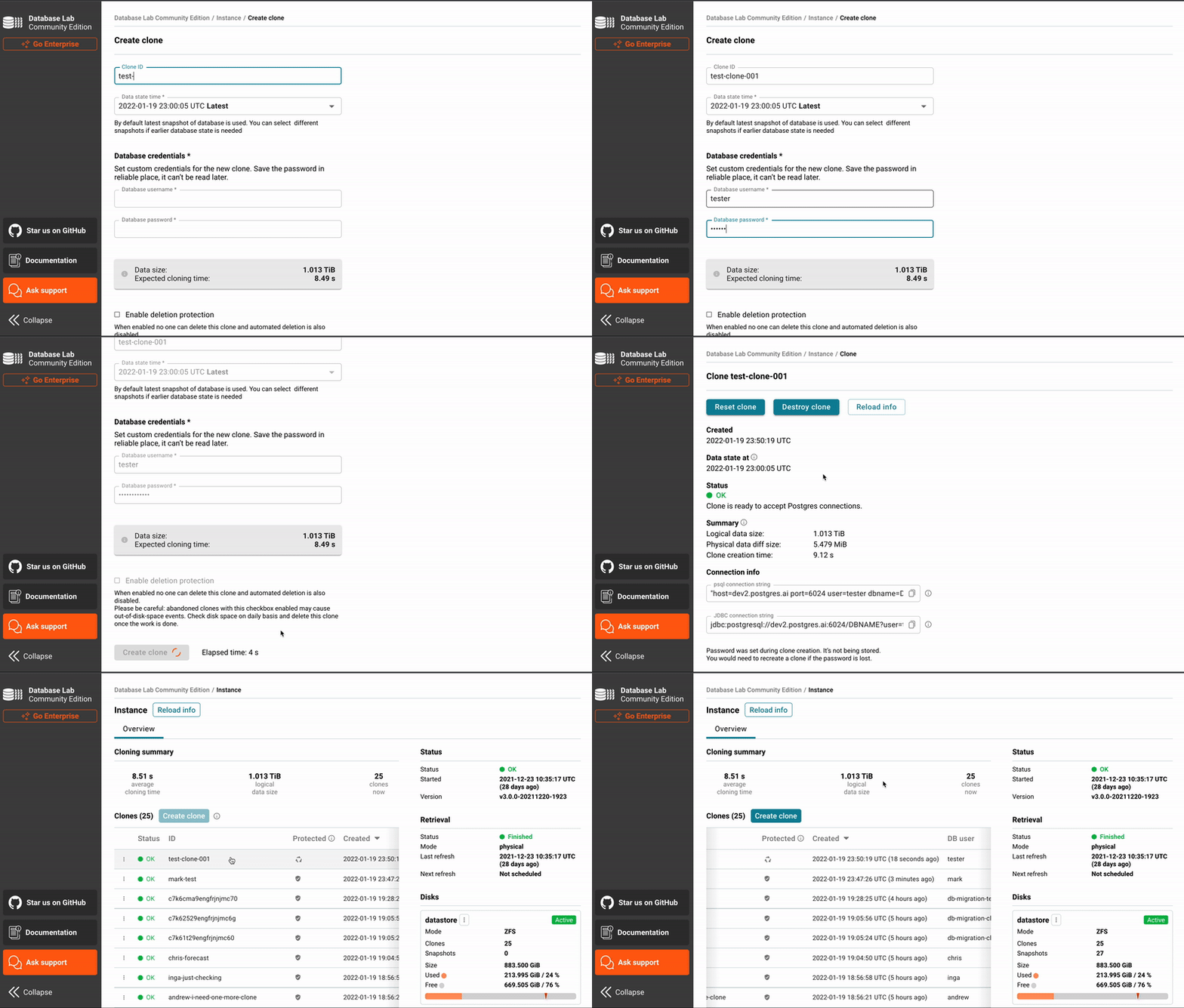
Try it yourself right now:
- Visit Postgres.ai Console, set up your first organization, and provision a DBLab Standard Edition (DBLab SE) to any cloud or on-premises environment.
- Pricing (starting at $62/month)
- Documentation: How to install DBLab SE
- Demo: https://demo.dblab.dev (use the token
demo-tokento access) - Looking for a free version? Install the DBLab Community Edition by following this tutorial.
How it works
Thin cloning is fast because it is based on Copy-on-Write (CoW). DBLab employs two technologies for enabling thin cloning: ZFS (default) and LVM.
Using ZFS, DBLab routinely takes new snapshots of the data directory, managing a collection of them and removing old or unused ones. When requesting a fresh clone, users have the option to select their preferred snapshot.
Read more:
Where to start
- DBLab tutorial for any PostgreSQL database
- DBLab tutorial for Amazon RDS
- How to install DBLab SE using Postgres.ai Console
- How to install DBLab SE using AWS Marketplace
Case studies
Features
- Speed & scale
- Support & technologies
- PostgreSQL containers
- Popular extensions including contrib modules, pgvector, HypoPG and many others ([docs](http