claude-seo is a free, open source marketing & customer engagement project written in Python and released under MIT. It has 17,090 GitHub stars, 2,504 forks and 19 open issues, and was last pushed 6 days ago. On this registry it ranks #6 of 50 tracked projects in Marketing & Customer Engagement, with 5 head-to-head comparisons available. It gained 115 stars over the last 3 tracked days.

What is claude-seo?

Claude SEO is an open-source SEO analysis skill for Claude Code that runs 25 sub-skills and 18 specialist agents in parallel across technical SEO, E-E-A-T content quality, Schema.org markup, AI search optimization, local SEO, and reporting, built for SEO agencies, in-house SEO leads, and freelance consultants who need repeatable, testable audits rather than one-off tool output.

What it is

Claude SEO is an open-source SEO analysis plugin for Claude Code. It packages 25 sub-skills and 18 specialist agents that execute in parallel across technical SEO, content quality (E-E-A-T), Schema.org markup, AI search optimization (GEO/AEO), backlinks, local SEO, maps intelligence, semantic clustering, e-commerce SEO, international SEO, Google APIs, and PDF/Excel reporting. The project is written in Python and released under the MIT licence, with a public repository at AgriciDaniel/claude-seo and a separate private mirror at AI-Marketing-Hub/claude-seo that requires membership in the AI Marketing Hub Pro community for early access to upcoming features.

The concrete problem it solves is audit throughput and audit verifiability. A full site audit spawns up to 15 specialist agents simultaneously, so site-level audits finish in minutes rather than hours, and the workflow replaces the quarterly deep audit with weekly automated runs at the same team capacity. Every recommendation carries the first-principle observation it rests on, its dependency relationships, an explicit "how would we know this failed?" check, and a leading indicator, so results are falsifiable rather than promotional. The skill is also aligned with Google's AI Optimization Guide, which addresses the newer problem of pages that rank but are not citable by AI answer systems.

Key capabilities

  • Commands such as /seo audit, /seo schema, /seo geo, /seo content, and /seo backlinks drive the 25 sub-skills from the Claude Code command palette.
  • Parallel execution: a full site audit spawns up to 15 specialist agents at once, completing site-level work in minutes rather than hours.
  • AI-search-first checks: question-based citability scoring, primary-source evidence on llms.txt, IPTC TrainedAlgorithmicMedia marking for AI-generated product images, and agent-friendly page checks per web.dev.
  • Falsifiable output format: each recommendation carries its first-principle observation, dependency relationships, an explicit failure check, and a leading indicator.
  • Coverage breadth spanning technical SEO, E-E-A-T, Schema.org, backlinks, local SEO, maps intelligence, semantic clustering, e-commerce SEO, international SEO, and Google APIs.
  • Reporting to PDF and Excel.
  • Optional extensions for DataForSEO, Firecrawl, and Banana, plus the same workflow surface delivered to Codex through the Codex SEO port with TOML agents, plugin packaging, and deterministic runners.

Who uses it and how

  • SEO agencies running 5 or more client sites swap quarterly deep audits for weekly automated runs, holding headcount steady while raising audit cadence.
  • In-house SEO leads at SaaS, publisher, and e-commerce companies use it as a second pair of eyes before executive reviews, catching schema deprecation, AI-citability gaps, expired-domain heritage risk, parasite-SEO exposure, and machine-translation drift that GSC and Lighthouse do not surface.
  • Freelance consultants anchor day-one client scope with a 15-minute audit and a real 0-100 score, producing proof of value before proposal writing begins.
  • Teams standardized on Codex rather than Claude Code run the Codex SEO port, which keeps the same SEO workflow surface with TOML agents and deterministic runners.
  • Community members use the private mirror for early access features and direct collaboration with the AI Marketing Hub Pro group.

Getting started

It installs as a Claude Code skill from the public MIT repository AgriciDaniel/claude-seo, which ships tagged public releases and requires no membership; the homepage at https://claude-seo.md carries the detailed setup, and the repository includes a CI workflow and a test suite reported at 410 passing tests.

How it compares

The facts name no paid products this project replaces, so the nearest reference point is Codex SEO, the Codex-first port by the same author, which offers TOML agents, plugin packaging, and deterministic runners over the same SEO workflow surface. The other sibling is the private AI-Marketing-Hub mirror, which trades the MIT public release channel for membership-gated early access and direct collaboration.

When to use it — and when not to

Pick it when the team already runs Claude Code or Codex and wants audit output that states its own failure conditions. Do not pick it if the stack has no agent runtime to host the skill, or if third-party API dependencies such as DataForSEO, Firecrawl, and Banana cannot be provisioned, since those extensions are optional but carry their own accounts. The honest weaknesses are visible in the repository record: 19 open issues, a README excerpt that is thin on installation specifics, and a workflow whose results depend on the underlying model run rather than a fixed deterministic crawler.

project readme (upstream, from github) — read inline

Claude SEO cover: a Claude Code command palette with /seo audit, schema, geo, content, and backlinks commands over a dark CRT panel

Claude SEO: SEO Skill for Claude Code

Claude SEO is an open-source SEO analysis plugin for Claude Code. It runs 25 sub-skills and 18 specialist agents in parallel across technical SEO, content quality (E-E-A-T), Schema.org markup, AI search optimization (GEO), local SEO, e-commerce, and international SEO. Every audit produces a prioritized action plan with testable recommendations grounded in primary-source guidance from Google.


CI Claude Code Skill License: MIT Version Tests Community

Two versions of this skill.

Why Claude SEO

  • AI-search first. Aligned with Google's AI Optimization Guide. Question-based citability scoring, primary-source evidence on llms.txt, IPTC TrainedAlgorithmicMedia for AI-generated product images, agent-friendly page checks per web.dev.
  • Parallel execution. Full site audits spawn up to 15 specialist agents simultaneously. Site-level audits complete in minutes rather than hours.
  • Falsifiable, not promotional. Every recommendation carries the first-principle observation it rests on, its dependency relationships, an explicit "how would we know this failed?" check, and a leading indicator. See Methodology.

Real results
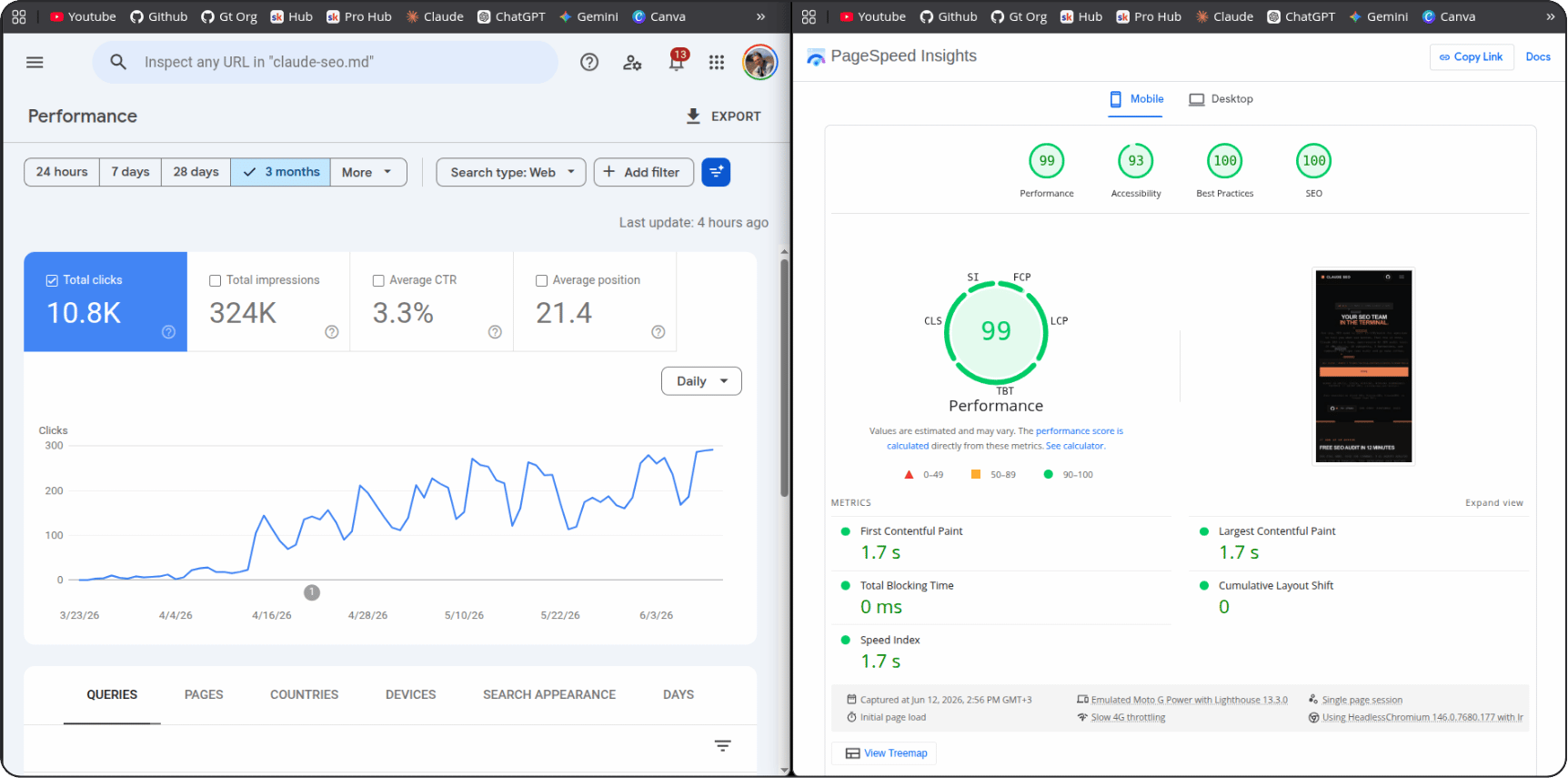
Google Search Console clicks and impressions for a three-month-old site climbing from launch to steady organic growth between 23 March and 12 June 2026

Google Search Console for a site started 23 March 2026 and run on this workflow: total clicks and impressions across its first three months, through 12 June 2026.

Using Codex instead of Claude Code? Use Codex SEO, the Codex-first port with TOML agents, plugin packaging, deterministic runners, and the same SEO workflow surface.

Who this is for

  • SEO agencies running 5+ client sites. Replace quarterly deep audits with weekly automated runs. Same team capacity, 4× audit cadence, every recommendation comes with a falsifiability check the client can verify.
  • In-house SEO leads at SaaS / publisher / e-commerce companies. Second-pair-of-eyes before executive reviews. Catches what GSC and Lighthouse hide: schema deprecation, AI-citability gaps, expired-domain heritage risk, parasite-SEO exposure, machine-translation drift.
  • Freelance SEO consultants. Anchor day-one client scope with a 15-minute audit and a real 0-100 score. Win the engagement with concrete proof of value before you spend an hour writing the proposal.
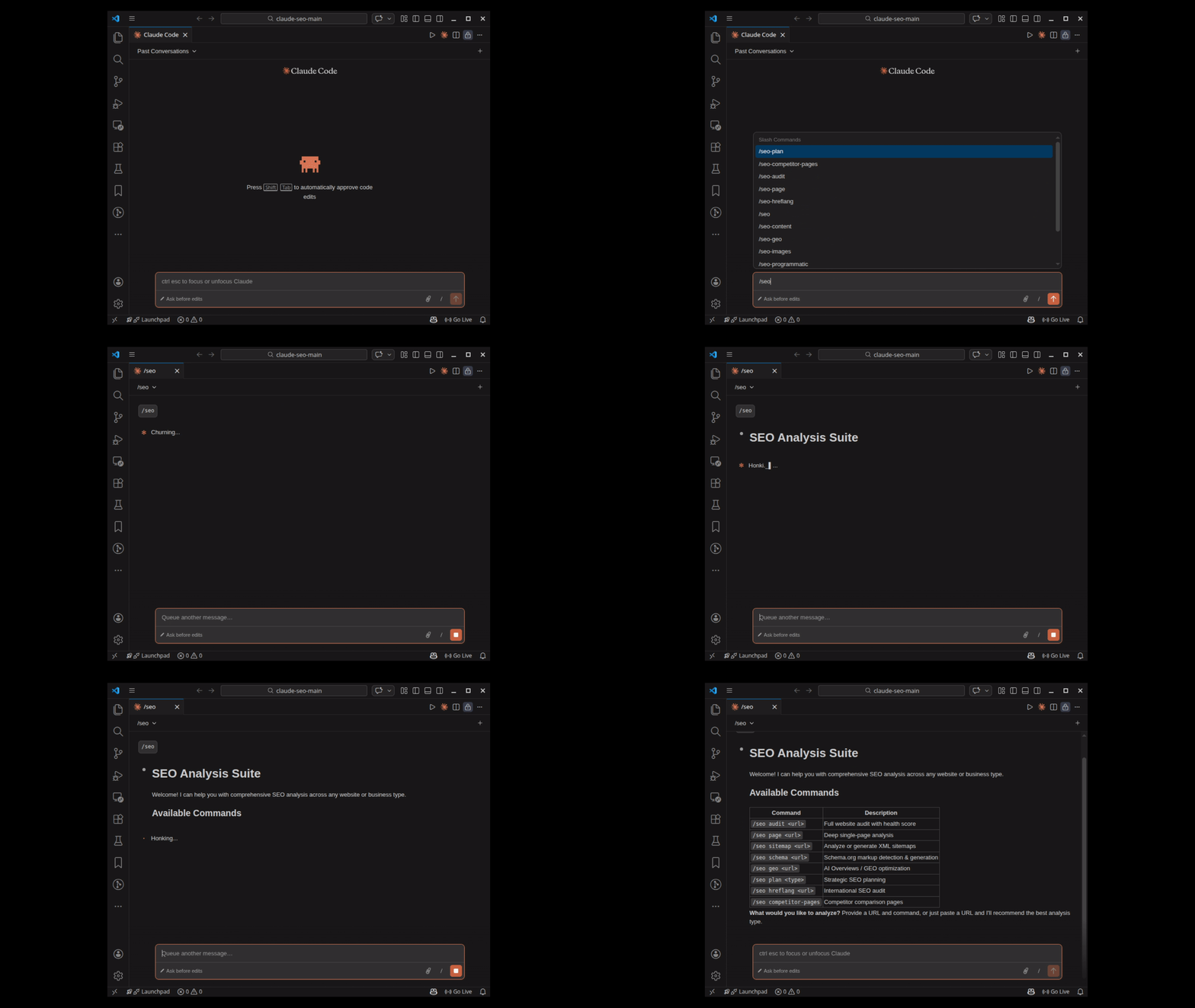
Claude SEO /seo command demo in Claude Code terminal

Run a full audit and watch parallel agents fan out across the site:
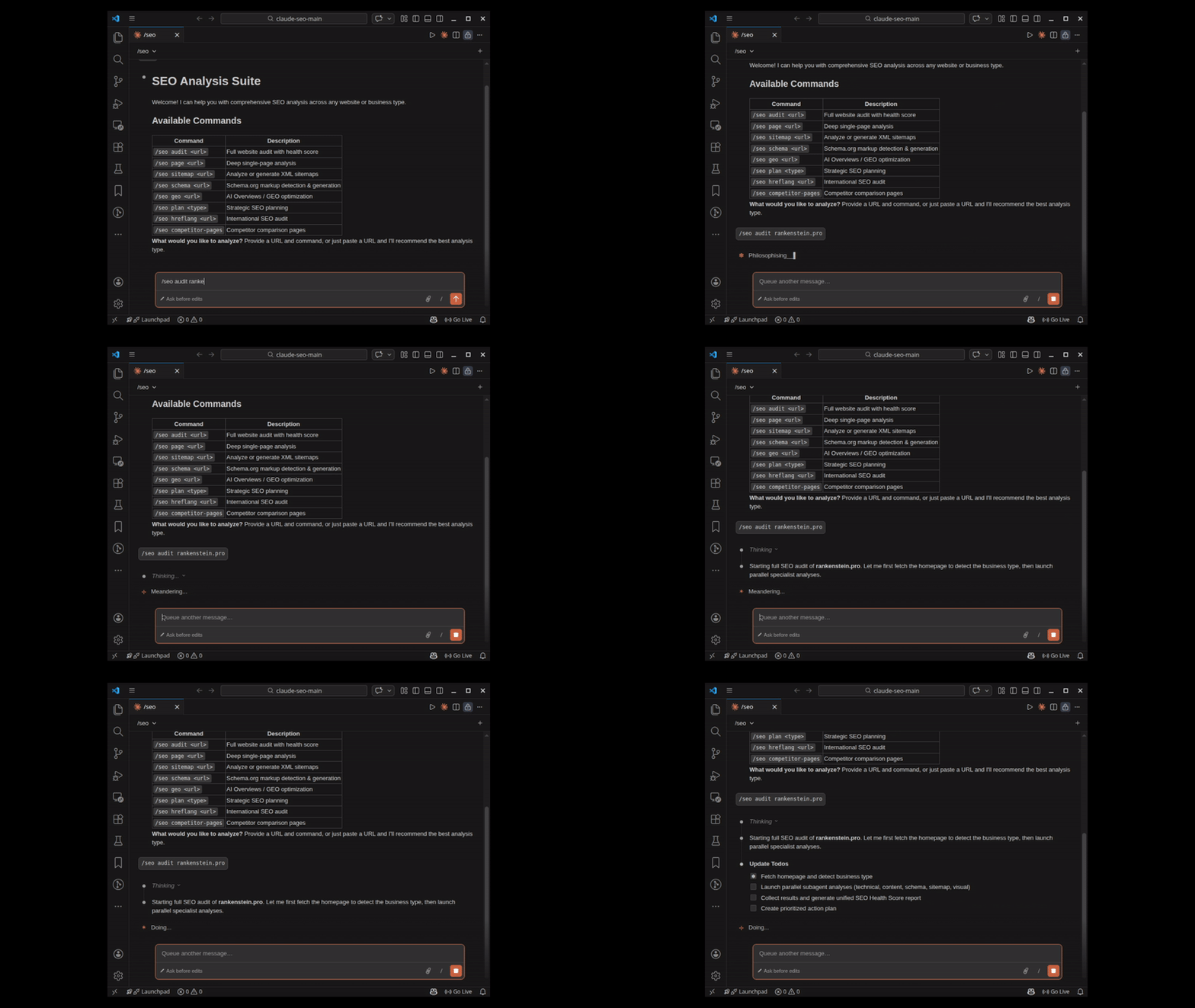
Claude SEO /seo audit demo: parallel subagents producing a prioritized action plan

Watch the full demo on YouTube

Table of Contents

Installation

ℹ️ Which version are you installing?

  • Public open-source (default). The commands below install from AgriciDaniel/claude-seo — MIT, public releases, no membership required.
  • AI Marketing Hub Pro member? Install the community version with early access instead: swap AgriciDaniel/claude-seo for AI-Marketing-Hub/claude-seo and the plugin slug claude-seo@agricidaniel-claude-seo for claude-seo@ai-marketing-hub-claude-seo. Requires gh auth login (or PAT) with access to the AI-Marketing-Hub org. If /plugin marketplace add 404s, DM in the Skool community to get added.

Plugin Install (Claude Code 1.0.33+)

The fastest path. One-time marketplace add, then plugin install:

/plugin marketplace add AgriciDaniel/claude-seo
/plugin install claude-seo@agricidaniel-claude-seo
/seo setup

The explicit setup step creates an isolated Python environment in Claude's persistent plugin data and installs Playwright Chromium. Check it at any time with /seo doctor. No global Python packages or PATH shims are created.

Manual Install (Unix / macOS / Linux)

git clone --depth 1 https://github.com/AgriciDaniel/claude-seo.git
bash claude-seo/install.sh
One-liner (curl, review then run)
curl -fsSL https://raw.githubusercontent.com/AgriciDaniel/claude-seo/main/install.sh > install.sh
cat install.sh        # review before running
bash install.sh
rm install.sh

Windows (PowerShell)

git clone --depth 1 https://github.com/AgriciDaniel/claude-seo.git
powershell -ExecutionPolicy Bypass -File claude-seo\install.ps1

Why git clone instead of irm | iex? Claude Code's own security guardrails flag irm ... | iex as a supply chain risk: downloading and executing remote code without verification. The git clone approach lets you inspect claude-seo\install.ps1 before running it.

Quick Start

# Start Claude Code
claude

# Full site audit: parallel sub-agents produce a prioritized action plan
/seo audit https://example.com

# Deep single-page analysis: on-page elements, content quality, schema
/seo page https://example.com/about

# Schema markup audit: detect, validate, generate
/seo schema https://example.com

# AI search optimization: passage citability + primary-source-aligned recommendations
/seo geo https://example.com

# Generate a sitemap with industry templates
/seo sitemap generate

Commands
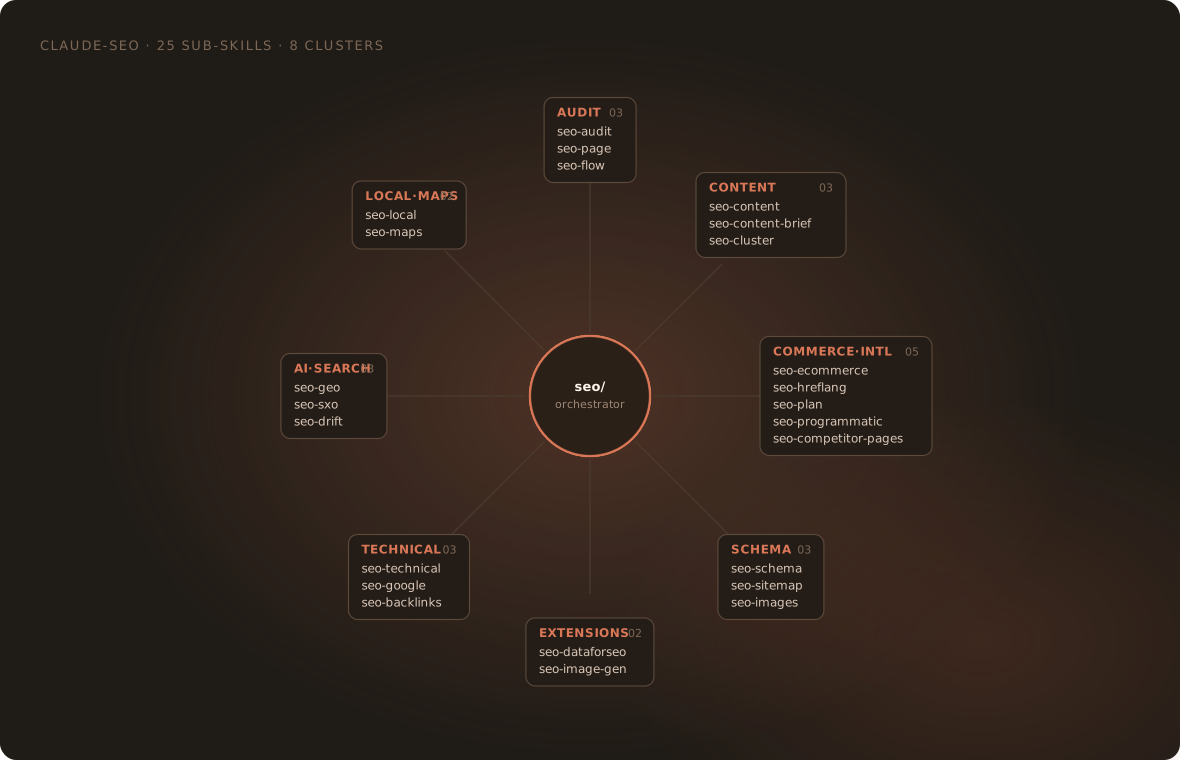
Claude SEO sub-skill ecosystem: 25 modules grouped into 8 categories (audit, content, schema, technical, AI search, local + maps, commerce + intl, extensions) around the central orchestrator

32 user-invocable /seo commands across the orchestrator, its sub-skills, and 8 MCP extensions. Full reference in docs/COMMANDS.md.

Command Description
/seo setup Create or refresh the isolated Python runtime and Chromium
/seo doctor Check runtime readiness without changing the system
/seo audit Full website audit with parallel sub-agent delegation
/seo page Deep single-page analysis
/seo technical Technical SEO audit across 9 categories
/seo content E-E-A-T and content quality analysis
/seo content-brief Detailed content brief: target keywords, outline, internal links
/seo schema Detect, validate, and generate Schema.org markup
/seo geo AI Overviews / Generative Engine Optimization
/seo sitemap Analyze or generate XML sitemaps
/seo images Image optimization analysis
/seo plan Strategic SEO planning (saas, local, ecommerce, publisher, agency)
/seo programmatic Programmatic SEO analysis and planning
/seo competitor-pages Competitor comparison p

readme truncated — read the full docs on github

Frequently asked questions

Is claude-seo free to use?

claude-seo is open source under the MIT licence. There is no licence fee and no seat count — you can self-host it or, where the project offers one, pay a vendor for a managed version instead.

What does claude-seo do?

Universal SEO skill for Claude Code. 25 sub-skills + 18 sub-agents covering technical SEO, E-E-A-T, schema, GEO/AEO, backlinks, local SEO, maps intelligence, se

What is claude-seo written in?

claude-seo is primarily written in Python. Its source is publicly available at https://github.com/AgriciDaniel/claude-seo, and it has 17,090 GitHub stars.

