BlokDust is a free, open-source visual music-making environment in which blocks dropped on a grid connect by proximity and particle emitters and lasers fire into sound sources to build self-playing instruments, made for musicians, experimenters and producers who want generative sound without patching hardware or writing code.
What it is
BlokDust lives in the web and plug-in ecosystem. It is a TypeScript application built around a node-based, visual-programming interface, and its topics describe it as a modular synthesizer and a generative-music tool. The same project reaches users three ways: as a website at blokdust.funputs.com, as free VST3/AU plug-ins for macOS and Windows, and as a standalone app. Version 2.0 shipped in November 2026 with the site and the free desktop plug-ins, and the next step on the roadmap is an iPad (AUv3) version.
The concrete problem it solves is the state of the original. This repository is a faithful, much faster rebuild of BlokDust v1, the 2015 release that remains available on the v1-legacy branch and at the v1-before-v2 tag, while the master branch holds V2 from version 2.0.2. Where v1 was a browser application, the rebuild keeps the block-grid playground and packages it for the desktop and for DAW hosting as VST3/AU, so instruments built on the grid can be carried into a production setup.
Key capabilities
- A node-based grid on which blocks connect to their neighbours when placed near one another, so an instrument is assembled by arranging parts on the grid.
- Physics-driven sound generation: particle emitters and lasers fire into sound sources, producing self-playing musical environments.
- Three delivery formats from one project: the web app at blokdust.funputs.com, free VST3/AU plug-ins for macOS and Windows, and a standalone app.
- Plug-ins are downloaded from the site under Settings › DOWNLOAD and load into a DAW as VST3 or AU.
- Sharing of what users build, as the tagline puts it: make sounds, build instruments and share your creations.
- A documented engineering corpus in the repository, including docs/architecture/overview.md, docs/decisions/README.md, docs/specs/README.md and AGENTS.md for agent contributors.
Who uses it and how
- Visitors try it immediately by opening blokdust.funputs.com in a browser, with nothing to install.
- Producers on macOS or Windows download the free plug-ins through Settings › DOWNLOAD and run BlokDust inside their DAW as a VST3 or AU.
- Musicians and experimenters working in generative music and modular synthesis use emitters and lasers to build self-playing environments rather than sequenced parts.
- Contributors target the master branch and clone https://github.com/BlokDust/BlokDust.git, following the setup and verification commands in docs/engineering/toolchain.md and AGENTS.md; the original was a collaboration between Luke Twyman, Luke Phillips and Ed Silverton, and the 2026 rebuild was built by Luke Phillips.
Getting started
The hosted web app at blokdust.funputs.com is the quickest start, and desktop users download the free macOS and Windows plug-ins from the same site under Settings › DOWNLOAD. Contributors clone the repository and run pnpm install followed by pnpm bd list, with toolchain details in docs/engineering/toolchain.md.
How it compares
The facts supplied name no competing music tools and no list of paid products that BlokDust replaces, so it stands alone in this registry as the only visual, physics-driven music playground described here. What can be said on its own terms is that the V2 codebase is AGPL-3.0-or-later while the original v1 remains MIT, that the plug-ins are free, and that the browser version requires no installation at all.
When to use it — and when not to
Choose BlokDust to sketch generative, self-running musical environments quickly, or to carry that workflow into a DAW through the free VST3/AU plug-ins. Hold off if an iPad or AUv3 build is required today, since that version is only on the roadmap, or if copyleft licensing is a blocker, because V2 is AGPL-3.0-or-later and arrives as a source snapshot starting at 2.0.2 rather than as a continuation of the original V1 history. The facts mention no server-side stack such as a database, storage or mail service to operate, but contributors must read the docs/ tree and AGENTS.md before the toolchain makes sense, and the repository carries 23 open issues.
project readme (upstream, from github) — read inline
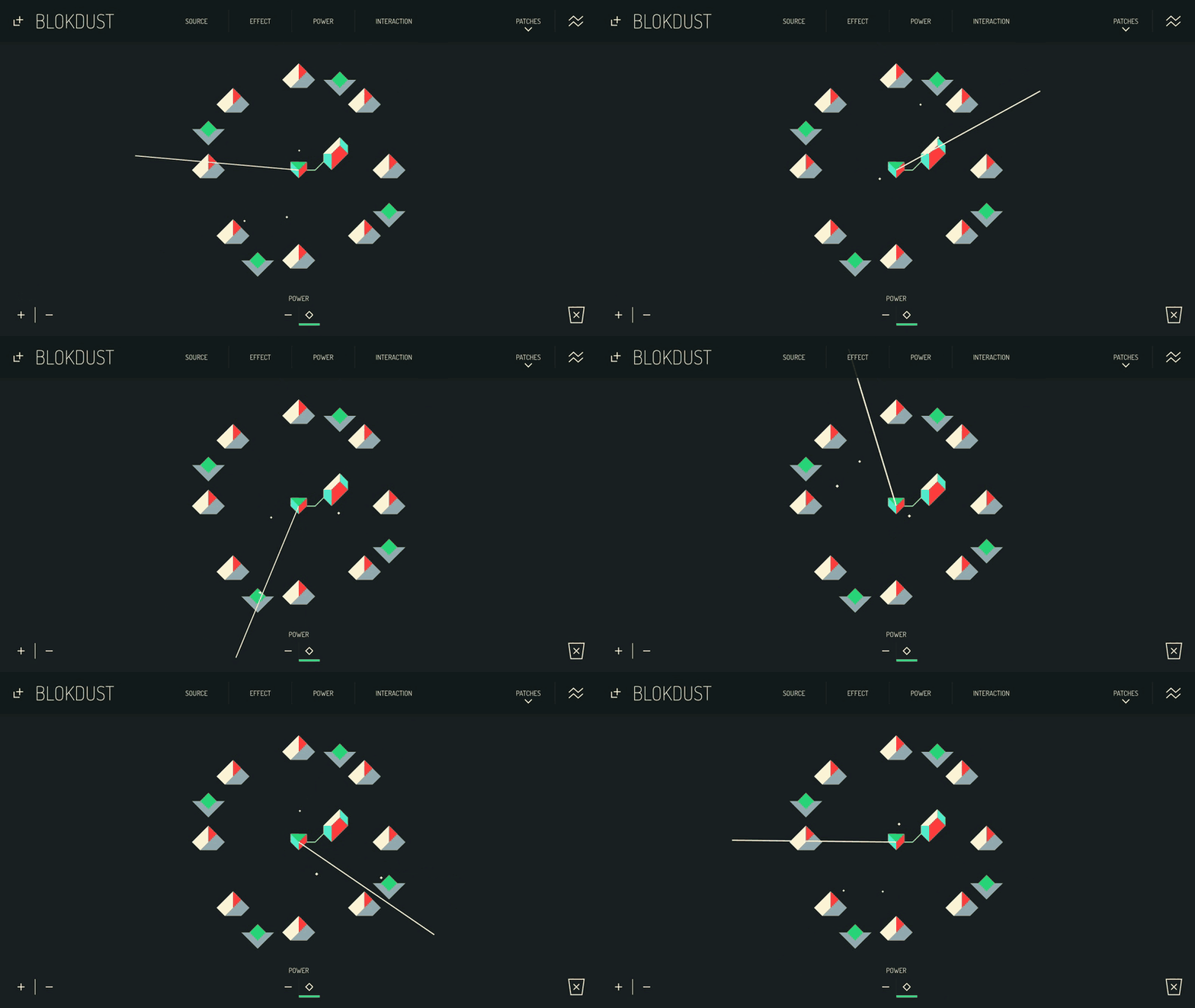
BlokDust 2
A visual, physics-driven music playground. Drop blocks on a grid; nearby blocks connect; particle emitters and lasers
fire into sound sources to make self-playing musical environments. A faithful, much faster rebuild of
BlokDust v1 (2015), for the web and as VST3/AU plug-ins and a standalone app.
Play it: blokdust.funputs.com · Plug-ins: Settings › DOWNLOAD on the site
(macOS and Windows, free)
Status: 2.0 is out (November 2026): the website and the free plug-ins for macOS and Windows. Next: an iPad
(AUv3) version. See the roadmap and what's new since v1.
Source and version history
This repository is the public home of BlokDust 2, starting with version 2.0.2. The master branch contains V2;
new contributions should target it. V2 was introduced as a source snapshot after the original V1 history.
The original application and its history remain available on the v1-legacy branch
and at the v1-before-v2 tag. V1 retains its MIT license;
V2 is AGPL-3.0-or-later, with the original attribution and notices preserved in NOTICE.md.
Clone the current source with git clone https://github.com/BlokDust/BlokDust.git. Local setup and verification
commands are in docs/engineering/toolchain.md and AGENTS.md.
Credits
BlokDust is a collaboration between Luke Twyman, Luke Phillips and Ed Silverton, released in 2016
(the original). This rebuild was released in 2026, built by Luke Phillips.
License
AGPL-3.0-or-later. Portions derived from BlokDust v1 (MIT), see NOTICE.md. Patches you make are yours.