baserow is a free, open source miscellaneous project written in Python and released under a custom open-source licence. It has 5,932 GitHub stars, 735 forks and 1,239 open issues, and was last pushed 6 hours ago. On this registry it ranks #13 of 25 tracked projects in Miscellaneous, and is listed as an open source replacement for 2 paid products, with 5 head-to-head comparisons available. It gained 73 stars over the last 6 tracked days.

What is baserow?

What it is

Baserow is an open-source no-code platform for building databases, applications, automations, dashboards, and AI agents. It combines a spreadsheet-style interface with a relational database backend, letting teams structure data, create internal tools, and visualize results without writing code. The project is written in Python and built on Django, Vue.js, and PostgreSQL, and it lives in the low-code and no-code ecosystem as a self-hostable alternative to Airtable and Microsoft Excel. It is distributed under an open-core model, with all non-premium and non-enterprise features licensed under the MIT License for commercial and private use.

The concrete problem Baserow solves is data control. Teams that rely on hosted spreadsheet-database hybrids often face storage limits, per-seat pricing, and compliance constraints that conflict with internal security requirements. Baserow addresses this by offering a cloud option and a fully self-hosted deployment with no storage restrictions, so organizations can keep data on their own infrastructure. It also targets teams that need to turn a database into a real application: forms, portals, dashboards, and automations can all be built on top of the same structured data, published on a custom domain, and accessed through a headless, API-first interface.

Key capabilities

  • Spreadsheet-database hybrid that pairs the familiarity of a grid with relational data organization.
  • Application builder for creating portals and internal tools, publishable on a custom domain.
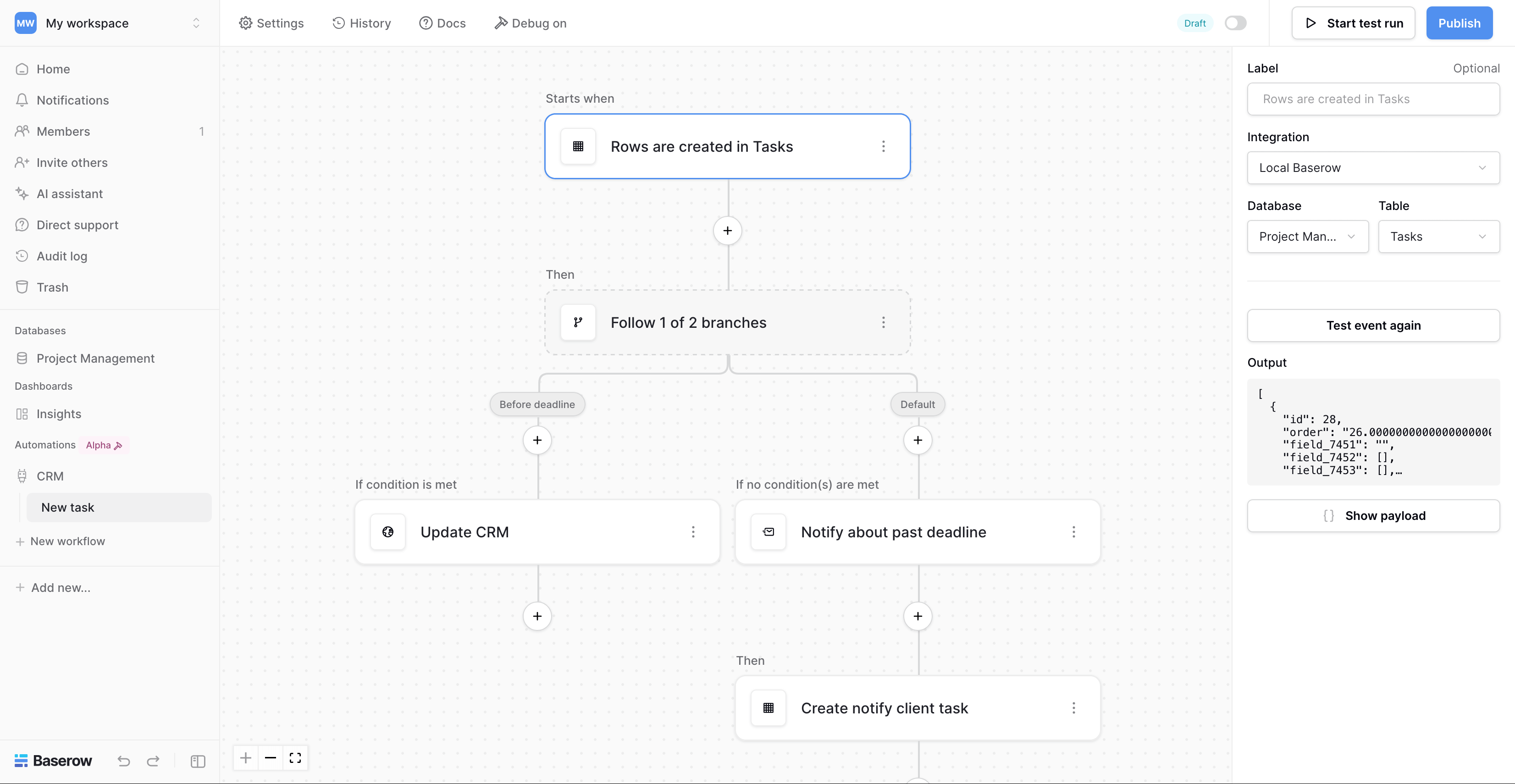
  • Automations for repetitive workflows triggered by data events.
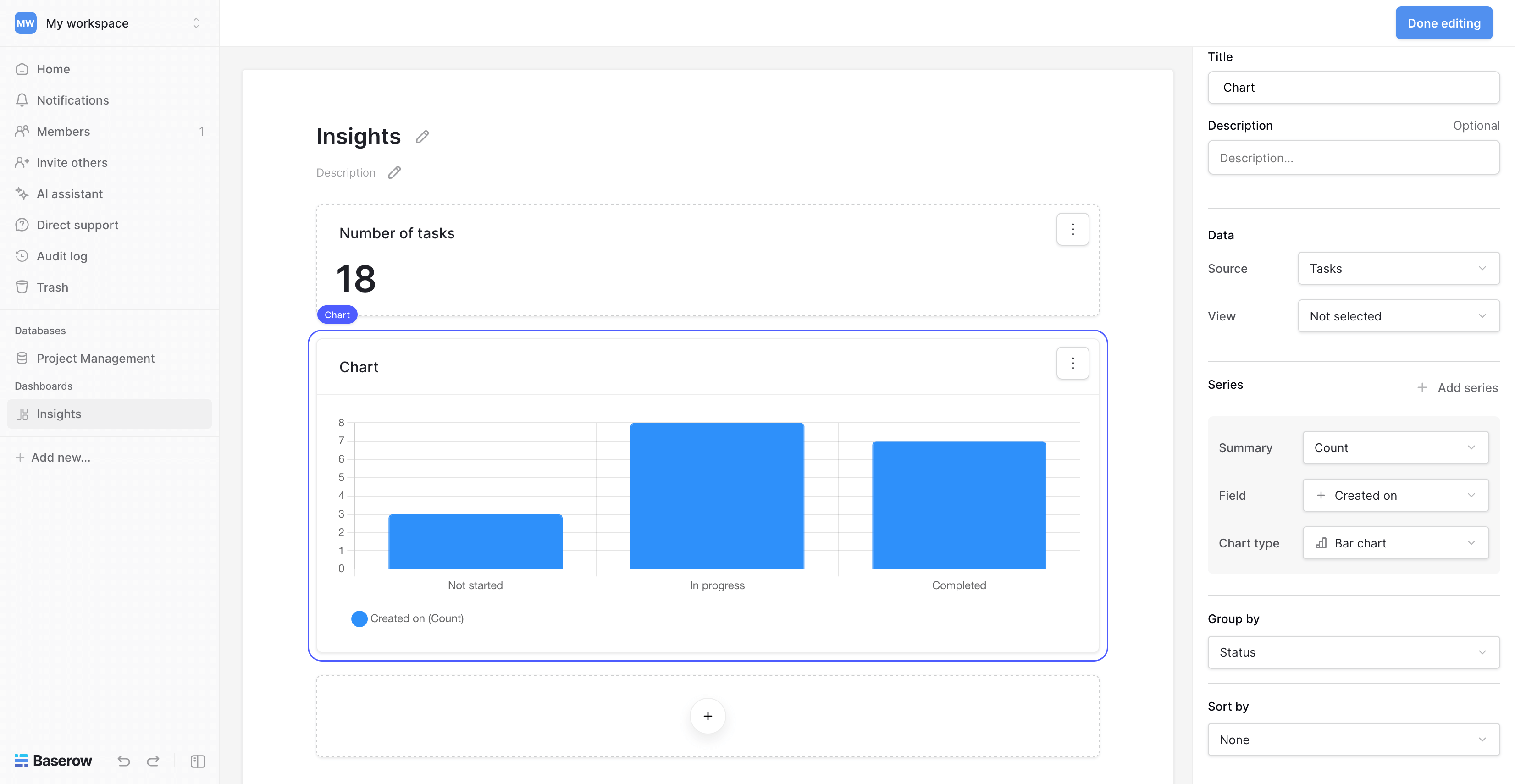
  • Dashboards for visualizing data stored in the underlying tables.
  • Kuma, a built-in AI assistant that builds complete solutions from natural language prompts.
  • Headless and API-first design, with OpenAPI schema and Redoc documentation exposed.
  • Fully extensible, self-hostable deployment with no storage restrictions.

Who uses it and how

  • Teams migrating from Airtable or Microsoft Excel that need relational structure with a grid interface.
  • Organizations with GDPR, HIPAA, or SOC 2 Type II compliance obligations that require self-hosted data control.
  • Internal tool builders who create portals, forms, and dashboards on top of a shared database.
  • Operations teams that automate repetitive workflows using event-driven automations.
  • Developers integrating Baserow into existing systems through its headless API.

Getting started

Baserow runs through a Docker image (baserow/baserow:2.3.3), and installation is documented for Docker, Docker Compose, Helm, Heroku, Render, Digital Ocean, AWS, Cloudron, Railway, and Elestio. A hosted cloud option is available at https://baserow.io for users who prefer not to self-host.

When to use it — and when not to

Baserow is positioned as an alternative to Airtable and Microsoft Excel, and it offers the advantage of self-hosting, no storage restrictions, and MIT-licensed core features, while the paid products it replaces are hosted services with vendor-controlled infrastructure. A self-hoster must operate the full stack that Baserow depends on, including PostgreSQL, and manage deployment, updates, and scaling. The project is also young, with a large number of open issues and no listed contributors or release history in the registry data, so teams should expect an actively evolving codebase.

project readme (upstream, from github) — read inline

Baserow: build databases, automations, apps & agents with AI — no code

Baserow is the secure, open-source platform for building databases, applications, automations, and AI agents — all without code. Trusted by over 150,000 users, Baserow delivers enterprise-grade security with GDPR, HIPAA, and SOC 2 Type II compliance, plus cloud and self-hosted deployments for full data control. With a built-in AI Assistant that lets you create databases and workflows using natural language, Baserow empowers teams to structure data, automate processes, build internal tools, and create custom dashboards. Fully extensible and API-first, Baserow integrates seamlessly with your existing tools and performs at any scale.

  • A spreadsheet database hybrid combining ease of use and powerful data organization.
  • Create applications and portals, and publish them on your own domain.
  • Automate repetitive workflows with automations.
  • Visualize your data with dashboards.
  • Kuma, powerful AI-assistant to builds complete solutions.
  • GDPR, HIPAA, and SOC 2 Type II compliant.
  • Easily self-hosted with no storage restrictions or sign-up on https://baserow.io to get started immediately.
  • Best Alternative to Airtable.
  • Open-core with all non-premium and non-enterprise features under the MIT License allowing commercial and private use.
  • Headless and API first.
  • Uses popular frameworks and tools like Django, Vue.js and PostgreSQL.

Deploy to Heroku

docker run -v baserow_data:/baserow/data -p 80:80 -p 443:443 baserow/baserow:2.3.3
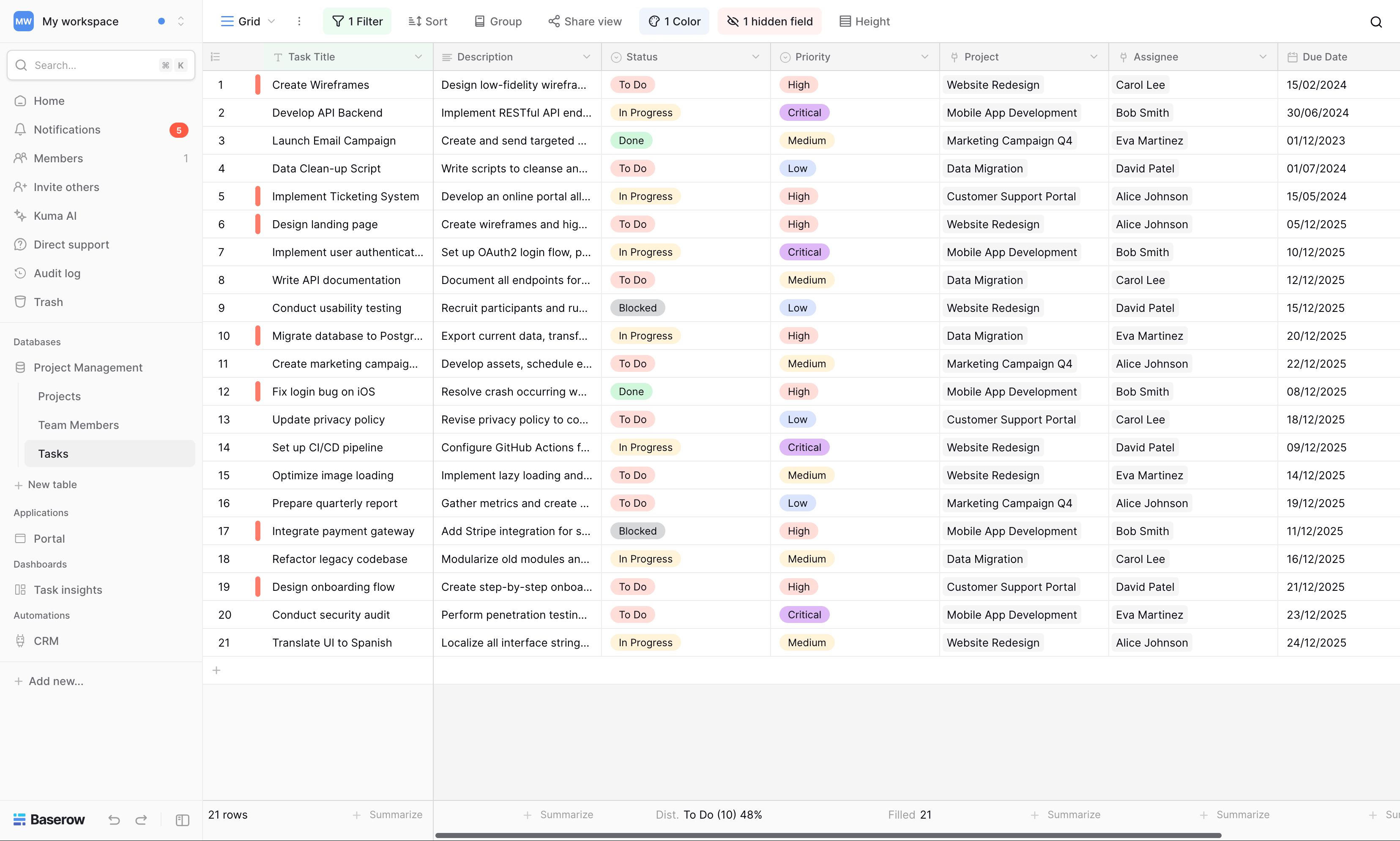
Baserow database screenshot

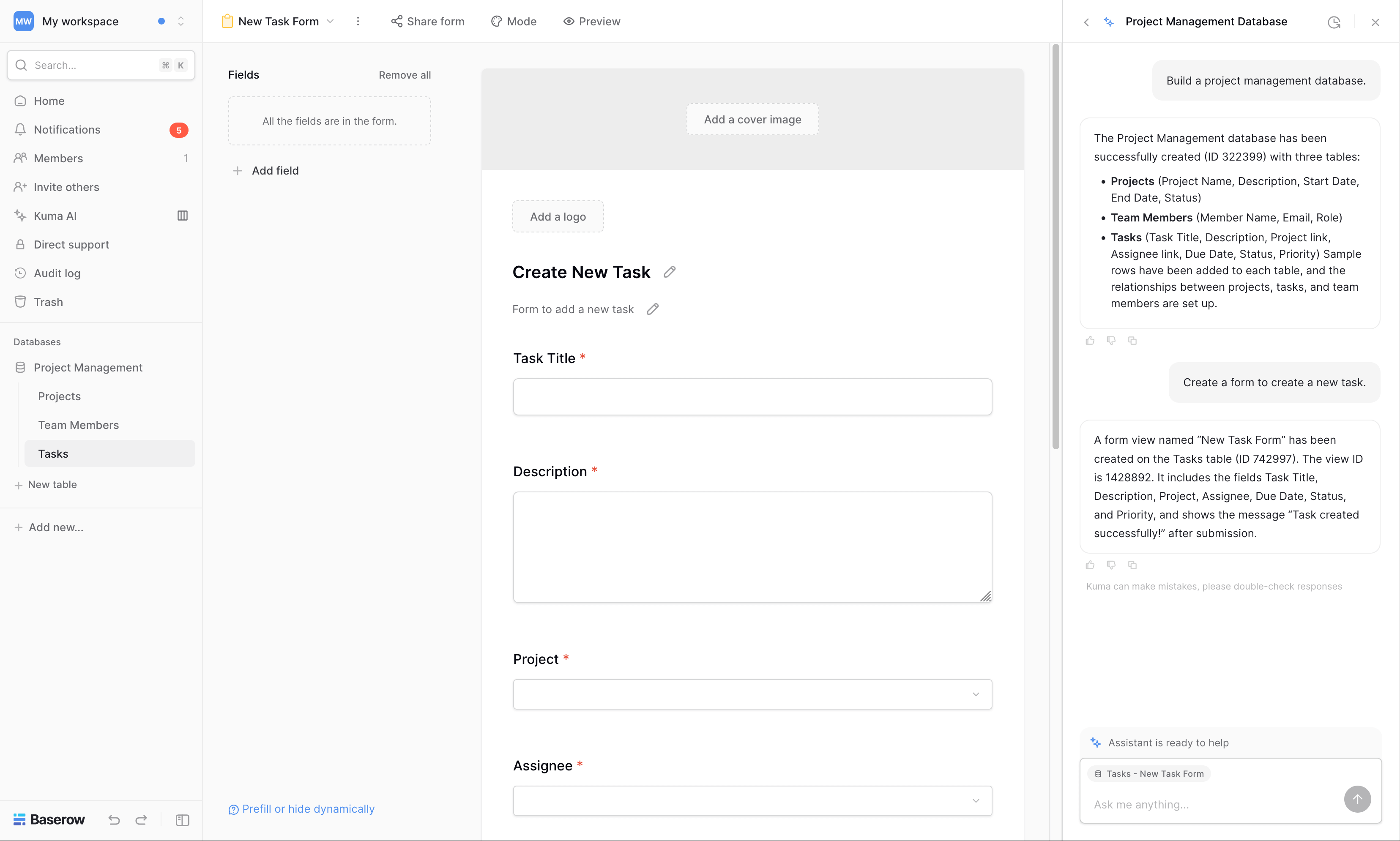
Baserow form screenshot

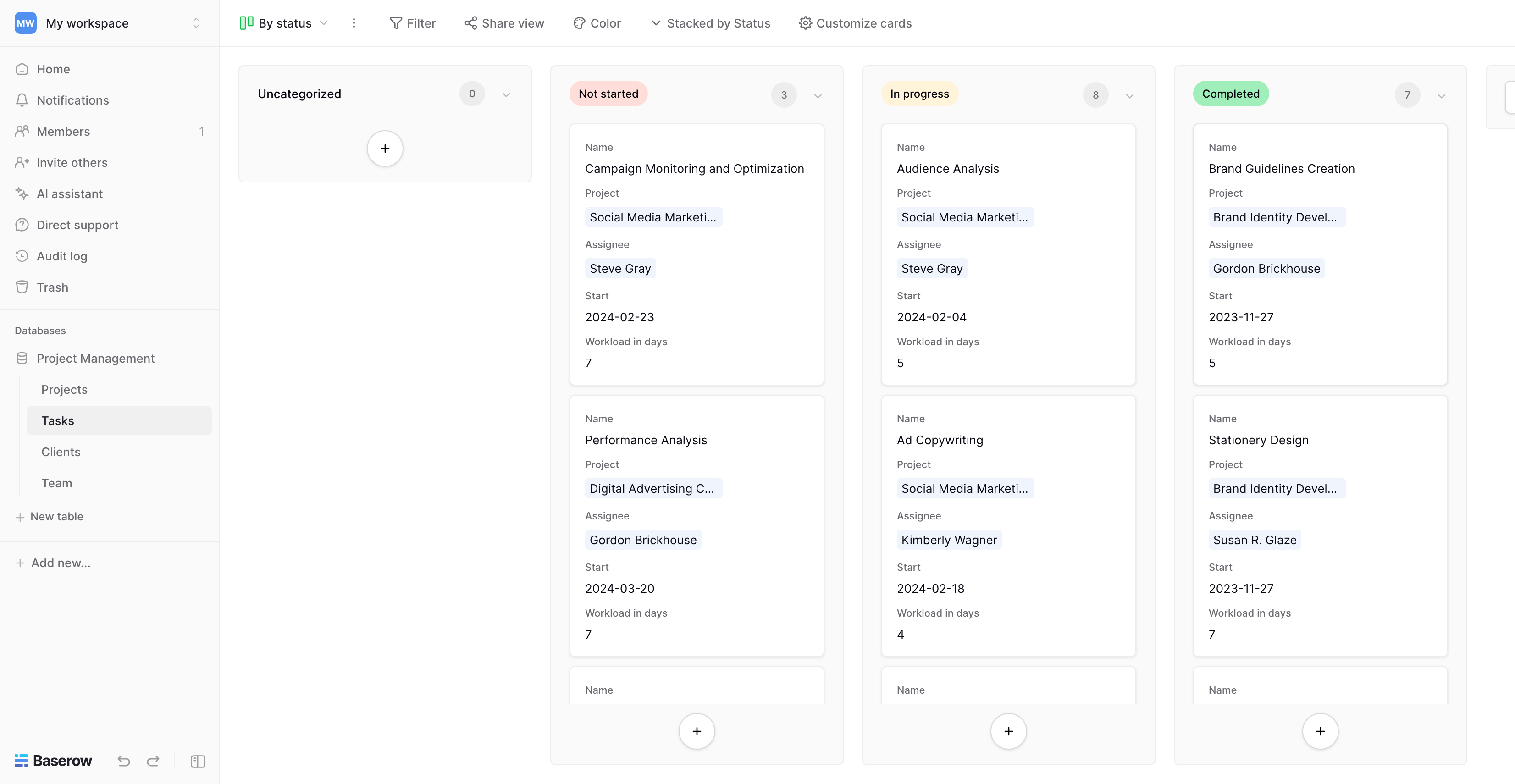
Baserow kanban screenshot

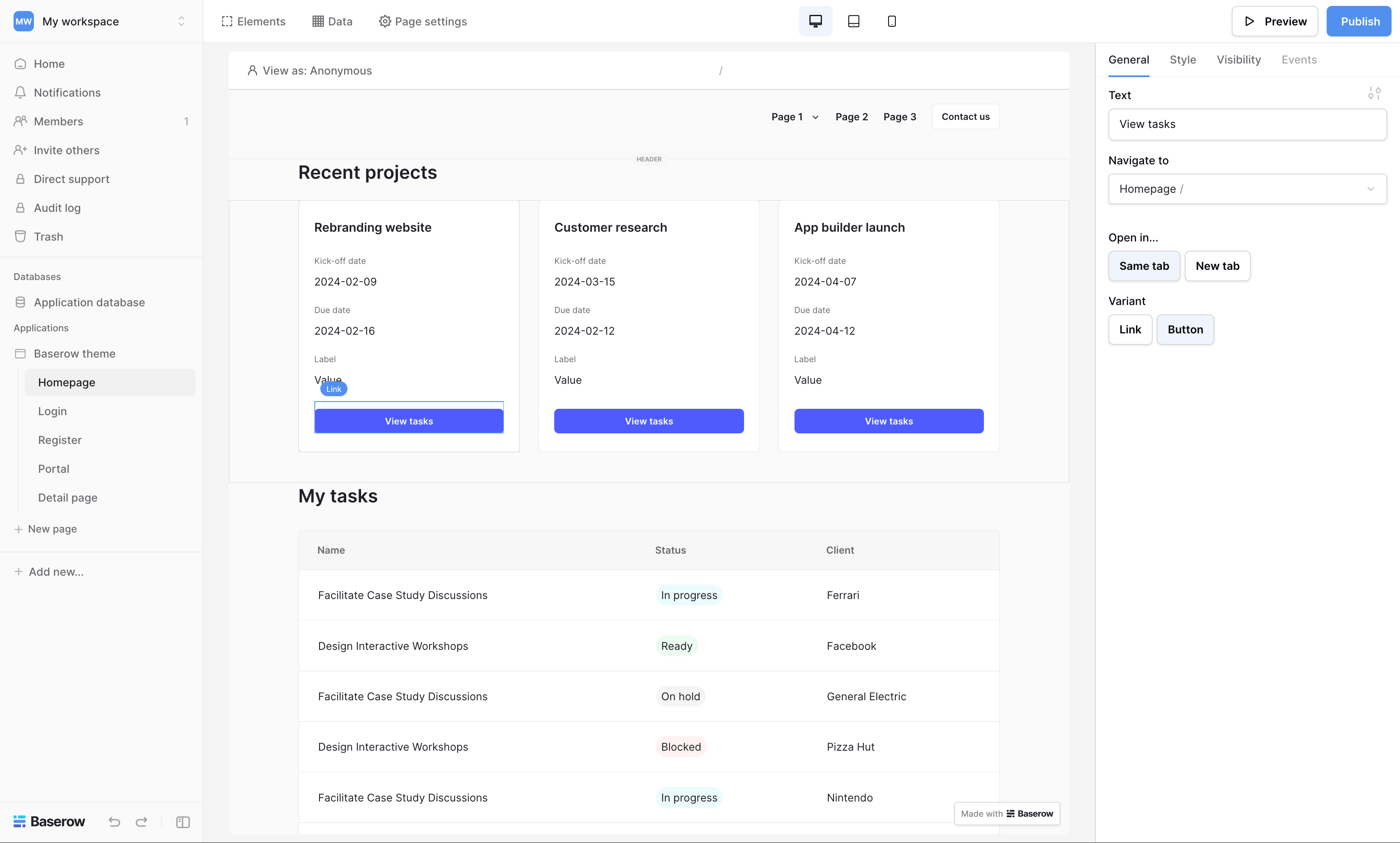
Baserow application builder

Baserow application builder

Baserow application builder

🚨 Repository Migration Notice

Baserow has moved from GitLab to GitHub. All issues have been successfully migrated, but merged and closed merge requests (PRs) were not imported. You can still browse the old repository and its history at: https://gitlab.com/baserow/baserow.

Please use this GitHub repository for all new issues, discussions, and contributions going forward at: https://github.com/baserow/baserow.

Get Involved

Join our forum at https://community.baserow.io/. See CONTRIBUTING.md for how to get involved.

Installation

Official documentation

The official documentation can be found on the website at https://baserow.io/docs/index or here inside the repository. The API docs can be found here at https://api.baserow.io/api/redoc/ or if you are looking for the OpenAPI schema here https://api.baserow.io/api/schema.json.

Development environment

If you want to contribute to Baserow you can setup a development environment like so:

git clone https://github.com/baserow/baserow.git
cd baserow

just dc-dev build --parallel
just dc-dev up -d

The Baserow development environment is now running. Visit http://localhost:3000 in your browser to see a working version in development mode with hot code reloading and other dev features enabled.

More detailed instructions and more information about the development environment can be found at https://baserow.io/docs/development/development-environment.

Why Baserow?

Unlike proprietary tools like Airtable, Baserow gives you full data ownership, infinite scalability, and no vendor lock-in — all while keeping the simplicity of a spreadsheet interface.

Meta

Created by Baserow B.V. - [email protected].

Distributes under the MIT license. See LICENSE for more information.

Version: 2.3.3

The official repository can be found at https://github.com/baserow/baserow.

The changelog can be found here.

Become a GitHub Sponsor here.

Frequently asked questions

Is baserow free to use?

baserow is open source. There is no licence fee and no seat count — you can self-host it or, where the project offers one, pay a vendor for a managed version instead.

What does baserow do?

Build databases, automations, apps & agents with AI — no code. Open source platform available on cloud and self-hosted. GDPR, HIPAA, SOC 2 compliant. Best Airtable alternative.

What is baserow written in?

baserow is primarily written in Python. Its source is publicly available at https://github.com/baserow/baserow, and it has 5,932 GitHub stars.

What is a good open source alternative to Airtable?

baserow is one of the open source options listed as an alternative to Airtable, Microsoft Excel. Compare licences, stars and activity side by side on the baserow profile.