Argo Events is an Apache-2.0 licensed, Go-based event-driven workflow automation framework that runs on Kubernetes and turns more than 20 kinds of events into more than 10 kinds of automated actions.
What it is
Argo Events is an event-driven workflow automation framework for Kubernetes, written in Go and released under the Apache License 2.0. It lives in the cloud-native ecosystem as part of the Argo project family, and it does one job: it watches for things that happen, applies business-level constraint logic to them, and then fires actions when those constraints are satisfied. It is CloudEvents compliant, which means the events it handles carry a standard envelope rather than an ad-hoc, vendor-specific payload shape.
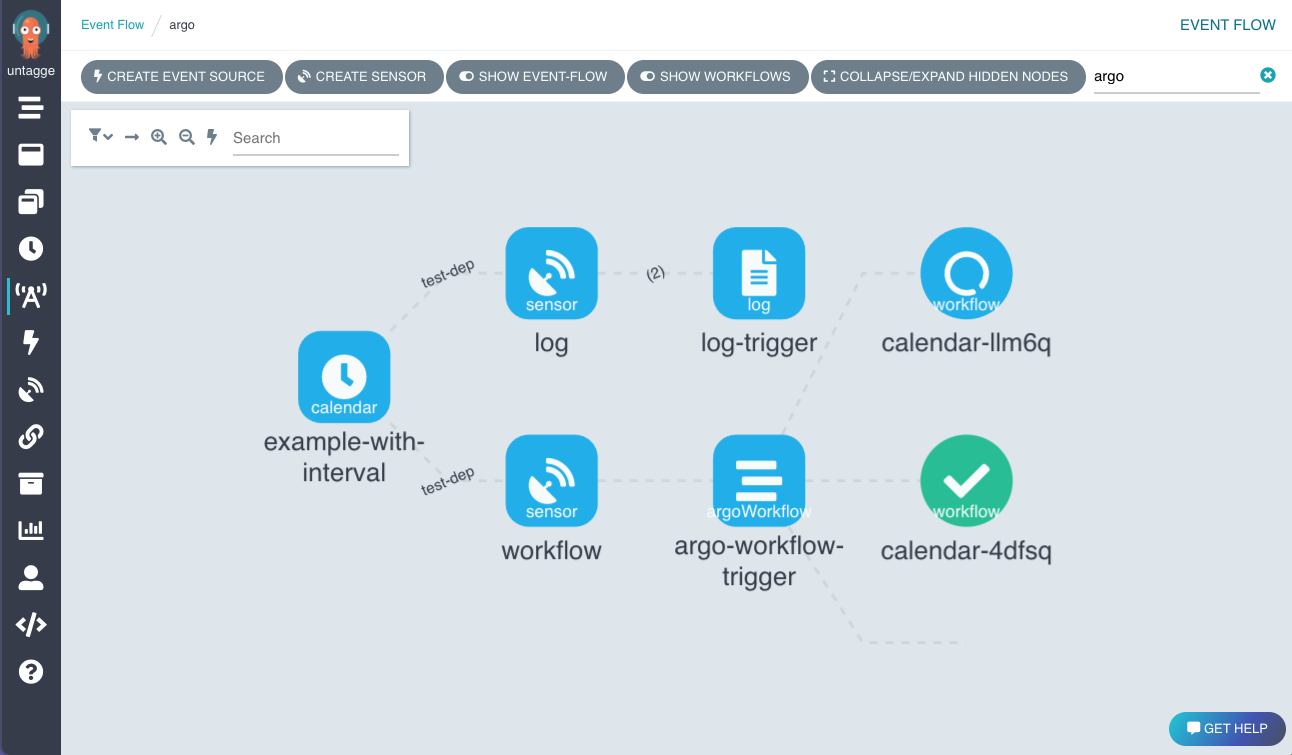
The concrete problem it solves is the glue code that would otherwise sit between event producers and Kubernetes workloads. Events arrive from webhooks, an S3 drop, a cron schedule, or messaging queues such as Kafka, GCP PubSub, SNS, and SQS. Instead of every team writing its own listener service to poll those sources and then shell out to kubectl, Argo Events replaces that bespoke integration layer with two declarative Kubernetes resources: an EventSource, which defines where events come from, and a Sensor, which defines what should happen when they arrive. The actions those Sensors trigger include creating Kubernetes objects, invoking workflows, and calling serverless workloads.
Key capabilities
- Consumes events from 20 or more event sources, including webhook, S3 drop, cron schedule, Kafka, GCP PubSub, SNS, and SQS.
- Triggers 10 or more actions, among them the creation of Kubernetes objects, the invocation of workflows, and the invocation of serverless workloads.
- Applies customisable business-level constraint logic, so a Sensor fires only when the event payload satisfies conditions the operator defines.
- Handles both simple, linear, real-time event flows and complex, multi-source ones that depend on several events before a single action runs.
- Ships as a CloudEvents compliant system, so event producers that already speak CloudEvents need no translation shim.
- Supports the linting of
EventSource and Sensor resources, letting malformed definitions be caught before they reach the cluster.
- Exposes events to the Argo Workflows API and user interface, which provide the control plane for inspecting and driving the flows.
Who uses it and how
- Platform and infrastructure teams on Kubernetes use it to wire external systems into cluster actions without maintaining custom listener daemons.
- CI/CD groups build pipelines in which a webhook or queue message kicks off an Argo Workflows run, as described in the project's published talks on CI/CD pipeline design.
- Data and research groups adopt it for automated research workflows, an application documented in a public talk about automating such workflows at BlackRock.
- Operators of multi-source flows use Sensors to gate a single downstream action on the arrival of several different events rather than one.
- Teams evaluating the framework can exercise it against the project's hosted demo environment at
workflows.apps.argoproj.io/event-flow/argo, which authenticates through GitHub.
Getting started
The supported installation path is the Helm chart published as argo/argo-events on Artifact Hub, following the installation instructions in the project documentation; a hosted demo environment is also available for a first look.
How it compares
Among the tools named in the project's own material, the closest stablemate is Argo Workflows, which supplies the API and user interface that support Argo Events. The two are complementary rather than competing: Argo Events decides when something should happen, while Argo Workflows carries out the longer-running work that follows. Where the facts name no other equivalent, Argo Events stands as the eventing layer of the Argo line rather than a substitute for the workflow engine itself.
When to use it — and when not to
A self-hoster must operate a Kubernetes cluster and then author, deploy, and maintain EventSource and Sensor resources; the README does not enumerate further prerequisites such as a database or SMTP service. Teams that are not already running Kubernetes, or that need only a single simple cron job, will find the framework heavier than the task deserves, and the project currently carries 156 open issues, so anyone adopting it should expect to track upstream fixes rather than assume a quiet queue.