Apache Druid is a high performance, open source real-time analytics database written in Java and licensed under Apache-2.0, built for teams that need sub-second OLAP queries and fast ingest for UIs, operational queries, and high-concurrency workloads.
What it is
Apache Druid is a high performance real-time analytics database. Its main stated value is reducing time to insight and action. It is written in Java, licensed under Apache-2.0, and listed in this registry under Infrastructure & Operations / Databases. The project lives at druid.apache.org, carries the topic "druid", and shows 14,054 stars, 3,789 forks, 784 open issues, and a last push of 2026-09-17.
The concrete problem Druid solves is the gap between slow analytical stores and workloads that demand fast queries and fast ingest at the same time. Druid is designed for workflows where fast queries and ingest really matter, and it excels at powering UIs, running operational ad-hoc queries, and handling high concurrency. It is positioned as an open source alternative to data warehouses for a variety of use cases, and the design documentation at druid.apache.org/docs/latest/design/architecture.html explains the underlying architecture.
Key capabilities
- Real-time ingestion and querying in one database, aimed at workflows where fast queries and ingest really matter.
- Sub-second OLAP query performance, as stated in the project tagline.
- Powers UIs that depend on fast, interactive query responses.
- Runs operational ad-hoc queries directly against the analytics database.
- Handles high-concurrency query workloads.
- Ships as the Docker image apache/druid on Docker Hub and as a Helm chart at github.com/asdf2014/druid-helm.
- Documents its architecture at druid.apache.org/docs/latest/design/architecture.html and offers downloads at druid.apache.org/downloads.html.
Who uses it and how
- Teams that want an open source alternative to a data warehouse for analytics use cases.
- Product teams powering user-facing UIs that need fast query responses.
- Operators and analysts running ad-hoc operational queries.
- Services with high-concurrency query traffic that cannot tolerate slow analytical scans.
- Workflows where fast ingest and fast queries both matter, with the goal of reducing time to insight and action.
Getting started
The README points to a local tutorial as the entry point, alongside the Apache Druid Docker image published as apache/druid. The project also provides a Helm chart, a downloads page at druid.apache.org/downloads.html, and a build-from-source path.
How it compares
No paid products are listed in the facts provided, and no specific similar tools are named, so Apache Druid stands alone in this registry as its real-time analytics database entry. Its own documented positioning is as an open source alternative to data warehouses for a variety of use cases.
When to use it — and when not to
Self-hosters take on the operational work of running Druid through Docker, a Helm chart, or a build from source, and they own the resulting deployment instead of relying on a managed service. The facts give no managed hosted option, so teams without the capacity to operate the system should look elsewhere. The README excerpt provided is truncated, which leaves the getting-started detail thin, and the repository carries 784 open issues; those are the clearest weaknesses visible in the supplied facts.
project readme (upstream, from github) — read inline












Apache Druid
Druid is a high performance real-time analytics database. Druid's main value add is to reduce time to insight and action.
Druid is designed for workflows where fast queries and ingest really matter. Druid excels at powering UIs, running operational (ad-hoc) queries, or handling high concurrency. Consider Druid as an open source alternative to data warehouses for a variety of use cases. The design documentation explains the key concepts.
Getting started
You can get started with Druid with our local or Docker quickstart. For Kubernetes deployments, the druid-operator is maintained in a separate repository.
Druid provides a rich set of APIs (via HTTP and JDBC) for loading, managing, and querying your data.
You can also interact with Druid via the built-in web console (shown below).
Load data
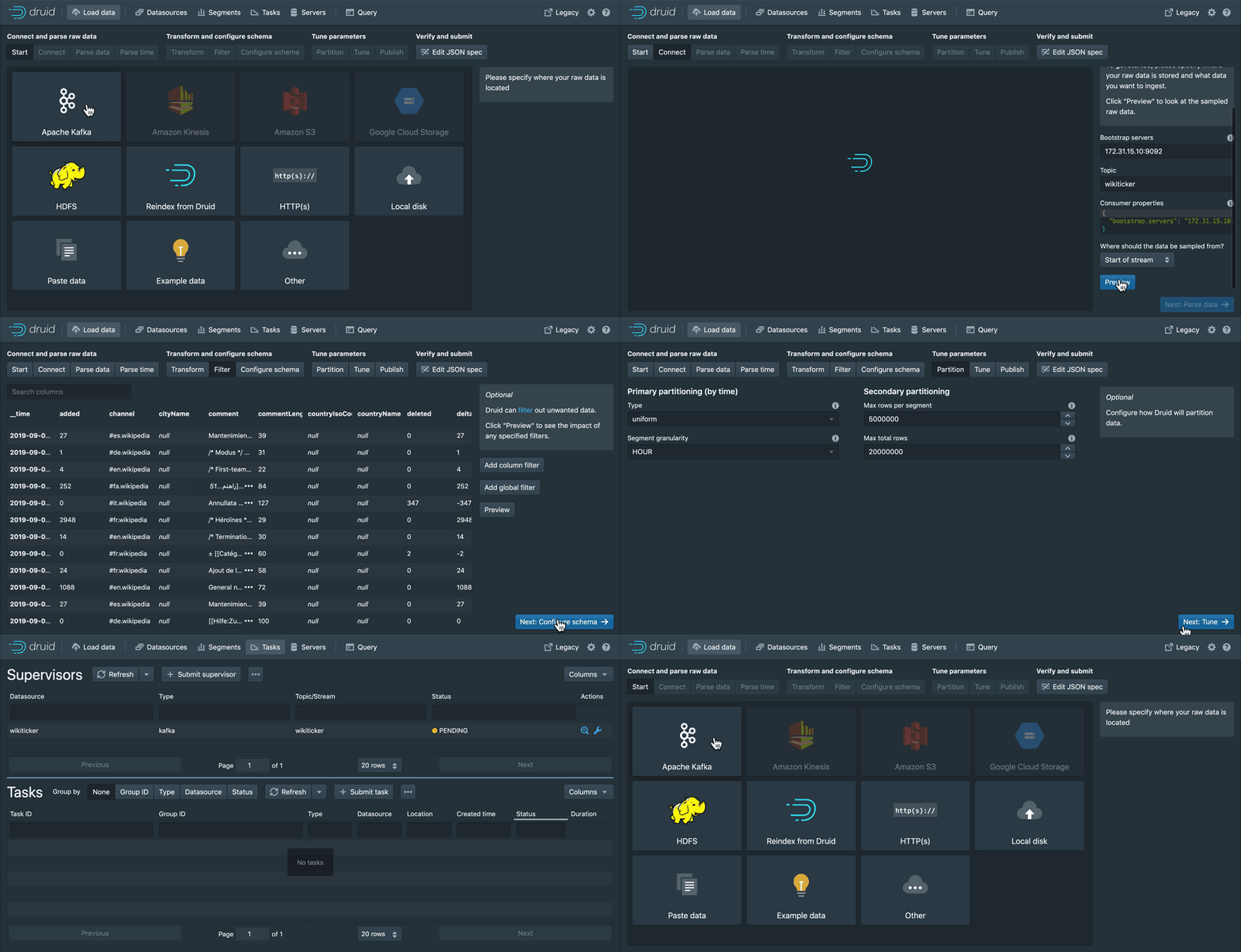
Load streaming and batch data using a point-and-click wizard to guide you through ingestion setup. Monitor one off tasks and ingestion supervisors.
Manage the cluster

Manage your cluster with ease. Get a view of your datasources, segments, ingestion tasks, and services from one convenient location. All powered by SQL systems tables, allowing you to see the underlying query for each view.
Issue queries
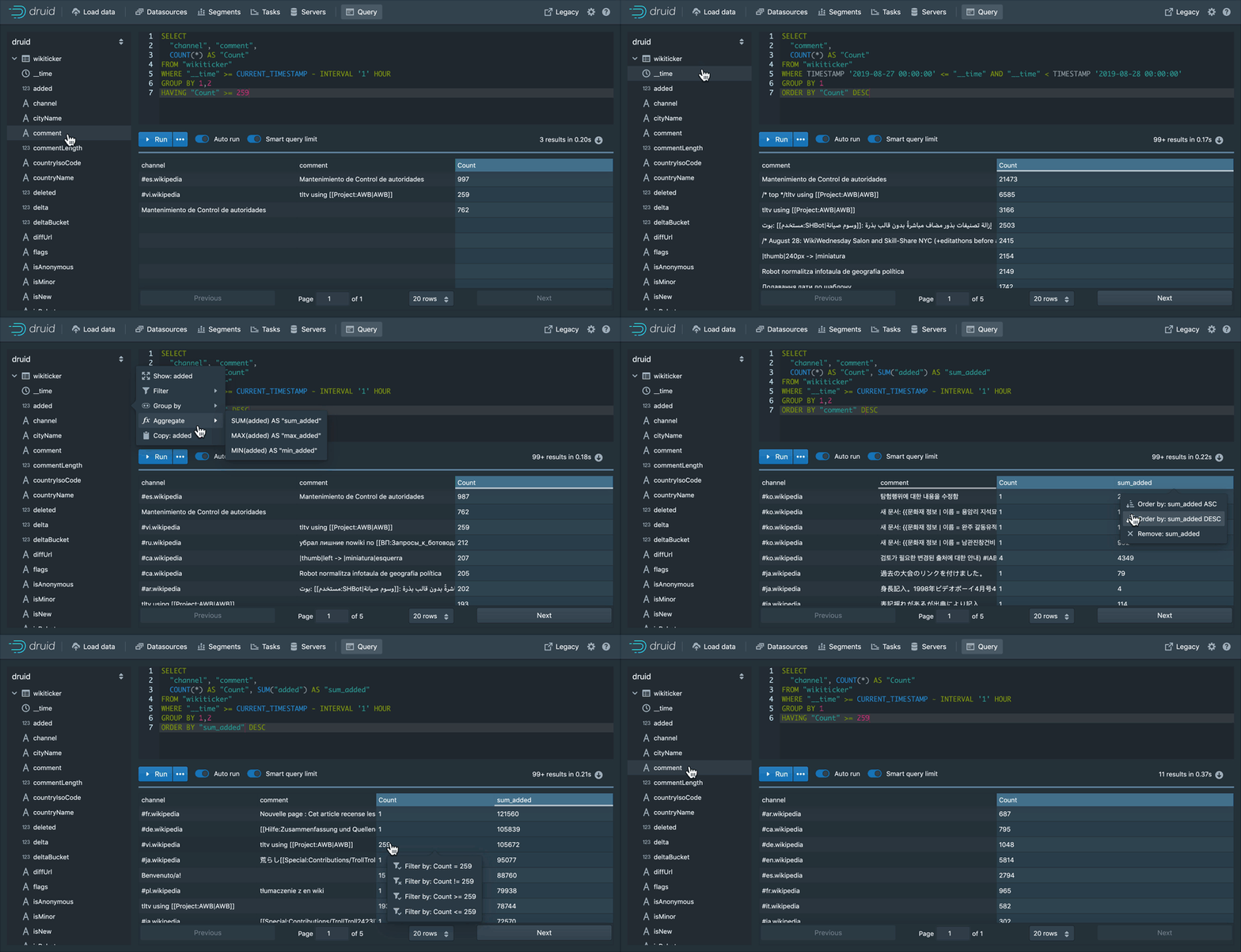
Use the built-in query workbench to prototype DruidSQL and native queries or connect one of the many tools that help you make the most out of Druid.
Documentation
See the latest documentation for the documentation for the current official release. If you need information on a previous release, you can browse previous releases documentation.
Make documentation and tutorials updates in /docs using Markdown or extended Markdown (MDX). Then, open a pull request.
To build the site locally, you need Node 22 or higher and to install Docusaurus 3 with npm|yarn install in the website directory. Then you can run npm|yarn start to launch a local dev preview of the docs.
If you're looking to update non-doc pages like Use Cases, those files are in the druid-website-src repo.
For more information, see the README in the ./website directory.
Community
Visit the official project community page to read about getting involved in contributing to Apache Drui